
Why Custom Keycaps Are the Secret to a Perfect Typing Experience
How Custom Keycaps Improve Ergonomics, Acoustics, and Typing Speed

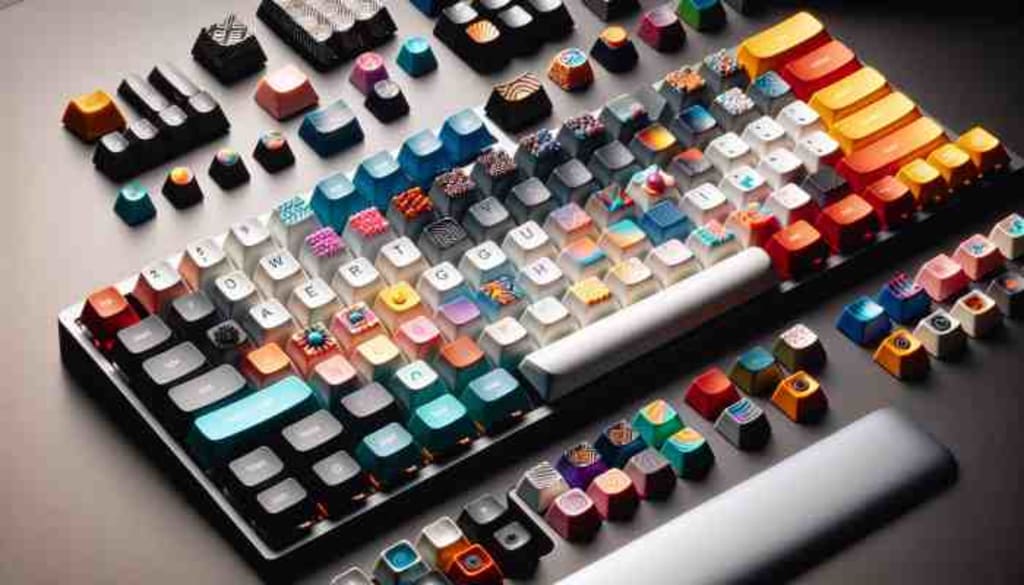
If you’ve ever typed on a mechanical keyboard, you know the allure: the satisfying clack of switches, the tactile feedback, the sense of control. But even among keyboard enthusiasts, there’s a quiet revolution happening—one that doesn’t involve switches, PCBs, or RGB lighting. The real game-changer? Custom keycaps.
These tiny pieces of plastic (or resin, or metal) are far more than decorative trinkets. They’re the unsung heroes of your typing experience, shaping everything from comfort to sound to productivity. Let’s dive into why upgrading your keycaps might be the best decision you’ll make for your keyboard—and your hands.
1. Material Science Meets Typing Comfort
Not all keycaps are created equal. The material alone can transform how your fingers interact with the keyboard:
ABS Plastic: The default for most stock keycaps, ABS is lightweight and smooth. However, it’s prone to “shining” (a greasy sheen from finger oils) over time.
PBT Plastic: Denser and more textured, PBT resists wear and provides a grippier feel. Typing on custom PBT keycaps feels like running your fingers over fine-grained sandpaper—in a good way.
Resin/Metal: Niche but growing, these materials offer unique aesthetics and heft. A brass spacebar, for instance, adds a luxurious thock to every thumb press.
Fun fact: In a 2022 survey by KeebTalk, 68% of users reported reduced finger fatigue after switching to PBT keycaps.
2. The Ergonomics You Never Knew You Needed
Keycap profiles (their shape and height) aren’t just about looks—they’re about ergonomics.
Cherry Profile: Low-profile and angled, this classic design suits fast typists and gamers.
SA Profile: Tall, spherical, and retro-inspired. SA keycaps encourage a floating wrist position, ideal for writers who type for hours.
DSA Profile: Uniform height and flat tops. Loved by minimalists, but notorious for tripping up touch typists.
Still skeptical? Try this experiment: Type on an SA-profile keyboard for a week, then switch back to flat laptop keys. Your wrists will beg you to return.
3. The Symphony of Sound
Mechanical keyboard sound tests flood YouTube for a reason—the right keycaps can turn typing into an ASMR session. Here’s how:
Thick PBT (1.5mm+): Muffles high-pitched clicks, delivering a deep, muted tone. Perfect for office environments.
Thin ABS: Amplifies the sharp click of tactile switches like MX Blues. Music to a gamer’s ears.
Foam Mod Combo: Pairing dense keycaps with keyboard foam? That’s the secret behind viral “marbley” typing sounds.
Pro tip: Check out sound comparison videos on channels like Taeha Types to hear how the same switches sound wildly different under resin vs. ABS keycaps.
4. Psychology of Personalization
A keyboard clad in neon anime keycaps or sleek monochrome artisans isn’t just flashy—it’s motivational. Studies in workspace design show that personalized environments boost productivity by up to 32% (Journal of Environmental Psychology, 2020).
Take Jane, a software developer who swapped her stock black keycaps for a botanical-themed set: “I used to dread coding marathons. Now, glancing down at those leafy green accents makes my workspace feel… calmer. I even type faster!”
“But Aren’t Custom Keycaps Just Expensive Decorations?”
Let’s tackle the elephant in the room:
Myth: “Keycaps don’t improve functionality.”
Reality: A well-designed SA profile can correct poor typing posture, while textured PBT reduces misclicks.
Myth: “They’re not worth the price.”
Reality: High-end PBT caps last years longer than cheap ABS. Divide the cost by daily use, and it’s often cheaper than weekly Starbucks runs.
Conclusion: Typing as Self-Expression
In a world of cookie-cutter tech, custom keycaps let you reclaim ownership of your most intimate device. They’re the difference between typing and typing joyfully—between a tool and a tailored experience.
So, go ahead. Replace that greasy ABS spacebar with something that sparks joy. Your fingers (and your Instagram followers) will thank you.
About the Creator
Keep reading
More stories from Gimsun Creative and writers in Gamers and other communities.
Window Art in Commercial Spaces
As silent sales associates facilitating dialogue between commercial spaces and pedestrians, windows serve as visual catalysts that transform momentary pauses into consumption behaviors. To create magnetic display spaces, three cognitive dimensions must be constructed: First, deconstructing the lifestyle panorama of target customers - young environmentalists crave natural materials and minimalist aesthetics, while the affluent class expects luxurious narratives woven through metallic luster and dramatic lighting. Second, capturing hidden touchpoints along consumer decision chains, from morning commute scenarios to midnight shopping impulses. Finally, translating these insights into tangible visual symbols.
By Gimsun Creative8 months ago in Art
The Rise of Online Gaming Communities: How Players, Creators, and Collaboration Shape Digital Culture
Over the last decade, online gaming has grown far beyond a simple form of entertainment. What once existed as a niche hobby for a small group of enthusiasts has evolved into a vast, interconnected digital culture. Today, online gaming is a global ecosystem that connects players, creators, and communities, all contributing to an environment where interaction, storytelling, and creativity define the experience. Gaming has become more than a pastime—it’s a space where social connections are built, ideas are shared, and digital culture is shaped.
By Hawaiian Malia7 days ago in Gamers
From Battle Royale to a Global Digital Platform
When Fortnite first gained popularity, it was known mainly as a fast-paced battle royale game. Over time, however, Fortnite evolved into something much broader. Today, it functions as a global digital platform that blends gaming, creativity, social interaction, and live entertainment. This shift did not happen through hype or exaggeration, but through steady development and changing player behavior.
By Games Mode On3 days ago in Gamers



Comments
There are no comments for this story
Be the first to respond and start the conversation.