
Video Games
The history and evolution of video games.

Video games have come a long way since their humble beginnings in the 1950s. From simple, black and white games played on bulky mainframe computers to complex, immersive experiences enjoyed by millions around the world, video games have undergone a remarkable transformation over the past several decades.
The history of video games can be traced back to the early 1950s, when computer scientists began to experiment with simple games that could be played on mainframe computers. One of the earliest examples of these games was "Tennis for Two," a simple tennis game created by physicist William Higinbotham in 1958. The game was played on an oscilloscope, and while it was crude by today's standards, it laid the groundwork for the development of more sophisticated video games in the decades to come.
The 1970s saw the emergence of the first commercially successful video games. In 1972, the game Pong was released by Atari, and it quickly became a sensation. Pong was a simple table tennis game that was played on a television screen, but it captured the imagination of millions of people and helped to establish video games as a mainstream form of entertainment.
Over the next few years, video games continued to evolve and become more complex. In 1978, the game Space Invaders was released, and it became another huge success. Space Invaders was a shooting game in which players had to destroy alien spaceships before they reached the bottom of the screen. The game's simple gameplay and addictive nature made it a huge hit, and it helped to establish the video game industry as a major force in the entertainment world.
The 1980s were a golden age for video games, with the release of a number of iconic titles that are still remembered and loved today. Games like Pac-Man, Donkey Kong, and Super Mario Bros. were all released during this decade, and they helped to establish the video game industry as a major cultural phenomenon. The popularity of these games also led to the development of home consoles like the Atari 2600 and the Nintendo Entertainment System, which brought video games into the living rooms of millions of people around the world.
In the 1990s, video games continued to evolve and become more sophisticated. The rise of 3D graphics technology allowed developers to create more immersive and realistic game worlds, and games like Doom, Quake, and Half-Life pushed the boundaries of what was possible in terms of gameplay and storytelling. The decade also saw the rise of online gaming, with games like Ultima Online and Everquest allowing players to connect and play with each other over the internet.
In the years since, video games have continued to evolve and become even more sophisticated. The rise of mobile gaming has made it possible for people to play games on their smartphones and tablets, while virtual reality technology has opened up new possibilities for immersive gaming experiences. Today, video games are played by billions of people around the world, and they have become a major part of popular culture.
In conclusion, the history and evolution of video games is a fascinating story that spans several decades. From the early experiments with mainframe computer games in the 1950s to the sophisticated, immersive experiences of today, video games have come a long way. Along the way, they have captured the imaginations of millions of people and established themselves as a major cultural force in the entertainment world.
About the Creator
Keep reading
More stories from writers in Gamers and other communities.
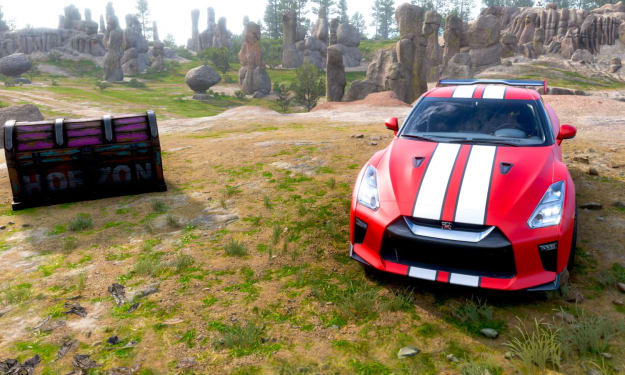
30k Tressure Hunt Forza Horizon 5
Forza Horizon 5 has become one of the most popular open-world racing games in the world, not only for its stunning visuals and realistic driving mechanics but also for its engaging side content, like Treasure Hunts. One of the most talked-about challenges in the game is the “30K Is The Game” Treasure Hunt, which rewards players with Forzathon Points and progression toward seasonal rewards.
By Games Mode Ona day ago in Gamers
Rsvsr Mega Evolutions Are Coming to Pokémon TCG Pocket – Get Ready!
If you’re a Pokémon fan, chances are you’ve been hooked on Pokémon TCG Pocket, the digital card game that lets you collect, trade, and battle Pokémon right from your phone. Well, there’s exciting news: the game is about to get a major update with Mega Evolution cards! And yes, that means Pokémon like Mega Gyarados, Mega Blaziken, and Mega Altaria are coming to your decks.
By Dangyc Ding7 days ago in Gamers


Comments
There are no comments for this story
Be the first to respond and start the conversation.