
Undertale: The Internet’s Favorite Video Game
How Undertale impacted game and Internet culture since its release almost a decade ago

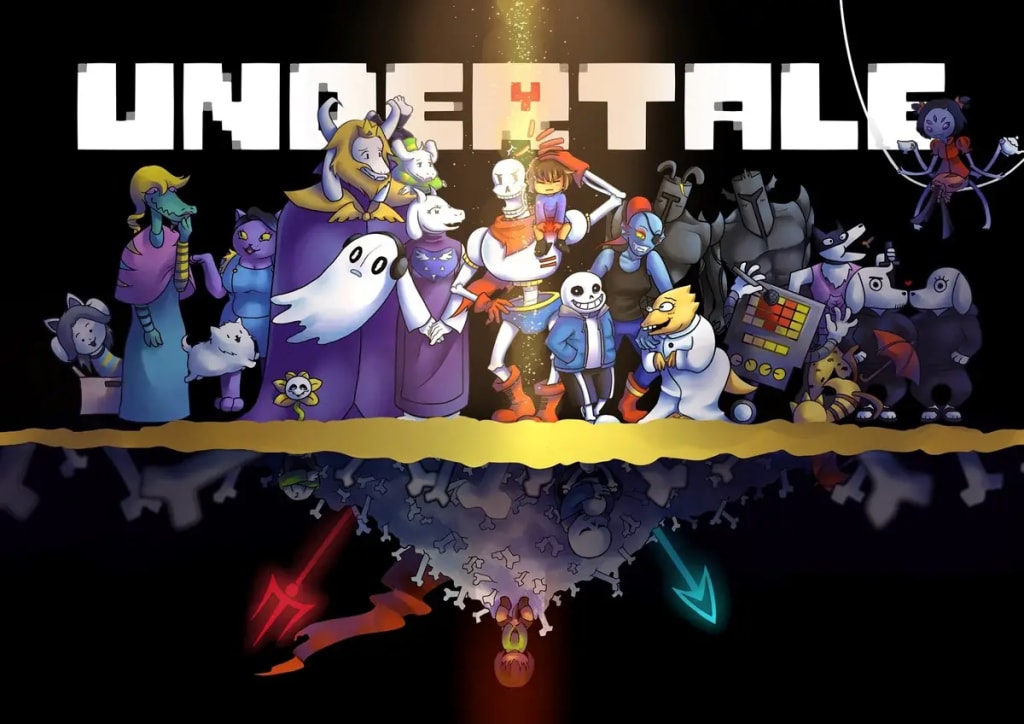
Undertale was released in 2015 by young American indie developer Toby Fox for only $5,000. Mere months after its release, the role-playing video game skyrocketed in popularity and exploded, taking the entire world by storm.
If you are a gamer, or if you are involved heavily with Internet culture, you might have heard of Undertale before. Popular online creators such as Jackscepticeye, Pewdiepie, Markiplier, and many others have full playthroughs of the game on Youtube, each video with millions of views each. Even if you haven’t, you may have seen some of the game’s popular characters online before—probably Sans—or stumbled upon one of the game’s soundtracks—probably Megalovania, which Internet kids could not go a moment without hearing everywhere (from memes to Youtube videos to wrestling) back in the day.
But if not, that’s totally okay. If you know absolutely nothing, zero, zilch about the game, let me introduce you to what many people call one of the greatest games of all time.
Undertale is an RPG (role-playing game) about a human child who falls into the Underground, a world full of monsters. You navigate through this world as the child, and you can choose to either fight or save the monsters you come across.
Without fully nerding out and going into too much detail, the backstory here is that the monsters are stuck in the Underground because they lost a war to the humans long ago, and they want to get out. They want to see the sun and feel alive and just chill on the surface again, mingling and coexisting with humanity. And for the price of seven human souls, which hold immense power in the game, the monsters would be free from the Underground and be able to live on the surface.
Their king Asgore has collected six human souls so far, and yours would be the seventh. By killing you, he would be setting his people free. He feels really bad about it—because he’s kind, but also definitely because it’s the reason his wife left him—but he’s determined to do it.
In fact, Undertale is about that single word: determination. It’s about your determination as a player to do what you want, whether that’s what you believe is right or what you know is wrong. Determination is the driving factor in this game. You can save every single monster you come across, or you can kill every single monster. Or you could save some and kill others—it’s all up to you. But one truth remains significant and seminal: your determination, with the power of your strong human soul, will be what dictates the fates of all the characters in Undertale.
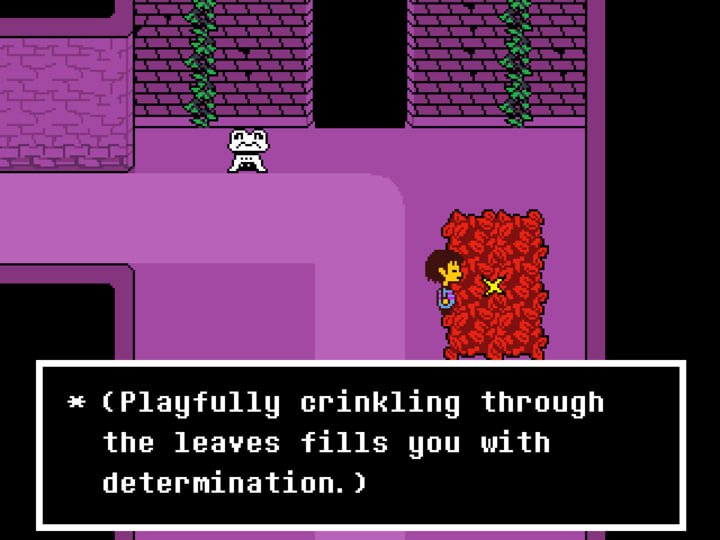
Undertale is known for having a great story, hilarious and lovable characters, funny dialogue, and really unique, engaging fights. Most of all, possibly, is the overwhelming praise for the game’s music, which is phenomenal. It’s also been singled out and praised for its inclusion of a queer couple in a way that wasn’t unnatural, forced, or sexualized. It was just very cute and sweet, which was a big win for queer gamers back then—shoutout to Undyne and Alyphs! And as adorable and funny as the game can be, according to how you play it, it also shocked gamers with its underlying eeriness and its themes of violence, betrayal, and horror.
As far as actually playing the game, it isn’t hard at all to navigate. The gameplay is pretty simple—you walk around, you talk to characters, and you have encounters with one or more monsters that pop up at random on your screen, the difficulty levels of them increasing slowly but fairly as the game moves on.
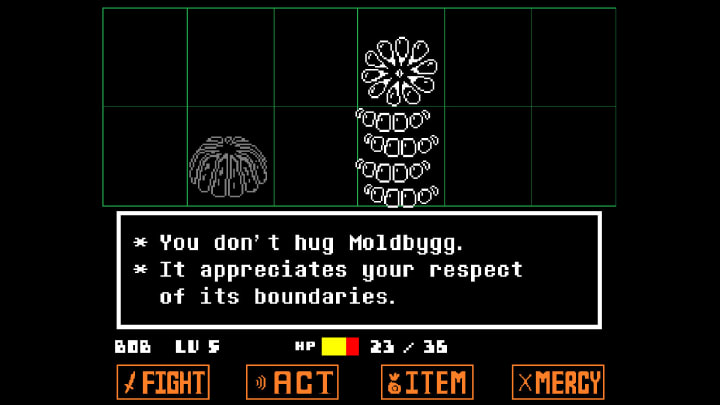
You can fight and kill your opponents, attacking with blows and dodging their attacks until they are defeated. You can act, speaking or complimenting or joking with your opponents between dodging their attacks until they no longer see you as a threat and spare you. When they spare you, you can spare them back by using the mercy button on the right. And item can be used to heal or increase your defense or offense with—you guessed it—items. It’s a fun, easy system with a lot of choice and freedoms left up to you, and all the monsters have unique moves and personalities.
So whether you choose to be a hero or a villain in this game—why does it matter? It’s just a game.
And that’s true. It is just a game. But let’s delve a little into why people care so much about the game and how people decide to play it.
Undertale fans can be very… impassioned, about a number of things, and they were especially impassioned during the year the game came out. Now, this isn’t an article about the rotted, festering, god-awful fanbase of Undertale. If it was, I would have a very different approach, because the fans were—to put it kindly—pretty wild.
People were obsessed with this game—most of them kids, of course, but some of them were full grown adults too. Which is fine. The game is great, and there’s something very special and magical about it. But things escalated very quickly. There were hundreds and thousands of fan-made AUs (alternate universes) made from this one, short game. There were millions of fanfictions and fanart pieces of every single character, from the main ones to the ones that had a millisecond of screen time. There were fan animations and fan-made songs about the characters and the lore of the game that were getting tens and hundreds of millions of views on Youtube, even if they weren’t all that good (there were some like this; there were also complete and utter masterpieces/check out YAMsgarden’s animation of the Undyne the Undying fight). There was, unfortunately, porn. Yes, Undertale porn. Based on these pixelated monster characters. Comes with the territory, I guess.
There was a lot going on. A lot of art, a lot of… “art”, a lot of emotions, and a lot of complaining. But I’d say above all, Undertale fans complained the most when they believed there was a “right” and “wrong” way to play the game, some even going as far as harassing streamers into deleting their videos or omitting their gameplays of Undertale because of it.
There are three main routes you can choose to take when you play Undertale: the Pacifist Route, the Neutral Route, and the Genocide Route.
The Neutral route is when you go through the game both sparing and killing various opponents. This is by far the easiest way to play and the best way to play on your first try—by killing monsters, your health bar increases, making fights easier and arguably more fun for a beginner. There are about a million different endings you can get in this route, and they’re definitely the least satisfying out of the three routes. You’ll always have at least one friend (someone you were nice to and didn’t kill) and one enemy (someone who cares about who you did kill—ahem, Undyne), and while the endings can be happy-ish overall, most seem rather bleak and even dull. The monsters always remain below the surface.
The Pacifist route has the best ending in the game. To complete this route, you must spare every monster in the Underground you come across, and you must befriend the silly, dim-witted skeleton Papyrus, the powerful, violently loyal fish-monster Undyne, and her anxiety-ridden, morally questionable scientist lizard girlfriend, Alphys. These are some of the greatest characters in the game, and getting close to them like you can in this route feels very satisfying. You also must defeat a different, harder boss named Asriel, and his backstory and conclusion are extremely moving. The ending you get for the Pacifist route is beautiful. Everyone ends up on the surface, happy and grateful to you. This is the ending the fans love the most and always wanted to see, therefore resulting in crazy fan behavior whenever someone completed a Neutral route, not knowing everything in the world there is to know about the game, and said they were done.
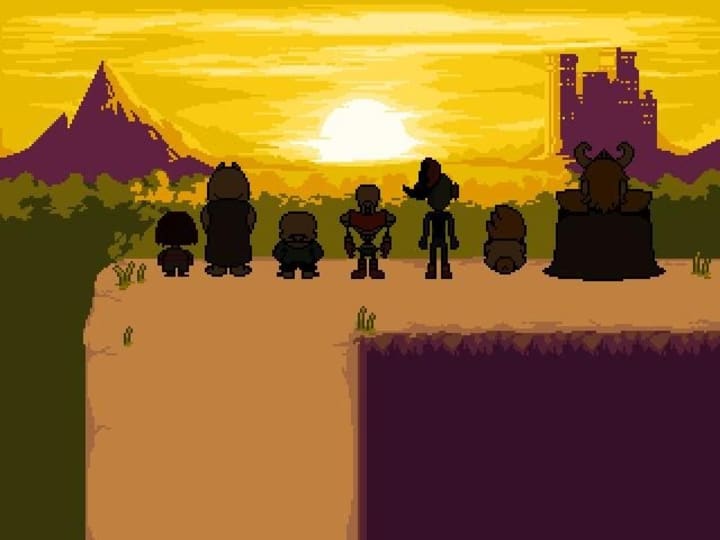
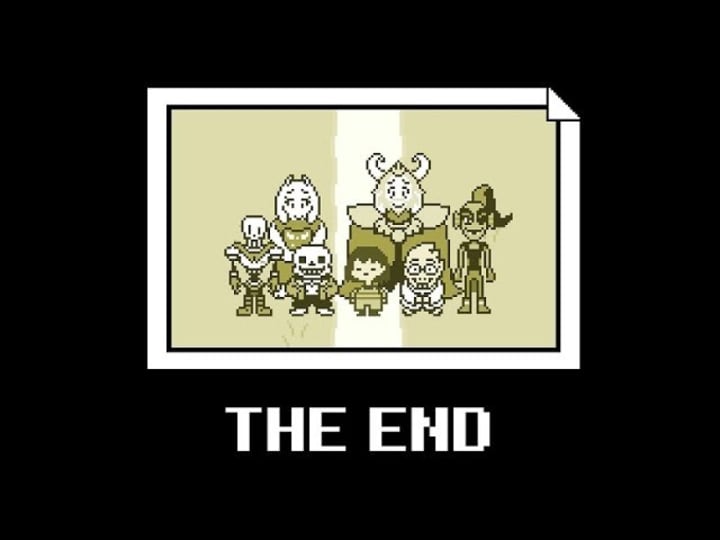
Call me a sap, but this is in fact the best route in the game, and I do think everyone should complete it at least once. Would I ever harass an online creator about it? Absolutely not. But it’s the best route. You get the best dialogue in the Pacifist route, and you get the best idea of the game’s themes about friendship, sacrifice, redemption, and determination. You get the best feel for the world and for the characters. You even get to hear great music you would miss out on otherwise—though the same is true for the final, most challenging, and most harrowing route.
The Genocide route is… exactly what it sounds like. You must go through the Underground seeking out encounters with monsters and killing each and every one of them. The vibe is completely different in this route, almost rendering the game unrecognizable. The towns that once brimmed with happy monsters are deserted. Your dialogue changes; save points that previously filled you with determination are replaced by kill counters, and once innocent statements about certain objects or places in the game are replaced with sinister alternatives.
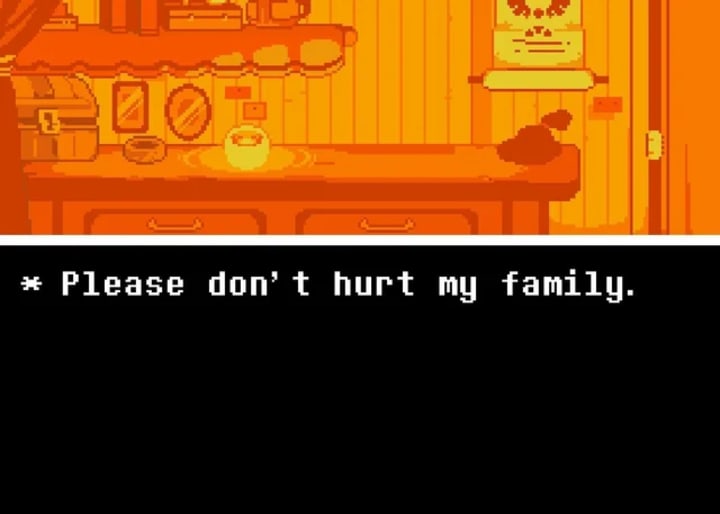
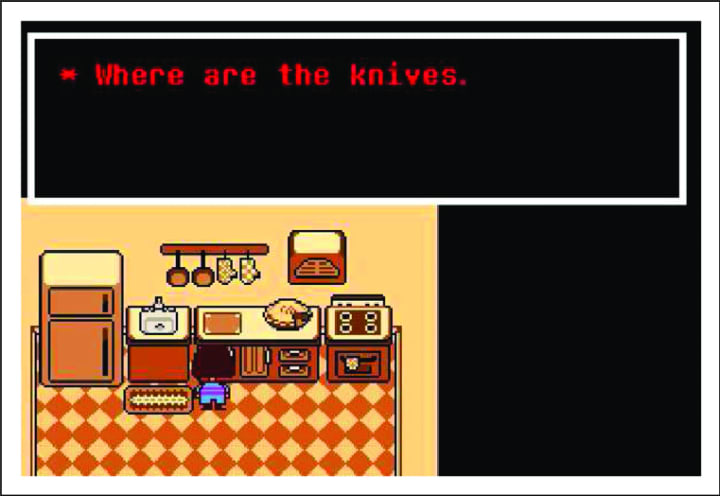
The music changes as well, becoming slower and more eerie. And all the friends you made are now enemies who fear you or plead with you to stop, to think, to change your ways. The Genocide route has a real way of making you feel absolutely terrible about what you’re doing. A character later in the game even confronts you about your own morbid curiosity as a player to complete it, using the power you have not to help but to hurt those around you. It’s a ruthless, brutal way to play, and you really do feel like a monster—you are the villain of this story, and you are winning. And the bosses who once stood a chance against you are now taken down by your bloodlust and taken out in one hit—all except for two.
The first is Undyne, who stops you from killing an innocent boy who looks up to her, killing herself in the process. With her own fierce, fiery determination, she is reborn into a temporary, super badass state and she becomes the hero to your villain—Undyne the Undying. This fight is incredibly hard, the second most difficult fight in any version of the game. It’s the first real challenge you face in the route, and it’s exhilarating. The music pounds in your ears as you attack and dodge her much harder, much faster attacks. Her heroism and resilience truly lets you know where you stand—as the monster who poses a threat to her entire world. It’s an awesome battle between two opposite ends of the morality spectrum.
The genocide route is also the only way to fight Sans, the most popular character as well as the most powerful boss in the game. This is the greatest battle in Undertale to me, surpassing even Undyne the Undying, because the hatred in this fight is almost palpable. Sans, a previously quiet, mysterious, funny character, now despises you for killing his brother and all his loved ones, and he is ready to kill. It’s also so good because it’s so hard and therefore the most satisfying when you finally defeat him. There’s so much to memorize and prepare for and so much to do. It’s a long, grueling battle that requires some of the best healing items in the game. And Sans is very much aware of how powerful his attacks are too, famously asking the player before the fight the now very-memed question, “Do you want to have a bad time?” You don’t, but you will.
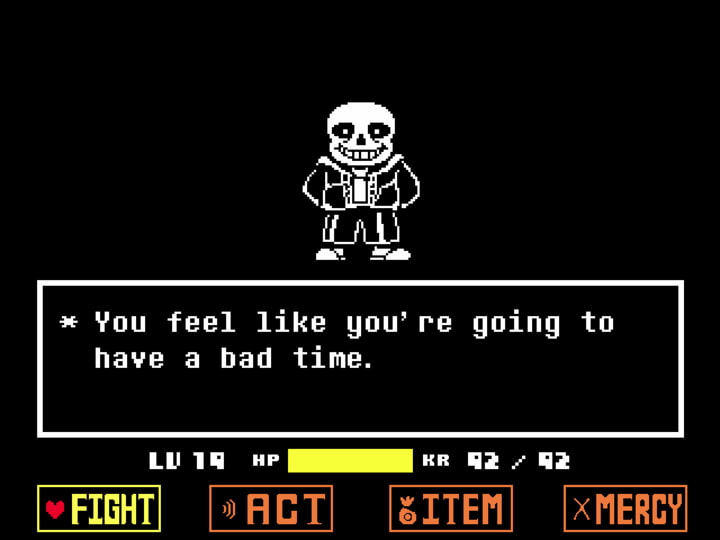
By becoming his enemy, you also become exposed to his secrets; he is aware of how you can bend the timeline. This results in a lot of fourth wall breaking, which gamers are such suckers for. Every time you die fighting him—which is a lot of times, for most players—he taunts you by stating he knows this is your second, third, fourth, or fifth time facing him. Like you, both the character and the player behind the screen, Sans is aware of Save points and of being aware of having the same fight over and over again, and he shows absolutely no mercy. After a number of lost fights, he even skips his opening dialogue that he knows you’ve heard multiple times before and just goes on straight to his very difficult opening move, impatient to kill you.
Players absolutely ate this self-awareness up, me included. Sans is awesome.
After you defeat Sans, you go on to sell your soul to the murderous human named Chara (I could tell you who this is, but please, please don’t ask unless you want another two thousand words of my yapping) who crashes your game and resets it. After this, your soul in the game is forever gone, and no ending you complete will ever be the same. Even when you try to complete a Pacifist route again, the game lets you know it has not forgotten what you’ve done by giving you one of these two lovely easter eggs after your happy Pacifist ending:
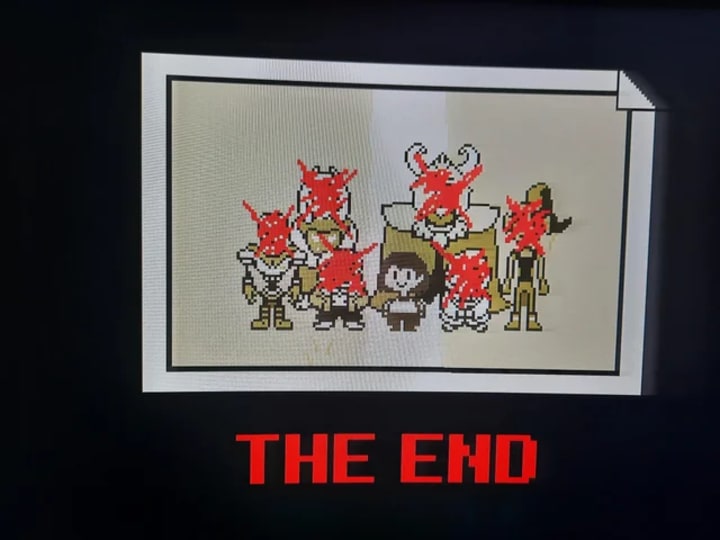
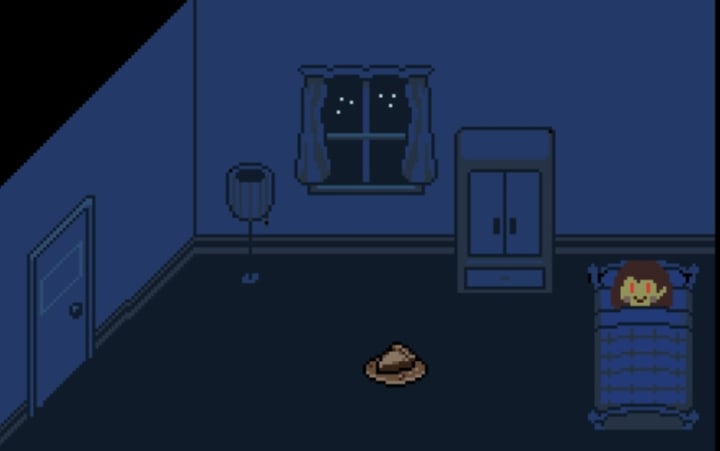
Creepy.
Fans either love or hate the Genocide route, and the pressuring of gamers to do it or not to do it back in the day was just silly. I thought it was quite interesting and worthwhile because of Undyne and Sans, the two most fun fights in the game, but otherwise the gameplay was grueling and depressing, and the lore we get of Chara and Asriel wasn’t as interesting as the lore we get of Asriel in the Pacifist route—to me. I don’t think it’s for everyone, and I don’t think it’s as enjoyable to be a monster as it is to be friends with all the characters. That being said, there is something to be said about how chilling it was. The game makes you fall in love with it before it tempts you with your own dangerous curiosity to do and become the unthinkable, and I think that’s very smart. Without the Genocide route, the game would have way less depth and intrigue.
Undertale is very important to me, and it’s loved and treasured by so many people. As obsessive and cringey as the fanbase was at its worst, there was a reason people went so crazy over this game. The story is beautifully complex and ever-changing. Each and every character is charming and charismatic. The entire game brims with humor and personality. But most importantly in its legacy, Undertale is an RPG where your choices actually matter. If you do complete the Genocide Route, the game never forgives you, and it never forgets. You have to live with the weight of your choices, even through a screen. This makes for an extremely interesting and highly emotional gaming experience, and this emotion instilled in Undertale sets it apart from all the rest.
The game’s themes of friendship, morality, control, and the weight of your choices are surprisngly heavy and meaningful, as well as extremely interesting in the context of the game’s uniqueness and common breaking of the fourth wall. I highly recommend the game to anyone who hasn’t played it!
About the Creator
angela hepworth
Hello! I’m Angela and I enjoy writing fiction, poetry, reviews, and more. I delve into the dark, the sad, the silly, the sexy, and the stupid. Come check me out!
Reader insights
Good effort
You have potential. Keep practicing and don’t give up!
Top insights
Compelling and original writing
Creative use of language & vocab
Easy to read and follow
Well-structured & engaging content
Expert insights and opinions
Arguments were carefully researched and presented
Keep reading
More stories from angela hepworth and writers in Gamers and other communities.
Essential Golf Tips Every Beginner Needs to Improve Their Game
Golf is a rewarding sport that combines skill, patience, and strategy. For beginners, the game can feel challenging because it requires mastering several techniques at once. Many new golfers focus too much on hitting the ball far instead of learning the fundamentals that lead to consistent performance. Improvement comes from developing good habits early, practicing with purpose, and understanding how each part of the game works together. With the right approach and consistent effort, beginners can build confidence and steadily improve their performance on the course.
By Daniel Ladner3 days ago in Gamers
7 Methods to Earn MLB The Show 26 Stubs Fast
In MLB The Show 26, stubs are the in-game currency that players use to purchase packs, cards, and other valuable items. Earning stubs can be challenging, but with the right strategies, you can accumulate them efficiently. Here are seven methods to help you earn stubs quickly without feeling overwhelmed.
By Snow maner2 days ago in Gamers


Comments (6)
I uh... please do a pacifist... please spare everyone
Great analysis! You captured Undertale's depth, characters, and emotional impact perfectly. Well written!
i remember playing
I've watched videos of Pewdiepie, Markiplier and Jacksepticeye playing various games but I've not heard of this one. I'm surprised given how well known you say it is. Although the genocide route has it's cons, I'm still so tempted to follow it hahahahahahaha
I remember playing the Kickstarter demo for Undertale in 2013, already knowing it would be a big deal.
Will forward this to my hubby. He's going to love this.