
Top 10 Hidden Secrets and Easter Eggs in Baldur’s Gate 3 You Probably Missed
Discover the Most Overlooked Secrets, Hidden Characters, and Obscure Easter Eggs Lurking in Baldur’s Gate 3 That Even Hardcore Fans Might Have Missed

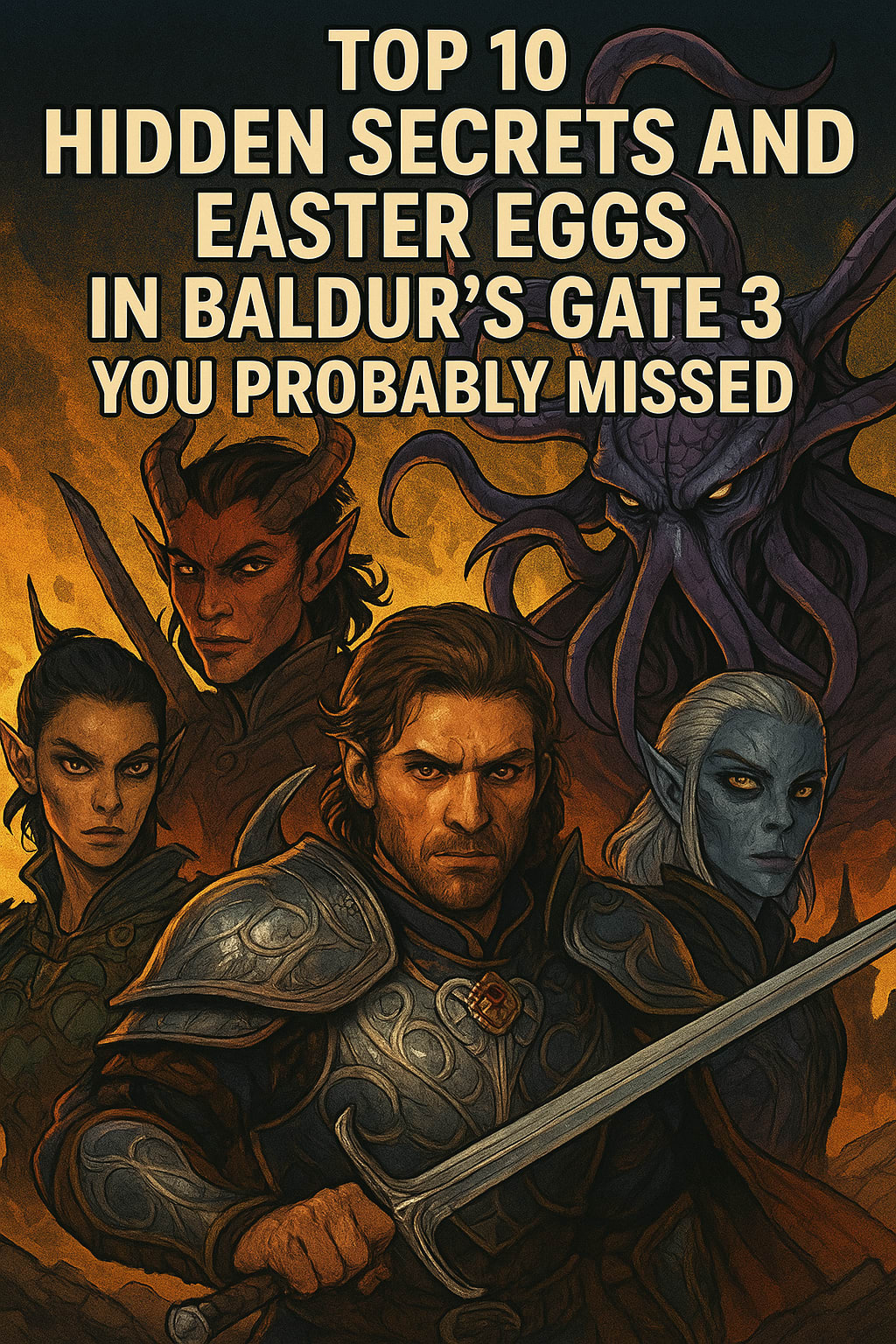
Baldur’s Gate 3 is a sprawling RPG packed with decisions, danger, and detail. But beneath its epic main story lies a rich layer of hidden secrets, subtle nods to classic D&D, obscure character moments, and cleverly buried treasures.
Whether you’re a seasoned explorer or a newcomer still figuring out how to quicksave properly, these ten secrets and Easter eggs are easy to overlook.
Let’s dive into the overlooked gems that make Larian Studios' masterpiece even richer than it first appears.
1. The Talking Skeleton in the Dank Crypt
Right near the start of the game, in the Dank Crypt under the Chapel Ruins, most players fight off the undead, loot the sarcophagus, and move on. But if you pass a Religion or Arcana check when examining the area, you’ll learn there's a skeleton you can talk to, with the right spell.
If you return later with “Speak with Dead,” you'll trigger a conversation with Withers, a mysterious undead who eventually offers to join your camp.
Not only does he handle your respecs and revivals, but his sarcastic humor hints at a deeper history tied to the Forgotten Realms' ancient lore. Missing him means missing one of the most useful and cryptic characters in the game.
2. Scratch the Dog Isn’t Just a Pet
You find Scratch mourning his dead master near the Blighted Village. Most players either comfort him or leave him alone. But if you successfully befriend him, he becomes a camp companion.
Beyond that cute exterior, though, Scratch offers unique gameplay interactions.
He’ll sometimes dig up hidden items in camp, warn of approaching threats, or simply bring you a ball mid-dialogue. Scratch's presence subtly influences camp morale, adding depth to the narrative fabric of your party, even though he never says a word.
3. The Owlbear Cub Can Be Recruited
That adorable owlbear cub in the cave? It’s not just there for a sad backstory. If you spare it and later encounter it during the goblin camp events, you can rescue it and invite it to camp.
Many players kill the owlbear or ignore it entirely. But with a bit of persistence and a few right choices, you’ll unlock one of the most heartwarming companions in the game.
The cub plays with Scratch, interacts with your party, and even has small influence over select narrative moments.
4. The Mysterious Singing Mushrooms
Deep in the Underdark, hidden away from the main paths, are patches of glowing mushrooms that appear to hum or “sing” when approached.
If you listen carefully and succeed on an Investigation or Nature check, you'll realize it's not just ambient noise, it's a coded melody.
These mushrooms subtly reference the "Myconid Sovereigns" from classic D&D lore. Players who cast Speak with Plants or experiment with bardic instruments can sometimes trigger unique environmental effects or bonus items. It’s easy to walk by them without ever knowing.
5. Karlach’s Hidden Past
Karlach’s story is intense, and her narrative arc is easy to follow once she joins your party. But hidden around the game world, particularly in Infernal-affiliated locations, are references to her time in Avernus that she never outright mentions.
By piecing together books, infernal relics, and NPC conversations, you can uncover fragments of her backstory that expand on her trauma, resilience, and identity.
It’s an environmental storytelling approach that rewards attentive players and deepens emotional investment.
6. The Mind Flayer Ship Is Revisit-able
Many players assume the Nautiloid crash site is a one-and-done area. But if you return after progressing further in the story, you’ll discover new interactive elements, charred bodies that have shifted position, locked compartments previously inaccessible, and hints about the ship’s true origin.
There's even a second Illithid tadpole hidden in a locked container, giving you another chance to expand your powers. Returning here offers more than nostalgia, it gives you power.
7. The Drunk Kobold Bard in the Underdark
Hidden in a hard-to-reach ledge in the Underdark is a kobold named Thulla, who appears to be passed out with an instrument beside her.
With high enough Charisma or Persuasion, you can wake her and learn she’s a self-proclaimed “bard of the shadows.”
If treated kindly and given a musical item, she’ll compose a tune about your character’s exploits. That song becomes a subtle motif during certain key events, another example of Larian’s intricate musical storytelling.
8. Ancient Sentient Weapon: The Silver Sword
Many players miss this completely because it requires both precise choices and luck.
During Act 2, in the Githyanki Creche, if you allow Lae'zel to delve deeper into her heritage and pass a few key checks, you unlock a hidden chamber containing a powerful sentient Silver Sword.
The sword isn't just strong, it talks. And it judges you. It may refuse to work with you based on your choices, offering commentary during battles and moral dilemmas. It’s a rare example of item-based narrative depth.
9. The Trick with the Baldur’s Mouth Newspaper
Scattered around the city of Baldur’s Gate in Act 3 are editions of Baldur’s Mouth, the city’s paper. They seem like background flavor at first glance, but they actually change based on your actions.
If you manipulate certain quests, interact with reporters, or bribe a few influential figures, the headlines start reflecting your reputation, hero, villain, or something in between.
This subtle feature adds a reactive world-building element that quietly mirrors your morality.
10. The Ghost of the Hollow Tree
In the Shadow-Cursed Lands, there’s a twisted tree unlike the others. If you cast Detect Magic, you'll see necrotic energy swirling around it.
Cast Speak with the Dead near the tree, and a ghostly voice speaks of a lover lost to the curse.
This haunting secret leads to a tiny, easy-to-miss quest involving a locket hidden inside the tree. If returned to its rightful owner or laid to rest, it will grant your character a small but permanent Wisdom boost. It’s a quiet story, one told in whispers and shadows, and it’s easily missed in the chaos.
Baldur’s Gate 3 is a game built for the curious. Beneath the epic battles and cinematic choices lies a world layered with secrets, waiting for those willing to slow down and explore.
Each of these hidden Easter eggs reveals not just Larian’s dedication to craft, but a fundamental truth: the world of Faerûn is alive. And it’s listening.
So next time you're wandering the wilds or digging through someone’s forgotten cellar, pay attention. You never know what you’ll find when you look beyond the obvious.
If you think you’ve found something stranger, deeper, or more obscure, you probably have, and that’s the magic of Baldur’s Gate 3.
About the Creator
Richard Bailey
I am currently working on expanding my writing topics and exploring different areas and topics of writing. I have a personal history with a very severe form of treatment-resistant major depressive disorder.
Keep reading
More stories from Richard Bailey and writers in Gamers and other communities.
10 Things Cloud Computing Solutions Simplify Server Control
Managing physical servers often feels like a never-ending battle against tangled wires and heat. You spend hours monitoring blinking lights in a cold room. Traditional setups demand constant attention and manual updates. Cloud computing solutions change this entire dynamic for modern businesses. It moves your digital assets to a flexible virtual space. This shift grants you total authority without the physical burden. The cloud transforms complex technical chores into simple clicks. It allows you to focus on growth rather than hardware maintenance.
By Arthur Leo2 days ago in Gamers
FC26 Daily Update: Fantasy Team 2 Is Live! Forlán & Sterling SBCs and Premier League Tracker Analysis
Hello everyone, welcome to today's FC26 Daily Briefing. We have an action-packed Friday as we move into the second week of the FC Fantasy promotion. Today’s highlights include the reveal of Fantasy Team 2, new SBCs for Diego Forlan and Raheem Sterling, and the high-stakes Champions League knockout draw.
By hasan zidan7 days ago in Gamers



Comments
There are no comments for this story
Be the first to respond and start the conversation.