
Tomb Raider Retrospective - 3
Chapter 3: Core to Crystal

Core Design had been having a hard time getting things right for the new wave of consoles at the time. Several of their titles PS 2 titles sold poorly, and it appears that Tomb Raider: Angel of Darkness was just the proverbial straw that broke the camel’s back. Now, the Tomb Raider IP had already started its decline at this point. Chronicles did okay, sales-wise, but it had a number of game-breaking bugs which left gamers frustrated. With that in mind, the reviews weren’t exactly glowing.
Angel of Darkness, which was supposed to be a next-gen story for new hardware had been delayed by two years - being released in 2003 instead of 2001. Despite the longer development window, the game was almost unplayable at release. Needless to say, it bombed - hard.
Jeremy Heath-Smith stepped down as the managing director of Core Design while Eidos started making moves. The company soon released a statement that read in part:
“The Board has been conducting a review of the Tomb Raider franchise and the studio operations of Core Design. In recognition of the Company's need continually to enhance the value and maximize the commercial opportunity of one of its key franchises, for which all intellectual property rights belong to Eidos, the Board has concluded that it will transfer development of the franchise to its Crystal Dynamics studio in the US." - Eidos Interactive
Now, as unfortunate as it is, it’s not really a shock. When you have a yearly release schedule and then your game is pushed back a year, that sucks. When your game is delayed by two years and is still a mess when it’s released; well, the execs are going to notice. As we see from the above statement, they definitely noticed and they were definitely unhappy.
The thing is, from everything I’ve read about the dev period of Angel of Darkness, it seems to have been somewhat doomed from the get-go. Apart from the general fatigue, health issues, and unhappiness around being forced into doing more Tomb Raider, it seems there was also some bad blood between the two teams (Chronicles and Angel of Darkness were being developed at around the same time). Additionally, the PS 2 was the new hardware which posed its own problems.
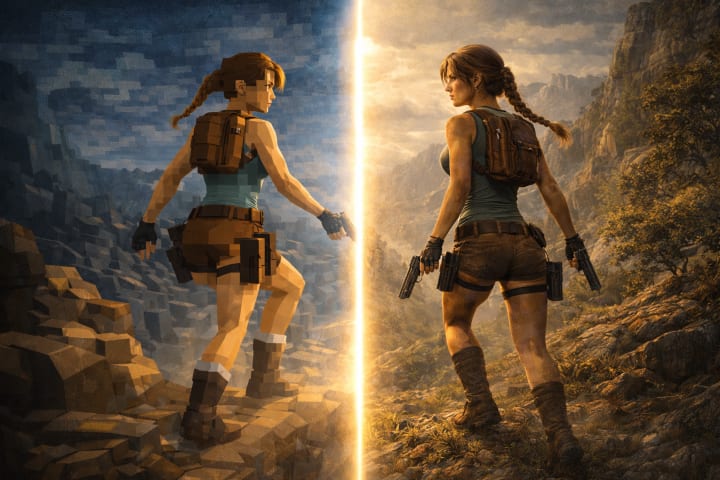
Most of the work that had been done had to be scrapped and re-worked with long hours and a bad work environment shredding the team’s morale. It didn’t help that nobody seemed to know where to go or what to do.
“It was 30 or 40 people, it didn’t have any organisation to it. It wasn’t clear who was in charge, who the leads were. There were lots of people with headphones on just all working on their bit and then one disaster after another as they realised things didn’t tally up.” - Gavin Rummery.
So, you’ve got a team of 30 - 40 people, nobody knows who’s in charge or what anyone else is doing - because nobody is communicating. Jeremy Heath-Smith and his brother (Adrian) would have regular arguments, and many of the men and women working on Tomb Raider 6 were likely worried about their jobs.
Frankly, I find the fact that Angel of Darkness was made at all to be quite a miracle in its own right. It just seems wild to me that you can have such a large team of people and nobody there to make sure everyone’s doing what they’re supposed to. Wilder still, is that, from what I’ve read, it seems some of the guys at Core weren’t expecting the loss of the Tomb Raider IP.
Still, that’s exactly what happened; Eidos Interactive seized control of the IP and transferred it to their American team at Crystal Dynamics. Now, Crystal Dynamics was - as far as I know - fairly unknown at the time. They had a mascot, Gex the Gecko, who became an icon in and of himself, and it wasn’t long before the team published a game by a Canadian developer called Silicon Knights. That game was a gothic fantasy RPG called Legacy of Kain.
Legacy of Kain was very successful, but sequels were trickier. There was apparently a major legal battle before Crystal Dynamics won the rights to make sequels and develop the series. It took a while, and then, in 2003, Eidos sent them the news that they’d probably be working on a Tomb Raider title.
"We were doing a few internal projects at the time, and we'd gotten the word that we might have the opportunity to work on a Tomb Raider title, it was fairly vague, but certainly exciting, being fans of the franchise ourselves. We started talking internally about what we would do with a Tomb Raider game. It came down to leveraging some of the things we had learned about character-based, action-adventure games with projects like Soul Reaver, and trying to apply them to what we loved about Tomb Raider games." - Creative Director, Noah Hughes
The fact that the team was packed with Tomb Raider fans is certainly a positive, but this change in developers still left fans more than a little concerned - especially after the disaster that was Angel of Darkness.
Crystal Dynamics was going to have to do something very impressive if they were going to convince the fanbase that the Tomb Raider series was in good hands. With that in mind, they got to work on the seventh instalment in the adventures of Lara Croft. Of course, the team decided to give Lara a bit of a holiday so that her new adventure would be great.
They proved themselves and then some. The fans were relieved, and faith in the series was restored.
About the Creator
Greg Seebregts
I'm a South African writer, blogger and English tutor; I've published 1 novel and am working on publishing a 2nd. I also write reviews on whatever interests me. I have a YouTube Channel as well where I review books, and manga and so on.
Keep reading
More stories from Greg Seebregts and writers in Gamers and other communities.
Call of Duty: Ghosts (2013)
So, I've reviewed a handful of Call of Duty titles by now, and I've had a great time doing it. World at War was a dark, grim portrayal of WWII that was really good. Black Ops was a Cold War thrill and the Modern Warfare trilogy was an action-movie extravaganza.
By Greg Seebregtsa day ago in Gamers
FC26 Daily Intel: Champions League Promo Leaks—Vinícius, Hamm, and New Heroes Arrive!
As we approach the festive season and the business end of the European calendars, the FC26 landscape is about to undergo a seismic shift. The latest leaks for the February 9th update reveal that the upcoming UEFA Champions League (UCL) Road to the Knockouts/Final campaign is packed with high-tier talent, including massive upgrades for fan favorites and the debut of several long-awaited legends.
By hasanzidan4 days ago in Gamers
The Malfunctioning Inevitable
The hoard of terrible creatures roiled from the buildings, horns and thorns rising from their smoldering flesh. The demons hissed and roared, snarled and clawed, burning saliva dripping from their maws as they sought prey to rend and tear.
By Neal Litherland7 days ago in Gamers
Staying sane in the insane world.
”It is no measure of health to be well adjusted to a profoundly sick society.” Jiddu Krishnamurti This quote has been one of my favourites since the moment I first laid my eyes on it. To me, it cuts right through the fog of the illusion of normality that permeates our lives. And since I am someone who has never felt (well) adjusted to this society, Krishnamurti’s words gifted me with the realisation that there isn’t anything inherently wrong with me.
By Eva Smitte2 days ago in Humans


Comments
There are no comments for this story
Be the first to respond and start the conversation.