
THE TRANSFORMATION OF THE OLYMPIC DECATHLON OVER TIME
Evolution of the Olympic Decathlon:A Journey Through Time.

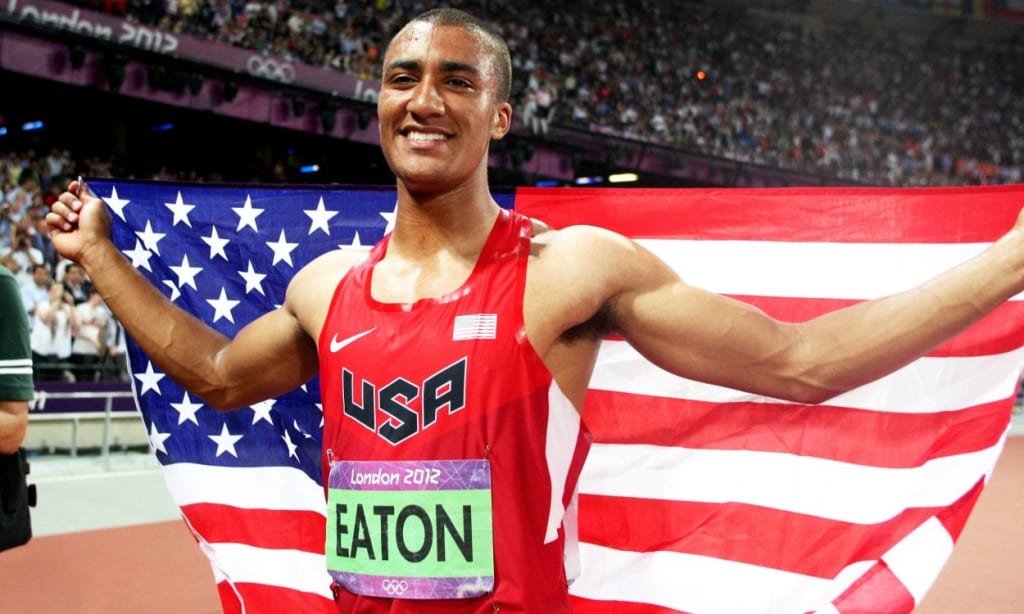
The decathlon, a cornerstone of the Olympic Games, is a grueling test of athletic prowess that has evolved significantly since its inception. Combining ten diverse events—ranging from sprints and jumps to throws and distance running—the decathlon has long been celebrated as the ultimate measure of an athlete’s versatility and endurance. However, the nature of the competition, its athletes, and its cultural significance have undergone substantial changes over time, reflecting broader shifts in sports and society.
(I)Origins and Early Development
The modern Olympic decathlon was introduced at the 1912 Stockholm Games. Its roots can be traced back to ancient Greece, where multi-event competitions were held to honor the ideal of a well-rounded athlete. However, the decathlon’s modern structure drew inspiration from Scandinavian and American traditions of track and field events.
In 1912, the inaugural Olympic decathlon was won by the legendary Jim Thorpe of the United States, who scored 8,413 points (under contemporary scoring standards). Thorpe’s victory set the tone for the event’s prestige. Yet, the early decades of the decathlon were characterized by rudimentary training methods, a lack of standardized equipment, and inconsistent scoring systems. These challenges meant that performances were often dictated more by natural ability than by advanced preparation or scientific approaches to training.
(II)Evolution of Scoring and Standards
One of the most significant transformations in the decathlon has been the evolution of its scoring system. Initially, scoring was based on arbitrary tables, leading to inconsistencies and debates over fairness. In 1934, the International Association of Athletics Federations (IAAF) introduced a more systematic scoring system based on mathematical formulas. This system, updated several times since, ensures that each event contributes proportionally to the overall score. For example, exceptional performances in the 100 meters and long jump no longer disproportionately outweighed steady performances in throwing or distance events.
The current scoring table, established in 1984, balances the events more equitably, enabling athletes to excel across disciplines rather than relying on dominance in a few. This development has elevated the decathlon’s status as a comprehensive test of athletic ability.
(III)Technological Advancements
The decathlon has benefited immensely from advancements in technology, from improved track surfaces to state-of-the-art equipment. Early competitors ran on cinder tracks and used primitive implements for throwing events. In contrast, modern decathletes compete on synthetic tracks designed for optimal speed and safety, while high-tech javelins, discus implements, and pole vault poles enhance performance.
Video analysis and biomechanical studies have also revolutionized training. Coaches can now dissect every aspect of an athlete’s technique, identifying minute adjustments to improve efficiency and performance. Furthermore, sports nutrition, recovery technologies like cryotherapy, and wearable fitness trackers have allowed decathletes to train more effectively and recover faster between events.
(IV)The Changing Profile of Decathletes
The archetype of the decathlete has also evolved. Early competitors were often amateur athletes with limited specialization, but modern decathletes are highly trained professionals who dedicate years to mastering their craft. Athletes such as Daley Thompson, who won Olympic gold in 1980 and 1984, epitomized the rise of the professional decathlete, combining natural talent with meticulous preparation.
Today’s decathletes are taller, stronger, and faster, reflecting broader trends in athletics. Ashton Eaton, the two-time Olympic champion from the United States, embodies the modern decathlete with his combination of speed, power, and technical precision. Eaton’s world record of 9,045 points, set in 2015, demonstrated the extraordinary levels of performance now achievable.
(V)Cultural and Global Impact
The decathlon’s cultural significance has also evolved. In its early years, the event was dominated by American and European athletes, reflecting the geographical focus of the Olympic movement at the time. Over the decades, the sport has become more global, with competitors from countries such as Canada, Germany, and Estonia achieving prominence. This globalization has enriched the decathlon by introducing diverse training methods and athletic traditions.
The decathlon has also played a symbolic role in defining athletic greatness. The title “World’s Greatest Athlete” is often bestowed upon the Olympic decathlon champion, underscoring the prestige of the event. This tradition has cemented the decathlon’s place in popular culture, with champions like Bruce Jenner (now Caitlyn Jenner) in 1976 and Roman Šebrle in 2004 becoming household names.
(VI)Challenges and Opportunities
Despite its storied history, the decathlon faces challenges in maintaining its relevance. The rise of specialized sports and the increasing complexity of television broadcasts have made it harder to showcase multi-event competitions. Moreover, the physical and mental demands of the decathlon often lead to shorter careers compared to athletes in single-discipline events.
However, the decathlon’s adaptability remains a source of strength. Efforts to modernize the event—such as integrating advanced analytics into broadcasts and promoting decathletes as role models for younger athletes—can help sustain its appeal. Additionally, the emphasis on all-around athleticism aligns with growing interest in cross-training and versatile fitness among recreational athletes.
In The End
The Olympic decathlon has transformed dramatically since its debut in 1912, reflecting broader changes in sports science, technology, and culture. From the pioneering efforts of Jim Thorpe to the record-breaking performances of Ashton Eaton, the event has continually redefined the boundaries of human potential. While challenges remain, the decathlon’s enduring legacy as a celebration of versatility and resilience ensures its place at the heart of the Olympic movement.
About the Creator
Badhan Sen
Myself Badhan, I am a professional writer.I like to share some stories with my friends.
Keep reading
More stories from Badhan Sen and writers in Gamers and other communities.
THE SIGNIFICANCE OF ROWING AND CANOEING IN OLYMPIC HISTORY
The Olympic Games have long been a stage for showcasing human endurance, strength, and skill, and among the many sports that have graced this global event, rowing and canoeing stand out for their rich history, tradition, and significance. These water-based sports not only test physical prowess but also exemplify teamwork, strategy, and the human spirit’s resilience. From their origins to their modern-day prominence, rowing and canoeing have played a crucial role in the Olympics and have captivated audiences worldwide.
By Badhan Senabout a year ago in Gamers
Early Life: From the Streets of Madeira to Stardom
Cristiano Ronaldo: From Madeira to Football Immortality Cristiano Ronaldo dos Santos Aveiro is a name that has become synonymous with determination, ambition, and sporting excellence. Rising from humble beginnings on the Portuguese island of Madeira, Ronaldo transformed himself into one of the greatest football players in history and a global icon followed by hundreds of millions of fans. His story is not only about talent, but about discipline, resilience, and an unstoppable desire to improve.
By Reflective Stories3 days ago in Gamers


Comments
There are no comments for this story
Be the first to respond and start the conversation.