
The Tragic Downfall of Light Gun Games
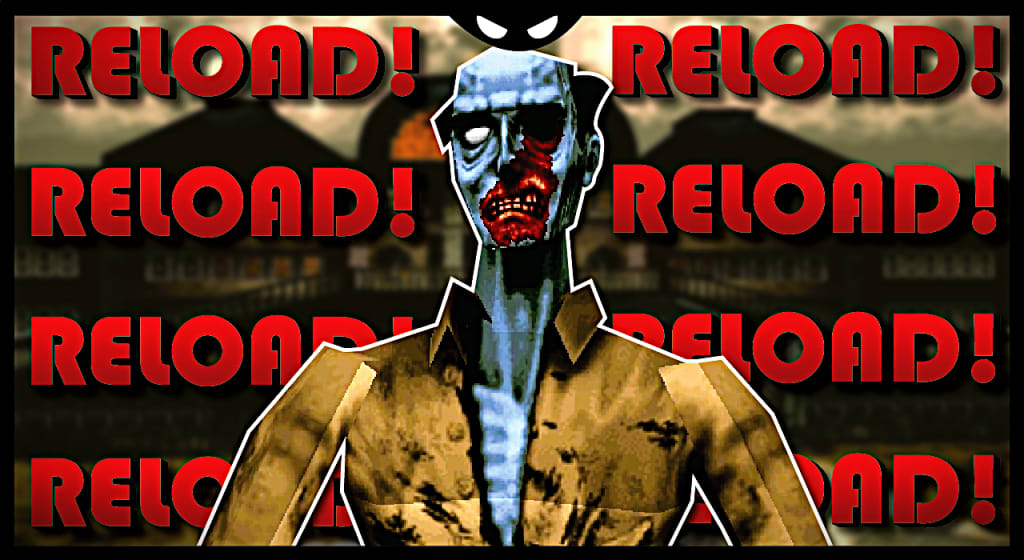
Reload! Shoot outside of the screen!

(Intro)
One of the most enjoyable and sought-after experiences I looked for growing up and going to arcades were light gun games. Machines that put you front and center either fighting off criminals, potential worldwide disasters, or zombies created by an evil mastermind wanting to take over the world. And although arcades were the premier location to play most of this genre, there were other ways to experience this style of video game, albeit in a heavily compromised way. But, as the market for home consoles grew in the early 2000s, the need or even desire to find an arcade to experience these games diminished. To the point, that at least here in the states, arcades are still around but provide a much different experience than they once did. Places like Dave & Buster’s, Apex Entertainment and more focus on arcade games with the goal of winning tickets to cash in for prizes. Whereas years prior, those kinds of games certainly did exist, but there was a stronger emphasis on just playing games and experiences you couldn’t get anywhere else. There was no prize, no immediate gratification other than the experience itself. And maybe being allowed to stay on the machine until you lost, too. And light gun games were certainly at the top of the arcade food pyramid. Next to other genres, like classic racing games, and fighting games. So today, I wanted to just have a conversation about the light gun genre as a whole; go over some of its history, which games really gave this genre the popularity it deserved back in the day and ultimately why light gun games fell out of favor in an arcade setting. They’re still around don’t get me wrong, but good light gun games, that have tons of replay value, are challenging but feel fair, and ultimately give you that classic arcade experience have had a tragic downfall.
(A quick crash course on light gun games)
Light gun games, also known as rail shooters, are arcade games that simulate a shooting gallery style experience. Usually, the player or players hold fake weapons that simulate the experience of firing an actual weapon. Usually either a handgun or a shotgun, but they can be a vast array of real or fictional firearms. Sometimes even having sliding or cocking mechanisms built into the weapon to simulate the slide flying backwards as if the weapon was firing for real, and to simulate recoil. The weapons were usually a bright color to ease the potential wariness of those who might be uneasy around firearms. Light gun games consist of a protagonist(s) working through a variety of areas taking out foes that are trying to damage the player to the point where if they lost all their lives, they must either insert more money to keep playing or get a game over and have to start from the beginning. The enemies can be all sorts, from other humans, zombies, bugs, robots to even dinosaurs; almost anything can apply here as enemies. The origin of the first conventional light gun game existed in the 1930s; a light gun called the Seeburg Ray-O-Life produced by the Seeburg company can technically be called the first light gun game. While not shooting enemies on a digitized screen, it was more mechanical; using sound effects to simulate the shooting experience of hitting the targets. It wasn’t until the 1960s where the combined use of electric and mechanical components becomes more commonplace. Two major players in this sphere early on were Sega and Namco, respectively. Which makes sense; many of the most popular and iconic rail shooters can be traced back to these companies. Sega and Namco produced a variety of rail shooters, utilizing whatever new technology was available at the time to come up with something new, and to push the genre one step forward. But it wasn’t until the early 90s where their first major success in this genre came to fruition.
(Virtua Cop; the first good rail shooter)
During the 1990s, within the United States and especially Japan, the desire to experience video games for those who cannot afford a home console sought out arcades to enjoy these experiences. I imagine the excitement of walking into an arcade and seeing a brand-new machine for the first time was a magical moment for many. Before putting your quarters in and seeing it was fun or not. And within Sega, there were multiple smaller development teams in charge of producing games for this popular and vast arcade market. For the context of rail shooters, we will be looking at two teams: Sega AM1 and Sega AM2. These teams were mainly in charge of creating a variety of not only rail shooters, but many of the classic Sega arcade games that most likely pop into your head when you think of them. Virtua On, Daytona USA, Virtua Racing and many more. But the first real major player in the rail shooter genre was a game aptly named, Virtua Cop. Produced by Yu Suzuki and Released in September of 1994 for arcades in Japan, and then November of the same year in America, the game was the first true vision forward with how technology can be used to create a rail shooter that at the time, looked life-like. Introducing 3-D polygons into rail shooters, which for its entire life previously, was only 2-D sprites or even just mechanical parts that snapped up and down, was inherently risky. However, very quickly it allowed Virtua Cop to thrive and become a massive success, being one of the highest grossing arcade games of that year in the United States.
The gameplay itself was relatively straight forward. Taking the role police officers (Michael Hardy as player one, and James Cools as player two) in a fictional town, your job is to travel to a variety of locations and take out the local gangs surrounding the areas. Of course, because this a rail shooter, you are allowed to attack the gang members to your hearts content; picking up health and other short-term weapon upgrades as you progress. You can also, if you are accurate enough land what are called “justice shots”, which is instead of just taking out all the gang members with reckless abandon, you take a more tact approach and only shoot the weapons out of their hands. This is actually how you earn the most points in the game if you are trying to achieve the highest score possible. And making sure you don’t accidentally attack any civilians caught in this mess is also important too. As hitting one both lowers your score and reduces your health by one. With three levels to choose from each with their own boss at the end, Virtua Cop in totality was the first major step forward for both graphics and gameplay within the rail shooter genre. It makes sense why this game was so popular back in the day; at this point, nobody had ever seen graphics on this level in an arcade setting. It’s bright color palette, snappy and responsive gameplay, and visual flare from classic Sega was just one of those games I'd imagine you felt like you had to play through all the way at least once. It must’ve been a coin consumer for sure. And because the game was so successful, a year later, they would release a sequel, Virtua Cop 2. Which was more of the same, but with new set pieces, a slightly updated visual style, and more of what people loved from this genre. But Sega wasn’t done churning out legendary titles just yet.
(The House of the Dead)
In March of 1997 for Japan, and May of 1997 for the States, Sega would release one of the most infamous and important games in this genre. The House of Dead, directed by Takashi Oda, was the second most successful arcade game the year it came out. And during its lifetime, the game would sell almost nine thousand arcade cabinets, across the world. The game itself was received very well by those who played it, with one major caveat with the game's overall image: the inclusion of red blood. This was a sticking point for many in the 90s, as the raw and uncensored depiction of blood in videogames hadn’t generally become mainstream or accepted by this point. Even with the option within the arcade boards to change the color of zombie’s blood, there were still people who saw the game’s violence as over the top and unnecessary. Even worse in Japan, with the unfortunate and tragic murder of two children in the same year, Sega ordered the game’s default blood option to be changed from red to green. Which was the default for future titles and many home console ports of the game going forward.
Nonetheless, even with a rocky start, The House of the Dead is seen nowadays as a timeless classic and of the true godfathers of this entire genre. Players take on the role of either Thomas Rogan (player one), or “G” (player two), and are tasked with investigating the "Curien Mansion" to find Rogan’s fiancée, all the while taking out the monstrosities that have been let loose across the entire building. What makes this game so interesting and what gave it so much replay value are all the branching paths that exist depending on how you interact with the environment. By taking out certain zombies, specific civilians perishing, or by intentionally taking damage at certain locations, the game has a ton of alternate paths the player can take which opens up the possibility to play the game more than once. It also allowed the game to consume all your quarters because one playthrough might differ from another, meaning you don’t have all the zombies' locations memorized. And especially with two players, this game can be rather challenging if you don’t know where the zombies are going to attack from. But again, that desire to complete the game and at least find a route you can work through is what creates the replay value that rail shooters are so known for. They usually don’t take very long to complete, (in the case of House of the Dead the runtime is about a half hour), there are lots of ways of navigating the mansion, and there is the community sense that people will clue you in on something they discovered during their playthrough that you want to now replicate. For a more personal anecdote, this was my first real foray into rail shooters. I remember back when I was a kid going on vacation and a hotel we used to stay at had a small arcade in the basement, and it had this arcade cabinet. And I was just so entranced by the graphics, the audio, and of course using a light gun. It was the game I easily spent the most money at, but the arcade also had Virtua racing, and Virtua On! which were also fantastic games to play if someone else was on the House of the Dead machine. I was always looking out for certain arcade games, and these combined with other rail shooters like Time Crisis were my go-to games that I would spend all my available money on. I didn’t really care about games that gave tickets for prizes; the experiences from games that were just fantastic were enough for me. And getting good enough from repetition and practice was incredibly satisfying. While The House of the Dead was a major player in the rail shooter ecosystem, there was another property created around the same time that was also beginning to pick up steam and become a household name in this genre as well.
(Time Crisis)
Time Crisis was another hugely popular rail shooter created in 1995 by Namco. The premise of the series was similar to something like Virtua Cop, but with a heavier focus on unique mechanics per game, allowing the use of multiple different weapon types, and much more cinematic and arguably, over the top experiences akin to an action film. The games were segmented usually into three stages (like Virtua Cop!), each getting more difficult to complete as you progress through it. What also made Time Crisis so unique compared to some other rail shooters was the introduction of the foot pedal. Normally, in Time Crisis you are behind cover which means you cannot take damage, but you also cannot fire back at the enemies. However, by pressing down on the foot pedal at an arcade machine, your character would stand up from behind the cover and allow you to take out your foes. But this also means you are susceptible to damage. It created a more interesting gameplay loop where you would need to look for enemies with weapons that can damage you and react to their attempts at shooting you. Also, the introduction of multiple weapon types spices up the gameplay from always using just a handgun. Now, you have the option for full auto with a machine gun, penetration power with a shotgun, or clearing out hordes of enemies with a grenade launcher. Time Crisis does a good job of separating itself from the other rail shooters, especially in later entries into the series like Time Crisis 3, which is the game I’ve personally played in arcades the most. And for what it’s worth, Time Crisis 3 was one of the harder games I’ve personally played. I remember playing the first stage tons of times and struggling to get any further when I was a kid. But that was kind of the beauty of this genre in an arcade setting; if you wanted to get better, you had to pay up and play. Even if it meant only getting through the first chapter in a rail shooter, or only the beginner course on a racing game, arcade experiences were truly something you had to be lucky enough to live through, which I am glad I did. But sadly, those experiences are much more difficult to find, at least here in the states.
(The downfall of light gun games [and arcades])
With the rise of home consoles in the late 90s and especially early 2000s, the desire to seek out arcades and those particular experiences began to wane. Why go out and spend tons of money on an arcade cabinet, when you can get a console and play that game in some form forever at home? Now granted, many games that originated from arcades and found their way onto a console were usually compromised versions in one way or another. Maybe the graphics had to be downgraded, maybe the audio had to be compressed, maybe there is a ton of input delay; whatever the case might be, for a handful of arcade shooters like House of the Dead 2, there were ports across a variety of consoles that were out at the time which removed the need to find an arcade with the game. Which as the technology for home consoles rapidly improved, it unfortunately took the life of the arcade with it. It’s a shame really; arcades as I mentioned earlier are a magical place if you were able to experience them. And while yes there are more modern places like Dave and Buster’s that try to simulate the arcade experience, it isn’t the same as finding an arcade where the point was to just go, spend money and have fun with games that were tactile and mechanical, instead of how digital many arcade games have become more recently that you couldn’t get at home. Tickets and winning prizes were there of course but were far from the only way to enjoy an arcade.
Light gun games also just became an old fad that wasn’t as popular; third and especially first-person shooters became all the rage with titles like the original Halo, Call of Duty, Gears of War, and Killzone. The on-rails experience was starting to become old; where there could only be so many new experiences created with such a limited perspective and gameplay loop. Eventually, classic rail shooters became kind of a rare find out in the wild where you would play them for nostalgia's sake, even if you didn’t grow up with them yourself. Many, myself included, have a fondness for these old rail shooters; they helped pave the way for games to branch out and divide into all different sub-genres that involve some form of shooting mechanics. And while there are ways of playing these games again with more modern technology, there is something lost about walking up to an arcade machine, putting your quarters in, and pressing play while grabbing whatever light gun was attached to the cabinet. Something we will remember fondly, for years to come.
(Outro)
Light gun games were king for a short period of time. A style of game that was addicting, had tons of replay value, and had grown so much from decades prior. With a host of legendary titles that would shape and define many different aspects of gaming as a media, rail shooters are an important part of video game history, that had a rather unfortunate and rapid decline as other markets filled in the gaps that light gun games couldn’t. Virtua Cop, The House of the Dead, and Time Crisis are the big three that pop into most people’s heads when you think of the huge rail shooter properties out there. And while again, they are still around and playable, it won’t ever compare to playing these games on the cabinets that were made for them. Feeling the recoil from the light gun, hearing the slide clack back and forth as you fire away at enemies, and the announcer constantly yelling at you to reload. Which is something that is as annoying as it could be, lives rent free at least in my head. Thank you very much for taking the time out of your day to watch this video. Let me know down in the comment section below your thoughts on light gun games and the genre as a whole, if you have any memories of playing these games when you were growing up and be sure to subscribe for more videos about different genres of video games that were once at the top to only eventually fall behind and fall off, while playing a vital role in the evolution of the media. I hope to see you in future ones.
About the Creator
Jirasu
Scripts about the things I find interesting. Most are for videos on my YouTube channel.
Check it out, if you're interested:
U4gm Maximizing Spores and Rewards in Pokemon Pokopia
The “More Spores for Hoppip” event in Pokemon Pokopia has quickly become one of the most exciting seasonal updates this year. Running from March 9 to March 24, 2026, the event challenges players to collect rare spores, Hoppip-themed furniture, and Pokemon Pokopia Life Coins, while exploring meadows and interacting with Hoppip, Skiploom, and Jumpluff.
By Dangyc Ding7 days ago in Gamers
Level Up Your Life: How Gaming Builds Skills, Friends, and Succes
"Think gaming is just a way to kill time? Think again. Every quest you complete, every strategy you master, and every battle you fight is secretly leveling up your brain, your skills, and your real-life potential. Gaming isn’t just entertainment—it’s training for life."
By Zakir Ullah4 days ago in Gamers
Hottest in the Office
Dear Rafi, You’re very distracting to work around. For the first second I saw you the other day, I thought you were some type of executive. It took a moment to realize no, you were just the new guy, dressed up for the job he wants. Be still, my heart.
By Gabriel Shames4 days ago in Pride



Comments
There are no comments for this story
Be the first to respond and start the conversation.