
THE ROLE OF THE OLYMPICS IN ADVANCING GLOBAL PEACE INITIATIVES
Fostering Unity and Diplomacy Through Sport:The Olympics as a Catalyst for Global Peace.

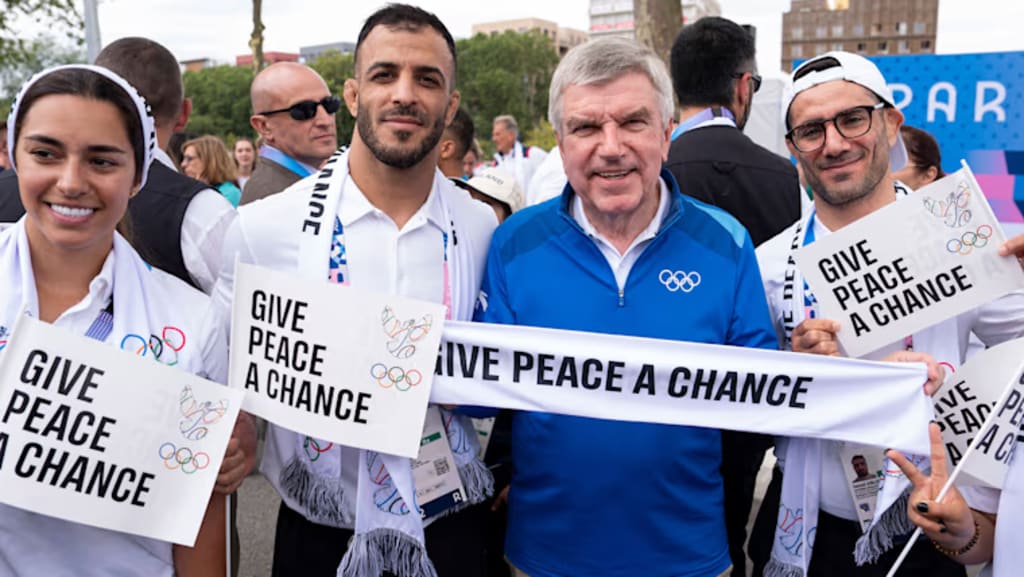
The Olympics have long been more than just a global sports competition. Since its inception in ancient Greece and the revival in 1896, the Olympic Games have grown into a major event that transcends sport, becoming a symbol of peace, unity, and global cooperation. Although the primary purpose of the Olympics is to promote athletic excellence, its role in advancing global peace initiatives cannot be overlooked. The Games offer a platform for fostering diplomatic relations, reducing global tensions, and promoting shared values such as respect, fairness, and cooperation among Nations.
The Olympic Truce: A Historical Foundation for Peace
One of the most significant ways in which the Olympics contribute to peace is through the tradition of the Olympic Truce. This practice dates back to the ancient Olympic Games in Greece, when warring city-states would agree to halt hostilities for the duration of the event, allowing athletes and spectators to travel safely to Olympia. The truce, known as the “Ekecheiria,” was a symbol of the potential for peace even in times of war.
In the modern era, the idea of the Olympic Truce was revived by the International Olympic Committee (IOC) in 1992. The United Nations General Assembly unanimously adopted a resolution calling for a cessation of hostilities during the Games, urging countries to observe a peaceful environment. The truce is not legally binding, but it holds significant diplomatic weight, as many countries adhere to it out of respect for the global unity the Olympics represent. Although the truce has not always been observed, its symbolic importance remains powerful, encouraging dialogue and cooperation among nations, even amidst conflicts.
Promoting Diplomacy and International Relations
The Olympic Games have served as a stage for diplomatic breakthroughs and fostering international relations. The presence of athletes, officials, and dignitaries from across the world provides a unique opportunity for face-to-face interaction and dialogue. The Games have seen historic moments of diplomatic rapprochement, where bitter rivals have used the event to engage in peaceful gestures.
One of the most famous examples is the “Ping Pong Diplomacy” that occurred during the 1971 World Table Tennis Championships in Japan, leading to a thawing of relations between the United States and China. This moment set the stage for President Nixon’s groundbreaking visit to China in 1972. The Olympics also played a key role in the peaceful end of the Cold War. The 1980 Moscow Olympics and the 1984 Los Angeles Olympics were marked by boycotts, yet these events did not prevent the gradual easing of tensions between the United States and the Soviet Union, which culminated in the eventual collapse of the USSR.
The Games offer an unparalleled platform for Nations to display their commitment to peace and collaboration. Even during times of political conflict, athletes from conflicting nations often find common ground, sharing the same platform in the spirit of competition and mutual respect. The Olympics provide a neutral venue where political differences can be set aside in favor of athletic achievement and camaraderie.
The Role of Olympic Values in Peacebuilding
The core values of the Olympic movement—excellence, friendship, and respect—are central to its peace-building efforts. These principles encourage athletes to strive for personal and team success while fostering mutual understanding and respect for others. The Olympic movement promotes inclusivity, bringing together people of diverse races, religions, and cultures, allowing them to celebrate their shared humanity.
In recent years, the IOC has actively worked to integrate peace initiatives into the Games. The inclusion of athletes from countries experiencing conflict, such as the Refugee Olympic Team in 2016 and 2020, exemplifies the Games’ commitment to peace and solidarity. By providing a platform for refugees to participate, the IOC sends a powerful message of hope and unity, showing that even in the face of displacement and adversity, peace and collaboration are possible.
Moreover, the Olympic Games serve as a means of promoting gender equality and social justice. The increasing participation of women in the Olympics—evidenced by the first-ever gender-equal Games in Tokyo 2020—has contributed to challenging stereotypes and empowering women globally. This progressive shift supports the broader peace agenda, as gender equality is a key factor in sustainable development and global stability.
The Olympics as a Catalyst for Social Change
In addition to promoting diplomacy and human unity, the Olympics have also catalyzed social change in host countries and around the world. Hosting the Olympics brings global attention to issues such as poverty, human rights, and the environment, creating opportunities for host cities to showcase their commitment to positive change. For example, the 2012 London Olympics were a platform for promoting sustainability, while the 2020 Tokyo Olympics featured a focus on inclusivity and accessibility for athletes with disabilities.
Athletes themselves have also used the Olympic stage to raise awareness about global issues and advocate for peace. Some notable moments include the Black Power salute by Tommie Smith and John Carlos at the 1968 Mexico City Olympics, which brought attention to racial inequality in the United States, and the peace gesture by South Korean gymnast Lee Eun-ju at the 2018 Pyeongchang Winter Olympics. These acts of protest and solidarity serve as reminders of the power of the Olympics to highlight social injustices and promote peace on a global scale.
In The End
The Olympics have a long history of advancing global peace initiatives through diplomacy, the Olympic Truce, the promotion of shared values, and the advocacy for social change. While the Games are a celebration of athletic achievement, they also represent a powerful symbol of what can be achieved when nations come together in the spirit of mutual respect and cooperation. The Olympics continue to provide hope for a world where, through dialogue and collaboration, peace can be pursued both on and off the field.
About the Creator
Badhan Sen
Myself Badhan, I am a professional writer.I like to share some stories with my friends.
Keep reading
More stories from Badhan Sen and writers in Gamers and other communities.
THE FLIGHT FOR RACIAL EQUALITY AT THE 1960 ROME OLYMPICS
The 1960 Rome Olympics marked a significant moment in the global struggle for racial equality. Held in Italy, a country with a rich history of political and social change, the games became a platform for African-American athletes who used their athletic prowess to challenge racial injustice. While the Olympics are often viewed through the lens of athletic achievement, the 1960 Games were notably shaped by the growing civil rights movement in the United States, setting the stage for future protests and raising global awareness of racial discrimination.
By Badhan Senabout a year ago in Gamers
U4gm Energy Shield, Spirit, and Skill: Witch Meta Explained
If you’ve been diving into Path of Exile 2 lately, you’ve probably noticed that some Witch builds just feel… unstoppable. Fast clears, consistent DPS, and solid survivability seem baked into the top-tier setups. The secret isn’t a single skill or flashy item—it’s a combination of Energy Shield, Spirit stacking, and skill scaling, carefully balanced to create a meta-defining powerhouse.
By Billo Nali5 days ago in Gamers
The Ever-Evolving World of PC Gaming
For more than thirty years, PC gaming has quietly shaped how people interact with digital worlds. What began as simple text commands typed into blinking screens has evolved into richly detailed universes filled with complex characters, competitive environments, and creative expression. While consoles and mobile devices continue to attract large audiences, PC gaming remains distinct because it grows alongside the technology that supports it rather than being limited by fixed hardware cycles.
By Hawaiian Malia6 days ago in Gamers



Comments (1)
Good job, but why does politics have to be a part of the Olympics anyhow.