
THE ROLE OF PUBLIC AND PRIVATE INVESTMENT IN OLYMPIC GAMES
Balancing Financial Responsibility and Economic Growth Through Collaboration Between Public and Private Sectors.

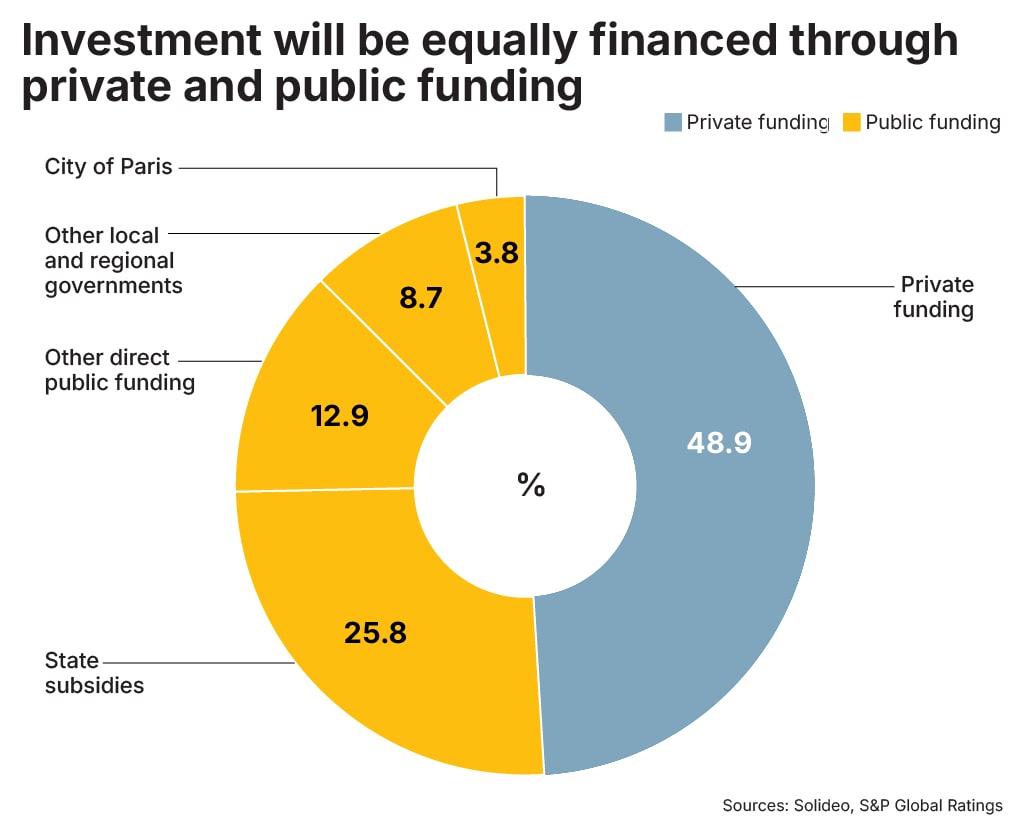
The Olympic Games, one of the world’s largest sporting events, require substantial investment to ensure successful preparation and execution. These investments come from both public and private sectors, each playing crucial roles in financing, infrastructure development, and event operations. The interplay between public and private investment often determines the economic and social legacy of the games, influencing the host city’s future.
(I)Public Investment: Infrastructure Development and Social Benefits
Public investment in the Olympic Games typically comes from the government, at local, regional, or national levels. One of the primary contributions of public investment is the construction and upgrading of infrastructure. Olympic Games require a vast array of sports facilities, housing for athletes, transportation networks, and sometimes, even a complete overhaul of the city’s urban planning to accommodate the influx of international visitors and participants. The development of such infrastructure is often a long-term benefit for the host city, as these facilities can remain in use for years after the Games have concluded.
For instance, the Beijing 2008 Olympics saw significant public investment in building sports venues like the iconic Bird’s Nest Stadium and new transportation networks such as an airport terminal extension and a high-speed rail link. Similarly, the London 2012 Olympics resulted in the regeneration of the East London area, with investments in new housing, parks, and commercial facilities. These long-term infrastructural improvements can stimulate economic growth, enhance the quality of life for residents, and provide lasting benefits beyond the event itself.
Moreover, public funding often covers the operational costs of the Games, including the organization, security, and welfare of athletes and spectators. The government’s role in guaranteeing the Games' security, particularly in light of potential terrorism threats and the complex logistics of handling large crowds, cannot be overstated. In this sense, public investment aims not only to build the physical infrastructure but also to ensure the social stability required to host such a large international event.
(II)Private Investment: Sponsorship, Media Rights, and Commercial Partnerships
Private investment is integral to the financial success of the Olympic Games. Large multinational corporations, through sponsorship deals, play a pivotal role in funding the Games. These companies provide essential financial backing in exchange for advertising and branding rights, which allows them to reach global audiences during the event. Some notable Olympic sponsors include companies like Coca-Cola, Visa, and Toyota, which contribute substantial sums to the Olympic coffers.
Private investment also comes in the form of media rights sales, where television broadcasters and digital platforms purchase the rights to air the Games. The International Olympic Committee (IOC) sells broadcasting rights globally, with media networks like NBC and Eurosport bidding for exclusive access. The revenue generated from media rights is one of the largest income sources for the Olympic movement and is distributed among the IOC, National Olympic Committees, and sports federations. For example, the media rights for the 2020 Tokyo Olympics generated around $4 billion. This influx of private capital supports not only the operational costs of the Games but also promotes Olympic sports through wide international coverage.
Additionally, the Games rely on private partnerships to manage logistics, technology, and branding. Companies specializing in event management, catering, transportation, and hospitality often step in to ensure the smooth functioning of the Games. These private entities contribute both in-kind services and direct funding, ensuring that the event runs efficiently while also profiting from the commercial opportunities it presents.
(III)Balancing Public and Private Investment
The balance between public and private investment can have a significant impact on the financial and social legacy of the Games. Ideally, a well-balanced partnership between the two sectors can maximize the Games' long-term benefits. Public funds ensure the creation of lasting infrastructure, while private investments guarantee that the event runs smoothly and generates significant global exposure.
However, the reliance on private investment can lead to challenges. In some cases, cities have experienced financial difficulties due to overly optimistic projections of revenue from private sources. For example, the Athens 2004 Olympics faced budget overruns, partly due to an overestimation of the revenue that could be generated through ticket sales and sponsorships. Similarly, the Rio 2016 Olympics were marked by significant financial challenges, with both public and private sectors struggling to recoup the costs of infrastructure development.
On the other hand, the 2012 London Olympics is often cited as a success story in terms of managing both public and private funds. The UK government invested heavily in infrastructure improvements, while private sponsorships, media rights, and ticket sales helped cover operational costs. Moreover, the Games left behind a legacy of urban regeneration and increased tourism, making it a model for future host cities.
In The End: A Delicate Balance
Both public and private investments are essential for the successful staging of the Olympic Games. Public investments, often focused on infrastructure and security, provide the foundational framework for the event. Private investments, through sponsorships, media rights, and commercial partnerships, ensure the financial sustainability of the Games and enable global visibility.
However, the balance between these two sectors must be carefully managed to avoid the pitfalls of over-expenditure and unfulfilled revenue expectations. When executed successfully, the Olympic Games can leave a lasting legacy, benefiting both the host city and the global sporting community.
About the Creator
Badhan Sen
Myself Badhan, I am a professional writer.I like to share some stories with my friends.
Keep reading
More stories from Badhan Sen and writers in Gamers and other communities.
THE EFFECT OF THE OLYMPICS ON PROPERTY VALUES IN HOST CITIES
The Olympic Games are one of the largest global sporting events, with the potential to impact various sectors of a host city's economy, including property values. Hosting the Olympics brings international attention, boosts tourism, and results in significant infrastructure development, all of which can affect the local real estate market. However, the long-term effects on property values are mixed and depend on several factors such as the location, the nature of the investment, and the post-Olympic legacy.
By Badhan Senabout a year ago in Gamers
How to Get the Vortex Beater in Palworld: Sealed Realm of Terraria Guide
The endgame of Palworld has evolved significantly with the introduction of the crossover-inspired dungeons, and nothing captures the imagination of players quite like the Sealed Realm of Terraria.
By Richard Bailey3 days ago in Gamers
Forza horizon 5 treasure hunt 30k is the game
What Is a Treasure Hunt in Forza Horizon 5? Treasure Hunts are optional mini-quests in Forza Horizon 5 that send you on a simple scavenger hunt using clues. Completing one earns 30,000 Credits (30K), which you can use to buy cars, upgrades, or cosmetics.
By Games Mode On2 days ago in Gamers



Comments
There are no comments for this story
Be the first to respond and start the conversation.