
THE ROLE OF POLITICS IN THE SELECTION OF OLYMPIC HOST CITIES
How Geopolitical Interest Shape the Olympic Games

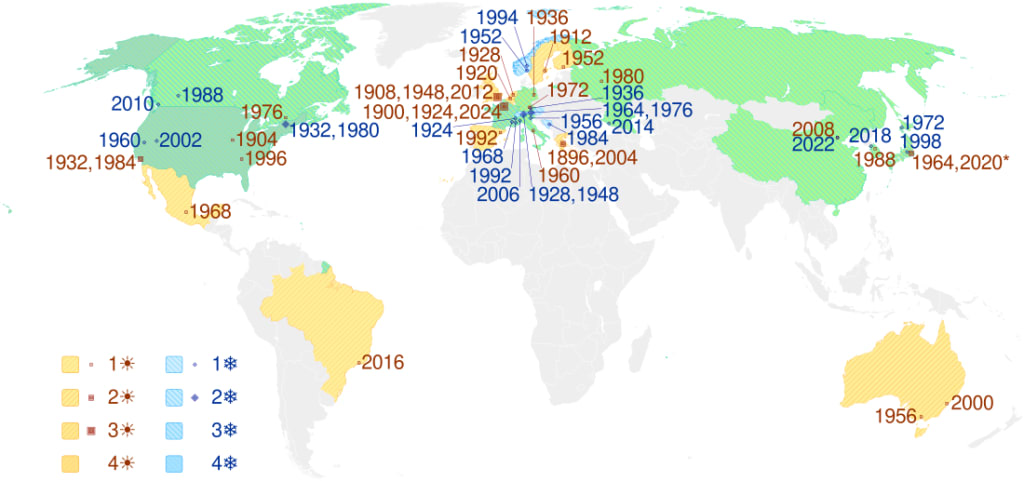
The Role of Politics in the Selection of Olympic Host Cities
The selection of a host city for the Olympic Games is one of the most prestigious events in global sports, but it is also deeply intertwined with politics. The decision to host the Olympics involves multiple factors, ranging from infrastructure readiness to the city's ability to handle large-scale international attention. However, political considerations often play a significant role in determining which cities are selected to hold the Games. Over the years, the Olympic bidding process has demonstrated how politics, both international and local, influence the outcome of this decision.
The Influence of National and International Politics
International politics can significantly shape the selection process for Olympic host cities. This is particularly evident in the interaction between countries and the International Olympic Committee (IOC), the governing body responsible for choosing the host city. In some cases, the Olympics are awarded to cities in countries with strong diplomatic ties to the IOC members, as they may consider the political or economic alliances when making their decision.
For example, during the Cold War era, the geopolitical rivalry between the Soviet Union and the United States had a major impact on the Olympics. In 1980, Moscow hosted the Summer Olympics, but the Games were marred by a boycott led by the United States and several of its allies in protest against the Soviet Union's invasion of Afghanistan. Four years later, the 1984 Los Angeles Olympics were similarly affected by a boycott, this time initiated by the Soviet Union and its allies. The IOC’s ability to maintain the Games as a platform for political expression is often challenged by these political tensions.
Additionally, countries with economic or military power sometimes gain an advantage in the bidding process. The wealth and international clout of these nations can be persuasive, especially when cities from economically weaker countries bid for the same event. For instance, the bid for the 2008 Beijing Olympics was seen as a way for China to establish itself as a global power and showcase its economic progress. The IOC's decision to award Beijing the Games in 2001 was influenced, in part, by China’s rising influence on the world stage.
The Role of Local Politics
At the local level, the political landscape of the bidding city itself can significantly impact the decision. Local governments are often responsible for presenting the bid, and their political agendas and priorities can shape the proposals put forward. A city's local government’s support for the Games is crucial, as the city must make substantial investments in infrastructure and services, and the political leadership's willingness to support the Games is a determining factor in the overall success of the bid.
The political leadership of the city, such as mayors, governors, and other officials, can often make promises to the IOC about the city's commitment to hosting a successful event. For example, in the case of London’s bid for the 2012 Olympics, then-Mayor Boris Johnson’s active promotion of the Games played a significant role in securing the bid. The promise of long-term economic and social benefits, such as job creation, tourism, and urban development, can make the bid more attractive.
However, political dynamics within the city can also lead to complications in the bidding process. In the case of the 2022 Winter Olympics, the city of Oslo, Norway, withdrew its bid for political reasons after local political leaders raised concerns over the cost of the Games and their long-term impact on public spending. This reflects the internal challenges that can arise when local politics collide with the costs and obligations of hosting the Games.
Economic and Social Factors
While political factors often dominate the Olympic bidding process, the economic and social implications of hosting the Games are also considered. Cities must present an economically viable plan to fund the construction of sports venues, infrastructure improvements, and transportation systems. The perception that the Games will stimulate economic growth and social progress can make a city more appealing to the IOC, but the political leadership must also convince the IOC that these promises will be fulfilled.
Cities in developing countries sometimes face challenges in securing the Games due to concerns over the long-term financial impact. In 2004, Athens was awarded the Summer Olympics, but the Greek government’s inability to manage the budget led to significant cost overruns and delays, casting a shadow over the city's post-Olympic legacy. Similarly, in the 2016 Rio Olympics, political and financial instability in Brazil, along with widespread corruption scandals, led to controversies over the handling of the Games.
The IOC and Transparency
The IOC has been criticized over the years for the lack of transparency in the bidding process. Political influence, lobbying, and backroom deals have raised questions about the fairness of the selection procedure. In response, the IOC has taken steps to reform the bidding process to make it more transparent. The implementation of new bidding rules, including the introduction of a more detailed evaluation system, is meant to reduce the influence of political lobbying and ensure that the Games are awarded to cities that are both capable and responsible.
Conclusion
In conclusion, the selection of a host city for the Olympic Games is influenced by a variety of political factors, including international relations, local government support, economic and social considerations, and lobbying efforts. Politics, whether domestic or global, plays a central role in the Olympic bidding process, and this dynamic often shapes the final decision. While the IOC strives for fairness and transparency, the ongoing influence of politics is an inescapable reality of the Olympic Games. As the world continues to evolve, it remains to be seen how political factors will continue to shape the future of Olympic hosting.
About the Creator
Badhan Sen
Myself Badhan, I am a professional writer.I like to share some stories with my friends.
Keep reading
More stories from Badhan Sen and writers in Gamers and other communities.
THE BOYCOTT OF THE 1980 MOSCOW OLYMPICS
The Boycott of the 1980 Moscow Olympics The 1980 Summer Olympics, held in Moscow, Soviet Union, became one of the most politically charged events in Olympic history. The games were marred by a massive boycott, led by the United States and joined by many other countries, in protest against the Soviet Union's invasion of Afghanistan in December 1979. The boycott, which affected the participation of more than 60 nations, dramatically altered the atmosphere of the Games and cast a shadow over the competition.
By Badhan Senabout a year ago in Gamers
Rsvsr Master Monopoly GO: Daily Strategies for Maximum Rewards
Monopoly GO takes the classic board game to a whole new level, combining strategy, chance, and real-time events with a wealth of rewards. Whether you’re a casual player or a competitive strategist, understanding daily events and planning your gameplay is essential to maximize progress and earn more dice, cash, and rare items.
By Billo Nali3 days ago in Gamers
Rsvsr Maximize Your Rewards in Monopoly GO! with Smart Event Strategies
Mobile board games have evolved far beyond their original roll-and-move mechanics, and Monopoly GO! demonstrates this evolution brilliantly. Instead of relying solely on luck, the game introduces dynamic events, tournaments, limited-time boosts, and daily missions that reward strategy and planning. Understanding how these systems work can help both casual players and dedicated strategists make the most of their gameplay and maximize in-game rewards.
By Dangyc Ding4 days ago in Gamers
The Solitude of The Chupacabra
Many say that the Chupacabra is a rather recent and modern tale, a mangy coyote or rabied dog. Some point out that it’s just twisted evolution. But very few know the true backstory of the shapeshifter that led to the bloodsucking legend. And perhaps once you will come to know and understand more, you might “forget” a few cattle out to wander.
By Oneg In The Arctic3 days ago in Fiction



Comments (1)
Great article. It is a shame that politics has to enter the games at all.