
THE BOYCOTT OF THE 1980 MOSCOW OLYMPICS
The Boycott of the 1980 Moscow Olympics:A Political Protest.

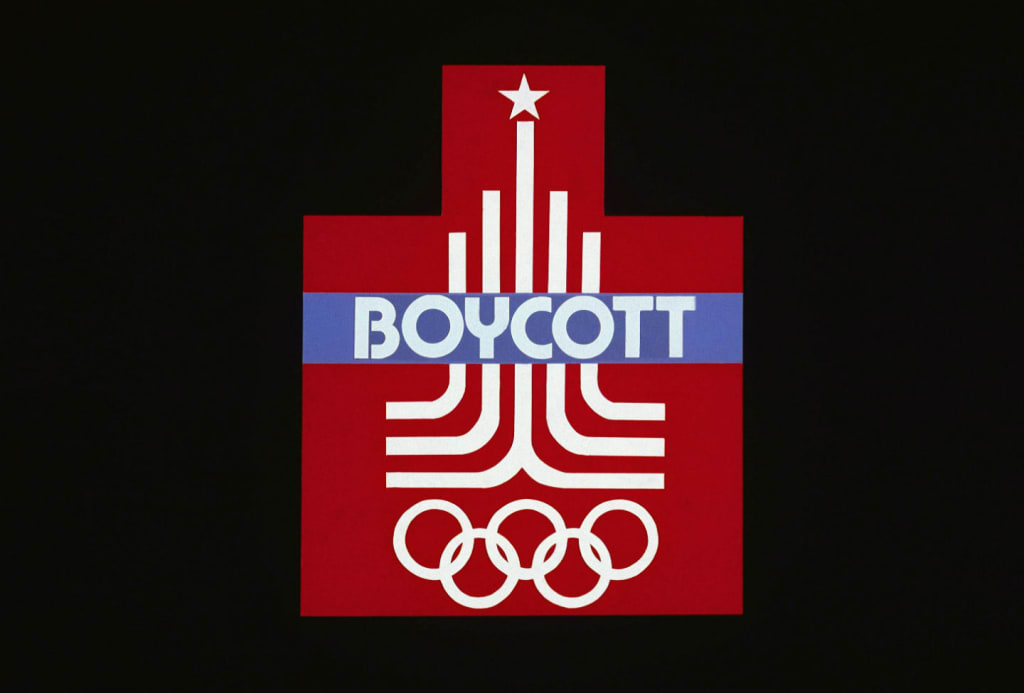
The Boycott of the 1980 Moscow Olympics
The 1980 Summer Olympics, held in Moscow, Soviet Union, became one of the most politically charged events in Olympic history. The games were marred by a massive boycott, led by the United States and joined by many other countries, in protest against the Soviet Union's invasion of Afghanistan in December 1979. The boycott, which affected the participation of more than 60 nations, dramatically altered the atmosphere of the Games and cast a shadow over the competition.
The Background to the Boycott
In December 1979, the Soviet Union, under the leadership of Leonid Brezhnev, invaded Afghanistan. The move was met with international condemnation, as it was seen as an expansionist action by the Soviet Union into a neighboring country. The invasion was part of the Soviet Union's efforts to support the communist government in Afghanistan, which was facing an insurgency from anti-communist forces. This intervention was seen as a significant escalation of the Cold War between the United States and the Soviet Union.
The United States, under President Jimmy Carter, viewed the Soviet invasion as a threat to global peace and security. Carter, who had already been critical of the Soviet regime’s human rights abuses, declared that the U.S. would not participate in the 1980 Olympics if the Soviet Union did not withdraw its troops from Afghanistan. Carter’s decision was influenced by a desire to send a strong political message against Soviet aggression, but it also had broader implications for international relations and diplomacy.
The Call for Boycott
On January 20, 1980, President Carter officially announced that the United States would lead a boycott of the Moscow Olympics unless the Soviet Union withdrew from Afghanistan by February 20, 1980. In his address, Carter called on other nations to join the boycott, citing the invasion as a violation of international law and an affront to the Olympic spirit of peace and goodwill.
The Soviet Union, however, was unmoved by Carter’s ultimatum. Soviet officials remained steadfast in their decision to continue their military operations in Afghanistan, despite international pressure. As a result, Carter's call for a boycott gained traction. The United States was soon joined by other countries, particularly those aligned with Western interests or members of NATO. In total, 65 nations, including Canada, West Germany, and Japan, decided to join the boycott.
The reasons for joining the boycott varied. Some countries, such as Canada, were deeply aligned with the U.S. politically and supported its position on the Soviet invasion. Others, such as Japan, were concerned about maintaining political and economic stability in their regions. Several African nations also supported the boycott as part of a broader movement against Soviet policies in Africa and in response to apartheid in South Africa. In total, the boycott represented a significant portion of the world’s population, although some notable nations, such as China, continued to participate.
The Impact on the Games
The Moscow Olympics were meant to be a celebration of Soviet strength and political influence, but the boycott had a significant impact on the Games. Of the countries that participated, many of the world's top athletes were absent. The United States, which had traditionally been a dominant force in Olympic competition, was notably missing from key events like track and field, swimming, and basketball. The absence of American athletes created an imbalance in competition, as the U.S. had some of the world's best athletes in these disciplines.
Moreover, some of the athletes who did compete were criticized for participating in an event that was widely perceived as politically compromised. Many countries found themselves caught between politics and sports, and some athletes expressed disappointment at the loss of an opportunity to compete on the world stage. For instance, some American athletes who had qualified for the Games were disappointed that their chance to participate was dashed by the political standoff.
However, the boycotted Olympics still went ahead with a reduced but still impressive field of competitors. The Soviet Union, which had been preparing for years to host the event, won the most gold medals, taking home 80 in total, far ahead of second-place Romania and third-place East Germany. Despite the absence of key competitors, the Soviet Union managed to solidify its position as a global superpower, showcasing its strength in sports and its ability to host major international events.
Political Repercussions
The 1980 Moscow Olympics are often seen as a demonstration of the power of sports as a political tool. The boycott highlighted the deep political divisions of the Cold War era and the ways in which the Olympic Games were used as a platform for expressing political ideologies and national interests. For the United States, the boycott was an attempt to isolate the Soviet Union and raise global awareness about the Soviet invasion of Afghanistan. For the Soviet Union, the Games were an opportunity to showcase its power and to demonstrate that it could still host a major international event despite global political tensions.
On a broader level, the boycott reinforced the idea that the Olympics were not just about athletic competition but also about national pride and global politics. It also set a precedent for future Olympic boycotts, as the 1980 boycott was followed by a retaliatory boycott of the 1984 Los Angeles Olympics by the Soviet Union and other communist countries. The 1984 boycott, in turn, led to further polarization in the Olympic movement, with political tensions continuing to overshadow the spirit of the Games for years to come.
Conclusion
The 1980 Moscow Olympics remain one of the most politically charged in Olympic history, largely due to the widespread boycott led by the United States. The boycott, driven by the Soviet Union's invasion of Afghanistan, cast a long shadow over the event and highlighted the intersection of sports and politics during the Cold War. While the Olympics still went on, the absence of many of the world’s top athletes and the political tension surrounding the Games left a lasting impact on the Olympic movement and set the stage for future political conflicts in the world of international sports.
About the Creator
Badhan Sen
Myself Badhan, I am a professional writer.I like to share some stories with my friends.
Keep reading
More stories from Badhan Sen and writers in Gamers and other communities.
THE 1936 BERLIN OLYMPICS AND ITS POLITICAL SIGNIFICANCE
The 1936 Berlin Olympics and Its Political Significance The 1936 Berlin Olympics, held under the shadow of Nazi Germany, stand as one of the most politically charged events in Olympic history. This article delves into the social and political backdrop of the Games, their role in Nazi propaganda, and the enduring moments of defiance and unity that emerged.
By Badhan Senabout a year ago in Gamers
Babbling Dixie
The short form of tomorrow is never the whole story. Abbreviations mean nothing when we are born to die and we all are aren't we? Being spoken for before birth is something we're not supposed to remember like some kind of karma after effect. Still here we are spending our lives looking for each other.
By Canuck Scriber Lisa Lachapelleabout 6 hours ago in Fiction



Comments (1)
What a great historical piece of politics and athleticism. Great work.