
THE ROLE OF ANTI-DOPING ORGANIZATION IN THE OLYMPICS
Ensuring Fair Play and Athlete Integrity in Global Sports

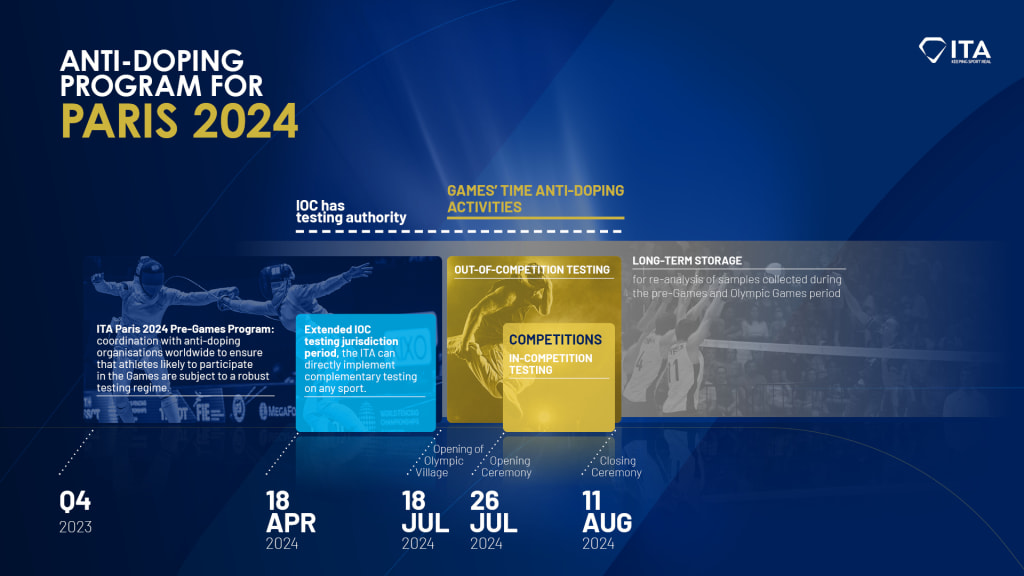
The Olympic Games, which embody the spirit of excellence, equality, and fair competition, have long been the stage for extraordinary athletic achievements. However, with the intense pressure to perform at the highest level, doping has remained a significant concern in sports. To maintain the integrity of the Games and ensure fair competition, anti-doping organizations (ADOs) play a crucial role. These organizations are responsible for enforcing the rules, testing athletes, and preventing the use of performance-enhancing drugs (PEDs). Their efforts are essential in preserving the values of the Olympic movement, ensuring that the athletes compete on a level playing field, and promoting the health and safety of competitors.
(I)The International Olympic Committee (IOC) and Anti-Doping
The IOC, as the governing body of the Olympic Games, takes the issue of doping very seriously. The World Anti-Doping Agency (WADA), established in 1999, is the primary organization responsible for coordinating efforts to combat doping in Olympic sports. WADA’s mission is to promote and coordinate the global effort to combat doping in sports, setting the standards for testing and education.
WADA’s World Anti-Doping Code provides the foundation for all anti-doping activities, setting clear guidelines on what constitutes doping, the methods of testing, and the procedures for handling violations. The Code is adopted by all Olympic sports federations and anti-doping organizations worldwide. The IOC works in close collaboration with WADA to ensure that these regulations are enforced consistently across the Games.
(II)The Role of National Anti-Doping Organizations (NADOs)
While WADA oversees the global anti-doping effort, each country has its own National Anti-Doping Organization (NADO). These organizations are responsible for implementing the anti-doping program in their respective countries, including testing athletes, providing educational programs, and enforcing sanctions for those caught violating doping rules. For example, USADA (United States Anti-Doping Agency), UKAD (UK Anti-Doping), and ASADA (Australian Sports Anti-Doping Authority) are some of the key NADOs.
NADOs collaborate with WADA and international federations to conduct testing at the national level. They are also responsible for developing anti-doping policies tailored to the needs of athletes within their countries, promoting a culture of clean sport. These organizations ensure that athletes are educated about the risks of doping, how to avoid unintentional violations, and the consequences of using performance-enhancing substances.
(III)Testing and Detection Methods
One of the key responsibilities of anti-doping organizations is to conduct drug testing to identify athletes who use banned substances. Anti-doping testing is carried out both in and out of competition. Athletes can be tested during training or at any point in time during major events, including the Olympics.
The testing process begins with the collection of a sample, typically urine or blood. Samples are then sent to WADA-accredited laboratories, where they are analyzed for banned substances or methods. These labs use sophisticated technology and techniques to detect even minute traces of PEDs, including blood doping, steroid use, and other performance-enhancing drugs like stimulants and growth hormones.
Athletes are subject to a strict code of conduct, including providing whereabouts information for out-of-competition testing. If an athlete is found to have used a banned substance, they face serious consequences, including suspensions, stripping of medals, or even lifetime bans in some cases.
(IV)Sanctions and Consequences
Anti-doping organizations play a critical role in ensuring that those who cheat are held accountable. When an athlete tests positive for a banned substance, the relevant NADO, in consultation with WADA and the IOC, determines the appropriate sanction based on the severity of the violation. The penalties vary depending on the type of doping violation, ranging from suspensions and fines to disqualification from events or the stripping of medals.
One of the most high-profile instances of anti-doping enforcement in the Olympics was the case of Lance Armstrong, the American cyclist who was stripped of his seven Tour de France titles after being found guilty of doping. While Armstrong’s case was not directly related to the Olympics, it highlighted the global importance of anti-doping efforts in all sports, including the Games.
The legal process surrounding anti-doping violations is designed to ensure that accused athletes receive a fair trial. However, the reputation and integrity of the Games are at stake, and anti-doping organizations are committed to preserving the spirit of sport by holding athletes accountable.
(V)Promoting a Clean and Fair Olympics
Anti-doping organizations also engage in educational initiatives aimed at raising awareness among athletes about the dangers of doping, including the health risks and the moral implications. The goal is not only to catch those who cheat but also to prevent doping by fostering a clean sport culture.
WADA’s educational programs emphasize the importance of athletes making informed decisions about what they put in their bodies. These programs include information on banned substances, as well as the risks of taking supplements that may unknowingly contain PEDs. Additionally, the IOC and other Olympic stakeholders support initiatives that focus on mental health, stress management, and ethical behavior in sports, which can reduce the temptation for athletes to turn to doping.
End
The role of anti-doping organizations in the Olympics is vital to maintaining the credibility and integrity of the Games. These organizations work tirelessly to ensure that athletes compete fairly and that their accomplishments are the result of hard work, dedication, and natural talent. Through rigorous testing, education, and collaboration, anti-doping organizations safeguard the values of fair play and sportsmanship, ensuring that the Olympic Games remain a celebration of human excellence.
About the Creator
Badhan Sen
Myself Badhan, I am a professional writer.I like to share some stories with my friends.
Keep reading
More stories from Badhan Sen and writers in Gamers and other communities.
THE RUSSIAN DOPING SCANDAL AND THE 2016 OLYMPICS
The Russian doping scandal is one of the most significant controversies in the history of the Olympic Games. It exposed a state-sponsored system of doping that was aimed at boosting the performance of Russian athletes at various international events, including the 2016 Summer Olympics in Rio de Janeiro. The scandal, which was uncovered in 2014 and continued to evolve over the following years, not only shook the athletic world but also raised concerns about the integrity of global sports and the effectiveness of anti-doping measures.
By Badhan Senabout a year ago in Gamers
Rsvsr Helldivers 2: Entrenched Division Warbond Brings Trenches, Tactics, and Explosive Firepower
Helldivers 2 is taking combat to a whole new level with its latest Premium Warbond update: Entrenched Division, set to launch on March 17, 2026. Designed for both solo adventurers and coordinated squads, this update introduces a full suite of new weapons, tactical gadgets, and immersive WW1-inspired gear, creating the ultimate trenches warfare experience.
By Billo Nali5 days ago in Gamers
7 Intelligent Automation Skills That Define AI Digital Assistants
AI Digital assistants or virtual assistants are smart software applications/programs that use Artificial Intelligence to help you with your daily tasks. The software functions as a personal assistant that operates through voice and text commands. These tools use natural language processing and machine learning to understand exactly what you need. They can manage your schedule, emails, or even control your smart devices.
By Arthur Leo4 days ago in Gamers




Comments
There are no comments for this story
Be the first to respond and start the conversation.