
THE RUSSIAN DOPING SCANDAL AND THE 2016 OLYMPICS
State-Sponsored Doping,Corruption,and the Fight for Fairness.

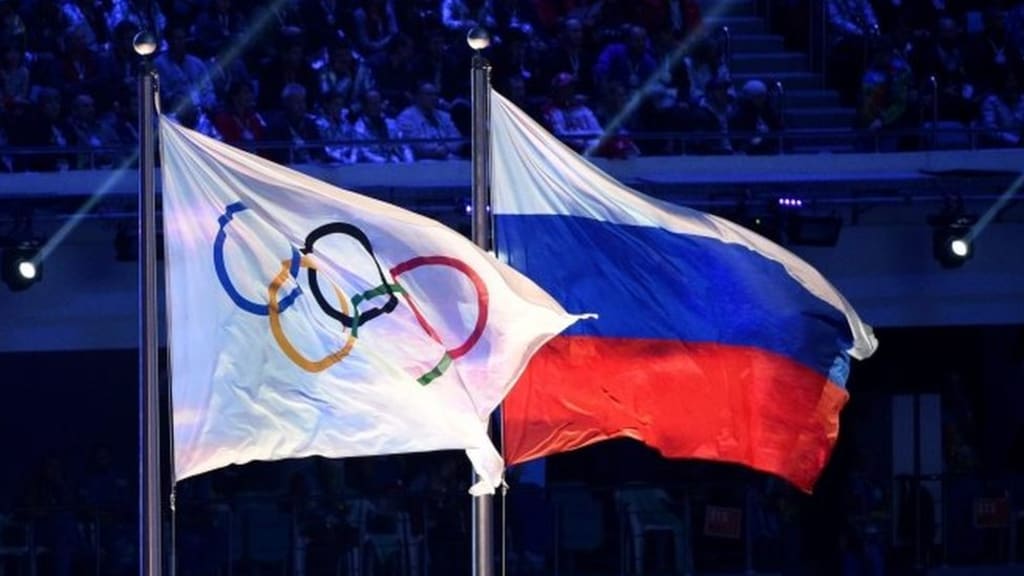
The Russian doping scandal is one of the most significant controversies in the history of the Olympic Games. It exposed a state-sponsored system of doping that was aimed at boosting the performance of Russian athletes at various international events, including the 2016 Summer Olympics in Rio de Janeiro. The scandal, which was uncovered in 2014 and continued to evolve over the following years, not only shook the athletic world but also raised concerns about the integrity of global sports and the effectiveness of anti-doping measures.
The Beginning of the Scandal
The Russian doping scandal was brought to light in 2014, when former Russian anti-doping laboratory director Grigory Rodchenkov defected to the United States. Rodchenkov revealed that Russia had orchestrated a state-sponsored doping program, which involved systematically masking drug use during international competitions, including the 2014 Sochi Winter Olympics. According to Rodchenkov’s testimony, Russia’s secret services were involved in concealing positive test results and replacing contaminated urine samples with clean ones.
Rodchenkov’s revelations sparked a full investigation led by the World Anti-Doping Agency (WADA). The subsequent report by Canadian lawyer Richard McLaren in 2016 confirmed that Russia had engaged in a large-scale, state-supported doping operation. McLaren's findings suggested that over 1,000 Russian athletes had been involved in the scandal, across more than 30 sports, including athletics, weightlifting, and swimming.
The Impact on the 2016 Olympics
The 2016 Summer Olympics in Rio de Janeiro took place amidst the fallout from these revelations. Although many Russian athletes were initially banned from competing at the Rio Olympics, the International Olympic Committee (IOC) did not impose a blanket ban on the Russian team. Instead, individual athletes were assessed on a case-by-case basis to determine whether they had been involved in doping.
In the end, 271 Russian athletes were cleared to participate, but several high-profile names were banned, including some of Russia’s leading track and field stars. Notably, the Russian track and field team was completely excluded from the Rio Olympics, after the International Association of Athletics Federations (IAAF) upheld a ban on the country's track and field federation due to the evidence of widespread doping.
Despite the limited exclusions, the cloud of suspicion hung over the Russian athletes who were allowed to compete. The IOC’s decision not to impose a full ban left many critics questioning whether the response was strong enough. Some believed that the IOC’s leniency in allowing Russian athletes to participate was a missed opportunity to send a firm message against doping in sports.
Notable Cases of Doping at the 2016 Olympics
During the Rio Olympics, there were notable instances where Russian athletes were either disqualified or had their medals stripped due to doping violations. One of the most high-profile cases was that of Yulia Stepanova, a former Russian athlete who had blown the whistle on the doping practices in her home country. Stepanova was banned from the Olympics due to a positive test in 2013, but her actions helped to expose the depth of Russia’s doping culture.
In addition, several medals were stripped from Russian athletes after re-analysis of samples taken from the 2012 London Olympics revealed traces of performance-enhancing drugs. This included the disqualification of Russian relay teams who had initially finished in the top positions. These incidents served as further evidence of the extent to which doping had been integrated into Russia's sporting system.
The Aftermath and Long-Term Consequences
In the years following the 2016 Olympics, the Russian doping scandal continued to dominate international sport. The World Anti-Doping Agency (WADA) imposed severe sanctions on Russia, suspending the Russian Anti-Doping Agency (RUSADA) for failing to cooperate with investigations. The Court of Arbitration for Sport (CAS) also upheld several bans on individual athletes who had been implicated in doping, including athletes who had competed at the 2016 Rio Games.
In December 2019, WADA handed down a four-year ban to Russia, barring the country from competing in major international events, including the 2020 Tokyo Olympics and the 2022 Beijing Winter Olympics. However, the ruling allowed Russian athletes to compete under a neutral flag if they were not implicated in the doping scandal. As a result, the International Olympic Committee banned Russia from using its name, flag, and anthem during the 2020 and 2022 Games.
Despite these sanctions, Russia’s involvement in global sport remains a contentious issue. The controversy surrounding Russia's state-sponsored doping program has led to ongoing debates over the effectiveness of the international anti-doping system. Critics argue that the punishments imposed on Russia have not been strong enough to deter other countries from engaging in similar practices. Others contend that the scandal highlights the need for deeper reform within the international sports community.
End
The Russian doping scandal, particularly its impact on the 2016 Rio Olympics, remains one of the darkest chapters in Olympic history. The exposure of a state-sponsored doping program brought the issue of cheating in sports to the forefront, forcing sports organizations and governments to reexamine their approach to doping enforcement. While some Russian athletes were banned, the decision to allow others to compete under a neutral flag left many questioning whether justice had been fully served. The scandal continues to cast a shadow over the world of sports, with the ongoing challenge of ensuring that athletes compete fairly and cleanly in the pursuit of excellence.
About the Creator
Badhan Sen
Myself Badhan, I am a professional writer.I like to share some stories with my friends.
Keep reading
More stories from Badhan Sen and writers in Gamers and other communities.
THE FALL OF MARION JONES:A TALE OF DOPING AND REDEMPTION
Marion Jones was once a name synonymous with excellence in track and field. With her powerful sprinting ability and magnetic personality, she captivated the world at the turn of the millennium. However, behind the gold medals and international fame lay a dark secret that would eventually bring her crashing down. The story of Marion Jones is a tale of unparalleled athleticism, shocking betrayal, and the long, painful journey of redemption. Her rise to stardom and fall from grace is a cautionary story of the dangers of performance-enhancing drugs and the complicated world of professional sports.
By Badhan Senabout a year ago in Gamers
Xbox Game Pass in 2026: Can the Brand Really Go Back to Exclusives?
The past week has been a fascinating one for Xbox. A major leadership shake-up has brought a new face to the forefront of the brand, with Asha Chararma stepping into a prominent leadership role. Since the announcement, the gaming community has seen a wave of reactions, PR statements, and opinion pieces discussing what this shift could mean for the future of Xbox.
By Info Post Gate5 days ago in Gamers
Rsvsr Hello Kitty Partners Event Brings Fun and Rewards to Monopoly GO
Monopoly GO keeps surprising players with fun, limited-time events, and the Hello Kitty Partners event is one of its most exciting yet. Combining cooperative gameplay, leaderboard competitions, and time-limited boosts, this event gives players a reason to roll the dice more strategically than ever.
By Billo Nali2 days ago in Gamers



Comments
There are no comments for this story
Be the first to respond and start the conversation.