
The Psychology of Silent Hill 2
How it is Easily the Most Disturbing Game I've Ever Played
Trigger Warning: Caution, this article discusses mature material that may not be appropriate for younger and more sensitive audiences.
What exactly makes a horror game scary? Of all people, I should know the answer to this question. I am no stranger to the genre. For starters, I booted up my first survival horror game at the age of five when I was introduced to Zombies Ate My Neighbors for the first time. Today, I have over four-hundred games between my PlayStation and my PC, and over half of those titles are survival horror. The list of horror games that I have conquered late at night with the lights turned down low include the likes of, and is not limited to, every Resident Evil title, every Outlast title, both of the Alan Wake titles, The Evil Within 1 and 2, Layers of Fear 1 and 2, the Fear series, Soma, Alien Isolation, The Blair With Project, Amnesia: The Dark Descent, Dead Space, Doom, Left 4 Dead, and many many others. As a matter of fact, I can vividly recall there was a time when I followed PewDiePie, and only purchased horror survival games for a hot New York minute.
So when I am faced with this question, what immediately occurs is that a kind of movie reel starts playing of all the moments of my play history that have made me jump out of my seat, turn off the console, put the controller down, and turn the lights back on. This, of course, is largely due to the fact that I am a hyper-visual learner, and it’s like I have Google imagining for a brain. That’s the way I think. It comes with the territory of having Autism, but that is beside the point.
As this movie reel plays out in my mind, I am reminded of the scene from Resident Evil 7: Biohazard, when the protagonist’s girlfriend bursts through a wall toting a chainsaw. Ruminating over it makes me feel like all these games have given me Complex PTSD. Horror games are defined by their jump scares. Horror games are at their best when you turn a corner in a ventilation shaft and you see your first Xenomorph run past, as in Alien Isolation. A good horror survival game makes you feel vulnerable as a result of limited visibility. Games like Outlast and Blair Witch make you feel your way through the night with nothing more than a video camera with night vision to guide your way through the terrifying levels. Every horror game that I can think of has an audio and soundtrack that is both ominous and that creates a feeling of impending doom. With their tight and confined corridors filled to the brim with zombies and otherworldly demons coming out of the woodworks, as in the Resident Evil series as well as in the Silent Hill games, it creates an effect that the player holds their breath with palpable tension as they progress through these nightmarish areas. And what can we say about the atmosphere, or these game settings? Capcom gave us vast gothic villages, complete with a satanic cult. The iconic atmosphere of a fog-infested town reminds everyone of Silent Hill. These games take us to dark, abandoned forests heavily populated with dense trees and foliage, as well as to the most sinister, insane asylums known to man. Not only that, but survival horror games challenge you to keep calm under pressure to make important decisions while being attacked by monsters of all shapes and sizes, so you survive the game. As the motto goes, the best strategy is one where you don’t die. At least, this is what comes to mind when I think about what makes a good horror game.
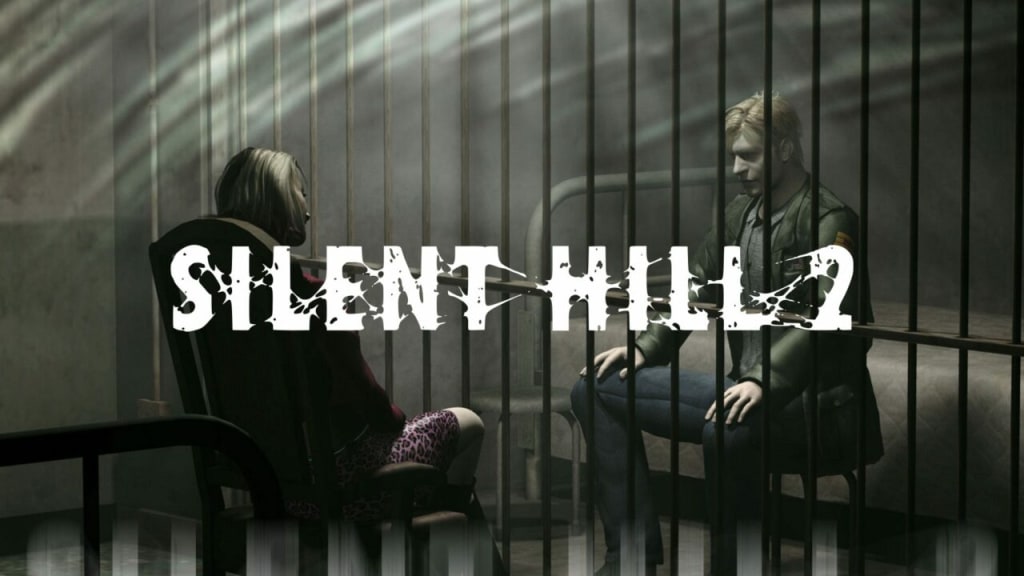
Now, as it would happen, in a serendipitous turn of events, I’ve had the experience where I just so happened to question everything I know about this genre. Very recently, I created a Twitch account where I make guides on how to platinum certain games. The game that I am working on now is Silent Hill 2. I’ve achieved forty of the forty-four trophies needed to platinum the game. This is not my first time playing this psychological thriller. In order to get all forty-four trophies, you need to beat the game two to three times (there are eight endings to the game, and seven of the trophies are attached to these various endings, and one trophy requires beating the game on New Game Plus). Another thing you should know about me is that I’m kind of like Will Ferrell as Harry Kerry from SNL. That is to say that you can say that my friends call me Mr. Whiskers because I’m curious like a cat, to quote the comedian. It was as I was broadcasting my second run through the game that I had a moment where I stopped and asked myself what exactly makes Silent Hill 2 a scary game. I also asked myself what makes it a psychological horror as opposed to a survival horror. Like any good student, I did some thorough research into the matter, and what I discovered completely changed the way that I view the game. In this article, I will provide an in-depth psychological analysis of the game that is Silent Hill 2, highlighting the ways that it is easily one of the darkest and most disturbing games that I have ever had the privilege to play.
Setting As An Overlooked Character And Cognitive Dissonance
When I was a student in college, I once wrote an essay on how the setting of a piece is often the most overlooked character influencing the piece. Harry Potter would not be the same if it were not set at Hogwarts in London. Stephen Crane would have been unable to tell his story about a boat lost at sea in a raging storm if all those circumstances had not met. The affair couldn’t have taken place in Kate Chopin’s The Storm, if there had not been a storm after which the short story is named. It is the same story with the town of Silent Hill, Maine. At first glance, the most noticeable aspect of the setting is the thick fog that blankets the town, which the game is known for. What we can say about the fog is that it represents James Suderland, the main character’s mental state at the beginning of the game. When we first meet James, he seems like your average Joe, just another guy who wants to perceive himself as a good husband. Ostensibly, James received a letter from his deceased wife, telling him to meet her in their special place — the town of Silent. It seems that his wife died as a result of a terminal illness, but the truth is much more sinister than that; the ugly truth is that James killed his wife, and the whole game centers around whether James accepts or denies this reality. Now going back to the fog. The fog is his mental state in that his repressed thoughts and memories make him confused and foggy. He doesn’t really have a clear state of mind. But the psychological implications go much deeper than that.
When it comes to the setting, one aspect that is unique solely to Silent Hill 2 is that there are different dimensions and realms to the game. There are fourteen different areas in Silent Hill two, and half the time you’re alternating between being in the regular world and the otherworldly dimension. When you enter into the otherworldly dimension, everything takes on a rustic, dingy, polluted, and corrupted quality. In the otherworld, everything is decaying and is much more unsettling than in the previous reality.
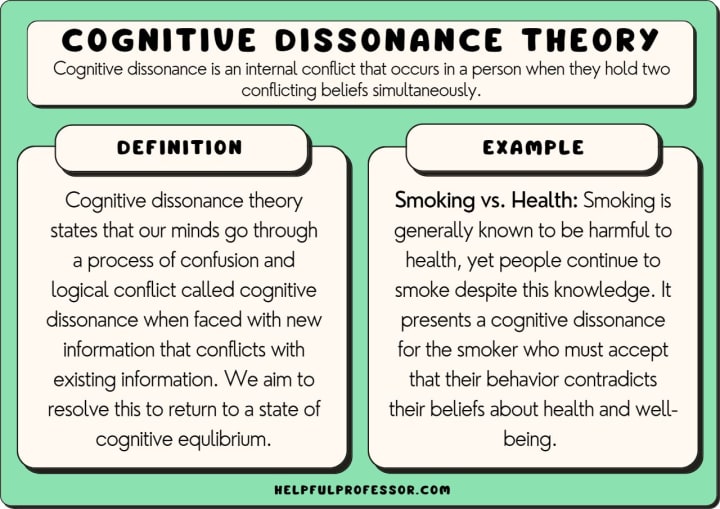
This dualistic characteristic of the setting can be viewed as a manifestation of the cognitive dissonance that James is experiencing. For those of you who don’t know, cognitive dissonance is a term used in the study of psychology that describes when a person is grappling with two conflicting beliefs that contradict each other. A complex exemplification of this would be someone who has the grandiose belief that they are a brilliant genius, and yet at the same time, they have difficulties taking care of themselves and struggle with carrying out tasks of daily living. Another extreme illustration of it might be if someone had a family member who was a narcissist, and felt like they were a good person during the love-bombing stage of the relationship, but then felt like they were cruel during the discard and devaluation stages of that particular trauma bond. Similarly, on a much more simple level, you can see cognitive dissonance taking place in instances where say someone asks what you did on a certain afternoon, and you say that you went to Taco Bell, even though you went to McDonald’s, and when they ask you what you had, you begin to fabricate what you ate at Taco Bell, rather than correcting yourself and answering with what you had at McDonald’s.
That is the fascinating thing about Silent Hill. The town acts as a projection of a person’s mental state, mirroring their state of mind on an individual level. The town appears different to everyone who enters it. Silent Hill appears differently for James than it does for all the other characters in the franchise. My silent hill would be a thousand times different from yours. In this way, Silent Hill reminds me of Dante’s Inferno in many ways. The most noticeable parallelisms are that both Dante and James went through their own personal purgatory or hell, and in both cases, it was over the women that they both loved; Beatrice in the case of Dante, and Mary in the case of James. So in the case of James, Silent Hill has two separate realities to mirror the fact that James is experiencing very complex cognitive dissonance. On the one hand, he is trying to maintain the delusion that his wife died of natural causes as a result of her terminal illness, but on a much deeper, unconscious and subconscious level — a level that is deeply repressed- James knows the truth about what he has done to his wife. James is entertaining a fantasy. The corrupted and decaying otherworld shows how James’ mental state is deteriorating, and that the reality is much darker than the fictional story that he is telling himself.
James Battles His Inner Demons: What The Different Monsters Say About James
The most painstakingly obvious aspect of James’ psychological profile that we can discern is that he is extremely masochistic. They say that people are either sadists or masochists, and there is no doubt that James feels the need to be punished. One of the most clear-cut demonstrations of this comes in the form of the enemy that James faces as found in Pyramid Head. Pyramid Head is depicted as a ruthless executioner who is always chasing after James, challenging James to confront his repressed guilt, sexual frustration, and overwhelming feelings of shame and despair. When viewing Pyramid Head from this vantage point, we also see that the sword that Pyramid Head is carrying is also highly symbolic. Throughout the game, everyone who wields this sword is illustrated as having to drag it because it is so heavy. The reason for this is that the sword acts as a representation of James’ cross to bear, so to speak, as a direct result of his sins and actions, and how they are so overwhelming that he is unable to carry the weight of his burden. It is simply too much for him. The other interesting thing about Pyramid Head is that while he is highly symbolic of how James yearns to be punished for his actions, he also, at the same time, acts as a kind of anti-hero throughout the game. We can see this in the way that in several instances, we see Pyramid Head chasing off other monsters and enemies throughout the game. The reason for this is that Silent Hill is a manifestation of James’ mental state, and each of the monsters could be viewed as a different part of James’ disturbed psyche, and Pyramid Head can be viewed as warding these distractions away so that James has the space to confront these challenging feelings.
Author's disclaimer: the following content is for mature audiences. A psychological analysis of Silent Hill 2 shows that Jame’s Suderland is perhaps the most sexually frustrated and sexually disturbed individual that has ever graced the face of the earth. I mean to say that our man James has the worst case of blue balls, not to mention the fact that he is seriously sick. In total, there are ten different enemies that you encounter in Silent Hill 2. In alphabetical order, those enemies include Abstract Daddy, the bubble head nurses, the creeper (a kind of cockroach), Flesh Lip, the faceless lying creatures you encounter in the early game, the Mandarin, the Mannequin, Mary (the monster), the prisoners, and, of course, the iconic Pyramid Head.
Now this isn’t a matter of speculation. The creator of Silent Hill has discussed how there are these sexual themes and motifs because he wanted to reach the core reasons of what drives human behavior. There is no questioning this. To demonstrate this, let’s refer to Abraham Maslow’s hierarchy of needs. When studying psychology, you learn that Maslow believed that there were certain basic needs that every human being has, and that the ultimate goal for every individual is self-actualization. Maslow’s hierarchy was pyramid-shaped like the nutritional chart, and at the foundation of the pyramid were physiological needs such as air, water, food, shelter, clothing, as well as reproduction, which is to say that Maslow believed sex was one of our most essential needs. The other tiers of Maslow’s hierarchy of needs include safety needs, love and belonging, esteem, and finally self-actualization.
So what we have to understand is that when Mary became terminally ill and was then confined to a hospital bed, James became extremely sexually frustrated. Hardly able to move, his wife was no longer able to meet his physical needs, his physiological needs, his needs of love and belonging, as well as his needs for intimacy. We pause here because there are a few things that we have to understand about this dysfunctional dynamic. We now know that James killed his wife, Mary. The thing we have to understand is that this was not some altruistic act to end Mary’s suffering; she never asked him to do it. What James did was extremely selfish. We know this because at the end of the game he says, “The truth is, I hate you.” James wanted his life back. He knew that what he was feeling was wrong, and that made things worst on him. It only intensified the guilt and the shame. Instead of being a human being and showing any compassion, or sympathy, or empathy for his wife, James was more concerned with his desires of the flesh, which says a lot about the man. So if Silent Hill projects one’s mental state, how does this manifest itself in the town? Let’s take a closer look.
We see just how sexually frustrated James is in the form of the demons he faces throughout the game. The first instance can be found in the form of the mannequins. These enemies were designed so that they had no faces, no arms, no torsos. The are nothing but a pair of legs on top of a pair of legs. The mannequins are symbolic of how James began to sexually objectify his wife and the women around him while his wife was sick and he was dealing with these conflicting feelings. We also see this in the case of the bobble head nurses that we see throughout the game. These creatures also have no faces, and they are dressed provocatively in nurse attire that stops mid-thigh, and that shows a good amount of their ample bust. These creatures also make very suggestive moaning sounds as they attack. It is said that they are a manifestation of the feelings of guilt and shame that James has surrounding these feelings of sexual frustration. It is also said that they manifest themselves this way because James was checking out the nurses while his wife was hospitalized. That’s how depraved he became. His wife was sick and dying in the hospital, and James was more concerned with these feelings and checking out the nurses. Another way of viewing the bobble-headed nurses is that while nurses are usually associated with feelings of nurturing and caring, these creatures also represent the trauma that James has begun to associate with hospitals. What we can also see when viewing these creatures through this lens is that his sexual frustration is so bad that it is lashing out at him and attacking him. But what do the other ghouls and monsters say about James?
The rest of the creatures that you encounter in Silent Hill 2 looked like something that was dreamed up for a Wes Craven or John Carpenter flick. Interestingly enough, the lying figures that you discover in the early moments of the game were designed after a combination of the fashion of BDSM and the paintings done by Francis Bacon, which seems like it shouldn’t work, but it works beautifully in Silent Hill 2. When we see the lying figures, they are these deformed creatures that writhe around in agony, and appear to have no arms because they are bound in a straitjacket. Primarily, they are a physical manifestation of James’ wife Mary, who is confined to her sickbed as a result of his terminal sickness. That is not the only thing that these humanoid demons represent. They are also a manifestation of how James felt trapped and confined in his relationship with his wife at this time in the relationship. And naturally, they follow along in this overarching theme of deeply suppressed sexual urges. One of the attack patterns of the lying figures is that they spit this acidic material at James as he navigates Silent Hill. One way of interpreting this is that it is highly symbolic of how James' mind is slowly beginning to corrode away.
Now, let us talk about Mandarin. These inner demons of James are difficult to describe, even for someone who has a rich lexicon and has made a living as a wordsmith. The Mandarins in Silent Hill 2 are only ever seen in the otherworld that we discussed earlier. More specifically, they appear in the section of the game where the floor is made up of a kind of caged grating. These creatures hang underneath the floor, clinging onto the cage with their long arms that have suction cups for hands that look like red eyeballs. Seeing as these creatures appear below ground, the result is that it is hard to make out their appearance, especially as you try to dodge the tentacles that they periodically shoot out at you. They wear dirty rags for clothing, and they are extremely tall. These Mandarins represent James’ subconscious. James has buried the memory of killing his wife deep down in his unconscious mind, and these creatures are highly symbolic of that. This is made even more evident as James begins to confront these memories, and the Mandarins make their way above ground in the later parts of the game. It is symbolic of how these unconscious memories are beginning to surface. Another way of viewing the Mandarins is in the light of James’ sanity is hanging by a proverbial thread, and the Mandarins represent that as they cling to the meshed cage.
The disturbing images that we see reflected back to us on the television screen when we are playing Silent Hill 2 tell us a lot about James’ tortured psyche. There are a total of five bosses in Silent Hill 2: Flesh Lips, Abstract Daddy, Eddie, Pyramid Head, and Mary the monster. Flesh Lips is the first boss that we encounter, and prior to this point, none of the creatures have faces, but Flesh Lips does, and he has a mouth dangling from the bottom of his body, which is suspended in a bed frame. After the fight with Flesh Lips, mouths become a common image in Silent Hill 2. The reason for this is that Mary often lashed out at James when she was confined to her deathbed, verbally abusing him out of rage from her situation, and flesh lips and the other images of mouths and lips act as a constant reminder of this to James. The other interesting thing to note is that of the five bosses that James battles during his time in the foggy Maine town, three of them have been designed so that a bed is part of their general appearance; we see this in the case of Flesh Lips, Abstract Daddy, and the final antagonist in the monster version of Mary. More mature content coming up. The bosses were intentionally designed this way. There is a reason for everything. Just as Flesh Lips is a reminder of the way that Mary would verbally attack James, the bosses being designed in this way where it seems like that are merged with a bed frame is a reminder to James that he hated that Mary was confined to a bed, and it acts as a way of reminding him of what he did while Mary was lying in her hospital bed. There is a kind of bittersweet irony in the fact that one of the attacks Mary has in the end of the game is that she can straggle James with her tentacles, because of the fact that James asphyxiated her in order to send her to a premature grave. Another reason that there are all these beds has to do with a much more disturbing reason. All the characters in Silent Hill 2 are struggling with some kind of trauma. As James explores the town of Silent Hill, Angela is another character that he runs into. Abstract Daddy is an outward projection of Angela’s trauma. Growing up, she was abused by her father in a way that too many women share familiar experiences with, and that is delicate, and I don’t feel comfortable elaborating on the type of abuse this is. Abstract Daddy personifies this as he is a creature that has one deformed body forcing another body through a bloody mattress. I told you that Silent Hill 2 was the most disturbing game that I have ever had the privilege of playing.
What the Different Endings Say About James: He is Highly Delusional
We have already touched on how James demonstrates delusional tendencies in the way that he fabricated a fictional reality. Just as we can argue the same thing in that he imagined having received a letter from his deceased wife, asking him to come to their special place to meet with her. In a psychological analysis of the game, we see by the game's conclusion that James is much more delusional than we initially thought, and there is no better illustration of this than in the case of the different endings that the game has to offer.
There are a total of eight different endings in the Silent Hill 2 remake. The decisions that you make throughout the game influence which ending you get. Chooses like choosing to combat the enemies or evade them, using health items, or refraining from using them, interacting with certain key items, choosing between the man and woman coin in one of the puzzles, choosing between the scarlet and rust colored eggs, and choosing between the ripe and rotten apples, are all decisions that James has to make in the game, all of which effect the ending the player receives. Each ending acts as a different way of how James handles the truth of what he’s done. There are the leave, in water, Maria, dog, UFO, rebirth, bliss, and stillness endings. Let’s examine some of these to see what they say about the delusional nature of James.
Of the eight separate endings, it can be argued that there is only one ending where James comes to terms with what he has done, and that is in the game's leave ending. In the leave ending, James reads the real letter that Mary has left James, stating how she didn’t want to die (those were her feelings when she found out she was sick). In the leave ending, James' acceptance can be seen in the way that he decides to move forward, leaving Silent Hill with Laura. Laura is a child whom James follows throughout Silent Hill 2. Laura was in the hospital at the same time that Mary was hospitalized. Mary and Laura bonded during this time, and in a way, Laura acts as the child that James and Mary always wished they had. In Silent Hill 2, Laura symbolizes innocence. She is too young to have the baggage and trauma that all the other characters have. While Silent Hill appears as a hellish landscape for all those who visit Silent Hill, everything is all rainbows and sunshine for innocent little Laura. Arguably, the best illustration of this is found in the way that she watches a movie with Eddie in the theater of Silent Hill, and her presence is enough to calm Eddie; he is another one of the more disturbing characters found in Silent Hill 2. Eddie torment is found in that he has been bullied his whole life on account of his weight, and this catapults him in a downward spiral of violence where he admits to killing a dog, and believes that he is killing the same person over and over again, but the truth is he is killing many different people, believing them all to be the same person that has been tormenting him. We see this in the fight scene with Eddie when he asks a corpse, “How many times do I have to kill you?” Throughout the game, we see Laura running away from James, and through her childhood innocence, we can see in this circumstance that she feels that something is off about James. She is constantly asking about Mary, not knowing the truth about what has happened to her. It is surprising that she would eventually leave with him.
Of all the endings, the one that best highlights James’ denial, as well as the extent of how delusional James is, is found in the Maria ending. Maria is another main character in Silent Hill 2. James escorts her through the town in several sections of the game, protecting her from the countless threats that are found in Silent Hill. The only thing is that Maria is a figment of James’ imagination. She can be viewed as a kind of doppleganger of Mary. James created her in his mind as a kind of ideal woman; she is the embodiment of what he wished his wife could be, hence the similarity between Mary and Maria. In the Maria ending, James chooses Maria over Mary and leaves Silent Hill with Maria, someone who doesn’t even exist in the context of reality. Once again, we see that to cope with what he has done, James has to fabricate a fantasy world instead of facing the truth.
Just about every ending offers this kind of delusional flair. Remember how James started his journey into Silent Hill because he supposedly received a letter from his deceased wife asking him to meet her there; he was under the impression that she died three years prior as a result of her illness. In yet another ending, we discover that that was the story James told himself, when the reality was that he had her dead body in the back of his car. In yet another ending — the leave ending — James is so unable to cope with the actions that he ends up committing suicide. In two of the game's endings — the dog and UFO endings, which are kind of joke endings — it can be said that James is so unable to cope with what he has done, that he is in such a state of denial, and that he is ultimately so delusional that he completely detaches from reality in order for these endings to take place. In the dog ending, James is distracted from the truth as the town is taken over by dogs. As for the UFO ending, we find that James is abducted by aliens in the game's conclusion. Finally, with the rebirth ending, we see that James is so conflicted with what he has done that he tries to rewrite the past, and in a vainglorious attempt, he tries to bring Mary back to life. All of these endings show that James is unable to cope with what he has done, that he is in an extreme state of denial, and that he is highly delusional. That and the game's conclusion show that he is greatly haunted by what he’s done to his wife, as the game's climax depicts James fighting a monstrous version of his wife chained to a bed.
Summary: When we conduct a psychological analysis of James’ character in Silent Hill 2, we find that he is a deeply troubled, disturbed, demented, and deranged character. He is a very sick man. The game's setting shows that James is suffering from acute cognitive dissonance, as is seen in the dual realities. The corrupted otherworldly is indicative that James' mental state is deteriorating. Silent Hill is a projection of James' mental well-being, and the iconic fog in the town shows that James is foggy and confused with all of his repressed memories. James is a man who murdered his wife out of spite, for selfish reasons, because he was experiencing inappropriate feelings of sexual frustration at a time when Mary needed sympathy and compassion, all of this revealed to us through the personal demons that James encounters in his time in Silent Hill. When we scrutinize James, we see he is a masochistic individual who feels he needs to be punished for what he has done, and his cross to bear is too much for him to handle. Examining the different realities and separate endings that the game has to offer indicates to us that James is a very delusional individual, and he is in a state of denial, and he is unable to cope with the overwhelming feelings associated with what he has done to his wife.
Writing and Research: Aaron M. Weis
Chill, educational trophy hunting streams. I break down platinum runs, missables, collectibles, and optimal paths — live. Horror, FPS, and completionist pain. Currently: Silent Hill 2 Remake 40/44 Trophies achieved. Follow me on Twitch @: https://www.twitch.tv/lilweisy222
About the Creator
Aaron M. Weis
Aaron M. Weis is an online journalist, web content writer, and avid blogger who specializes in spirituality, science, and technology.
Keep reading
More stories from Aaron M. Weis and writers in Gamers and other communities.
The 20 Best Games On PlayStation Plus For The Year 2025
Is it worth it to purchase the Premium Playstation Plus membership that Sony has to offer? Better yet, is it worth the seventeen dollars and ninety-nine cents per month, as opposed to the essential package which can be purchased for nine dollars and ninety-nine cents? These are the questions many Playstation players find themselves asking when the first of the month comes around. Let’s face it, Sony has made it so that the Essential Playstation Plus plan is pretty much a necessity in the world of gaming. The days of playing online multiplayer for free are long gone. This monthly ten dollar expense is what it takes to grant its users access to the online multiplayer platform. We all want to play games online. So, we can argue that that expenditure is justifiable.
By Aaron M. Weis2 months ago in Gamers
20 Horror Game Masterpieces to Play Before You Die
Horror games have a unique ability to evoke fear and adrenaline, making them a beloved genre among gamers. However, there are some horror video games that will blow your mind, and you should play them to experience the sensations they offer. For this reason, I asked the AI about the best horror video games available, since I find it difficult to choose among so many options.
By Ninfa Galeano5 days ago in Gamers



Comments
There are no comments for this story
Be the first to respond and start the conversation.