
THE POLITICAL BOYCOTT OF THE 1980 MOSCOW OLYMPICS
The 1980 Moscow Olympics:A Global Political Protest Against Soviet Actions.

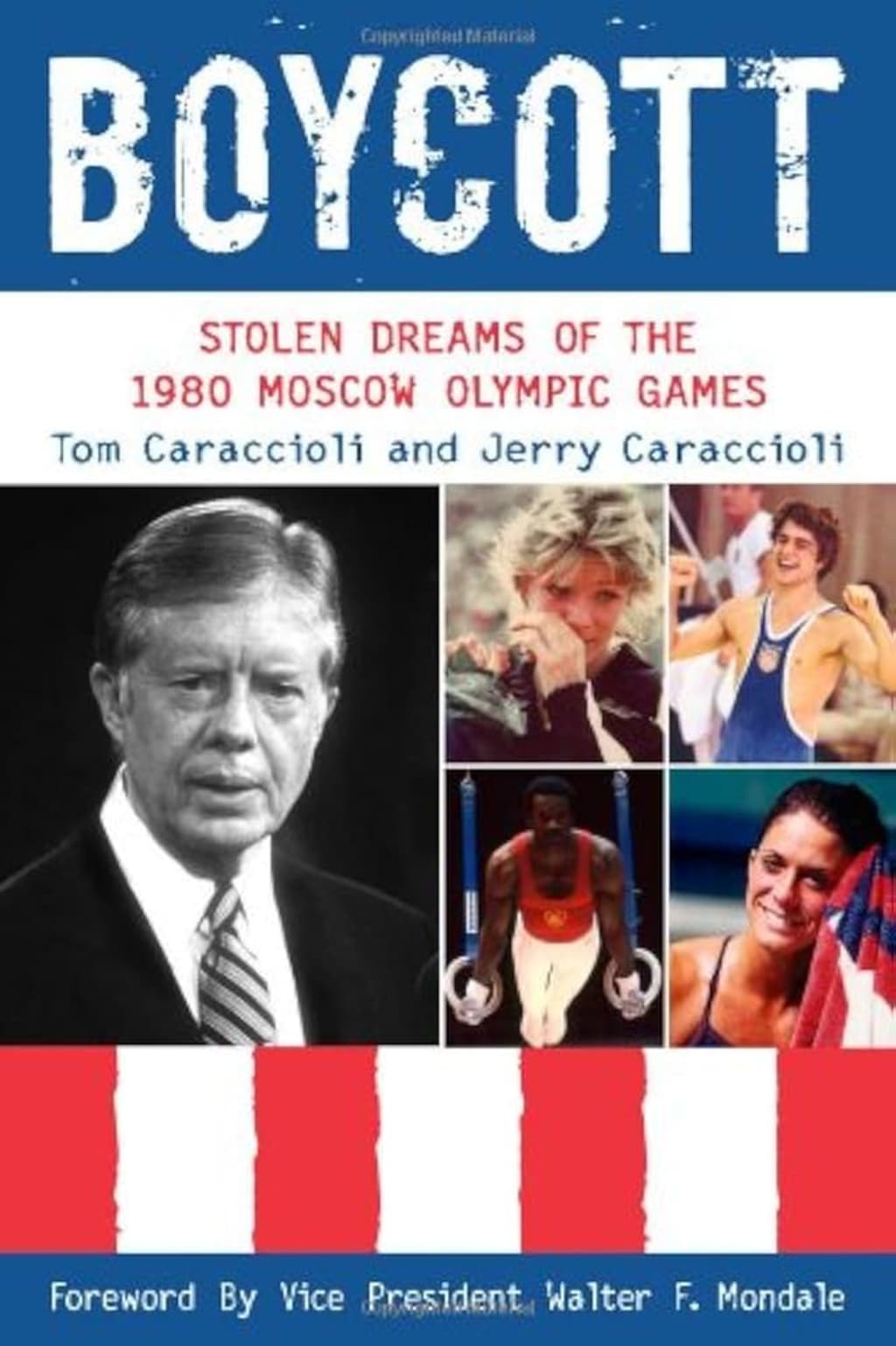
The 1980 Moscow Olympics were marked by one of the most significant political boycotts in the history of the Olympic Games. This boycott was not only a statement of political disapproval but also a reflection of the heightened Cold War tensions between the United States and the Soviet Union. The political circumstances surrounding the boycott had profound implications on the Games and the international sporting community. Here's a detailed account of the events and reasons behind the boycott:
(I)Background: The Cold War Context
In 1980, the global political landscape was dominated by the Cold War, the ideological and geopolitical struggle between the communist bloc, led by the Soviet Union, and the capitalist bloc, led by the United States. This rivalry had affected virtually every aspect of international relations, including sports. The Olympics, traditionally seen as an event that transcends politics, became entangled in the rivalry between the superpowers.
The 1979 Soviet invasion of Afghanistan played a crucial role in the decision to boycott the 1980 Moscow Olympics. The Soviet Union’s military intervention in Afghanistan was condemned by the United States and many of its allies. They viewed it as an expansionist move by the Soviet Union, aimed at spreading communist influence in the Middle East. The invasion led to widespread protests, particularly in the West, and it was seen as a direct challenge to the global order that the United States and its allies sought to preserve.
(II)The U.S. Decision to Boycott
In response to the Soviet invasion of Afghanistan, U.S. President Jimmy Carter and his administration called for a political boycott of the 1980 Summer Olympics. On March 21, 1980, Carter announced that the United States would not participate in the Moscow Games unless the Soviet Union withdrew its troops from Afghanistan. This decision was grounded in a desire to punish the Soviet Union for its actions in Afghanistan, but also to express solidarity with the Afghan people, who were facing invasion and occupation.
Carter's call for a boycott was supported by a variety of groups in the United States, including human rights organizations, anti-war activists, and members of Congress. They saw the Soviet invasion as an example of imperialist aggression and believed that a boycott of the Olympics would send a clear and powerful message to the Soviet Union that such actions would not be tolerated by the international community.
However, the boycott was not universally supported in the U.S. The American athletic community, particularly those who had trained for years for the Olympics, strongly opposed the idea. Many athletes viewed the boycott as a denial of their hard work and dedication, and they argued that the Olympic Games should remain separate from political disputes. The boycott also created a dilemma for American sports organizations, which had to decide whether to follow the government's directive or participate in the Games.
(III)The Widespread Boycott
While the U.S. initiated the call for a boycott, other countries soon followed suit. A total of 65 countries ended up boycotting the Moscow Olympics, including major powers like Canada, West Germany, Japan, and Argentina. In total, notable Western democracies and several developing nations aligned themselves with the U.S. decision, although many countries from the Soviet-aligned Eastern Bloc and other socialist states still participated in the Games.
The political repercussions were felt across the world. The boycott not only affected athletes but also the atmosphere of the Games. The absence of the U.S. and other boycotting nations diminished the competition and reduced the number of international participants. For example, the American basketball team, widely regarded as one of the best in the world, was notably absent, as were other athletes who had been favorites for gold medals.
(IV)Soviet Union’s Response
The Soviet Union, which had already been heavily criticized for its actions in Afghanistan, responded to the boycott with indignation. Soviet officials labeled the boycott as an unfair political attack and argued that it was an attempt to undermine the Olympic ideal of unity through sport. The Soviet Union accused the U.S. of using the Olympics for political purposes and suggested that the boycott was a way to cover up the U.S.'s internal problems, such as economic stagnation and civil unrest.
Despite the boycott, the Soviet Union went ahead with hosting the Games and focused on organizing a spectacular event that showcased Soviet achievements. The Moscow Olympics were still an athletic success for the host country, with the Soviet Union winning the most gold medals and dominating the Games.
(V)Aftermath and Legacy
The boycott of the 1980 Moscow Olympics did not lead to an immediate resolution of the conflict in Afghanistan. Soviet troops remained in the country for another nine years, until their withdrawal in 1989. However, the boycott marked a turning point in the history of the Olympics. It was a stark reminder of the increasing politicization of international sports during the Cold War.
The 1984 Los Angeles Olympics would see a similar retaliation, as the Soviet Union and its allies launched their own boycott of the Games in response to the 1980 boycott. This further demonstrated how the Olympics, intended to be a platform for international cooperation, had become entangled in global political conflicts.
The legacy of the 1980 boycott remains controversial. While it was seen by some as an effective way to protest Soviet actions, others argued that it was an unfortunate disruption of the Olympic spirit. The event highlighted the tension between the ideals of international sporting events and the harsh realities of global politics.
In the years since, the 1980 boycott has served as a case study in how international events like the Olympics can be used as tools for political expression. It also serves as a reminder of the complex relationship between sports, politics, and diplomacy during the Cold War era.
About the Creator
Badhan Sen
Myself Badhan, I am a professional writer.I like to share some stories with my friends.
Keep reading
More stories from Badhan Sen and writers in Gamers and other communities.
THE CONTROVERSY SURROUNDING THE 1936 BERLIN OLYMPICS
The 1936 Berlin Olympics, officially known as the Games of the XI Olympiad, remain one of the most controversial events in the history of the Olympic Games. Hosted by Nazi Germany, the event not only showcased athletic prowess but also became a propaganda tool for Adolf Hitler and the Nazi regime. The controversy surrounding the 1936 Berlin Olympics is multifaceted, encompassing issues of racial ideology, political manipulation, the treatment of athletes, and the international response to Nazi Germany’s increasing militarism and racism.
By Badhan Senabout a year ago in Gamers
How to Get and Use Aion 2 Kinah 2026
Aion 2 Kinah is the primary in-game currency that allows players to enhance their gear, trade with other players, and progress through various in-game activities. Earning and spending Kinah effectively is crucial for success in the game. Here's how to get and use Aion 2 Kinah.
By Snow manerabout 14 hours ago in Gamers


Comments
There are no comments for this story
Be the first to respond and start the conversation.