
THE PIONEERING WORK OF JACKIE ROBINSON AND THE OLYMPICS
Breaking Barriers in Sports and Inspiring Generations.

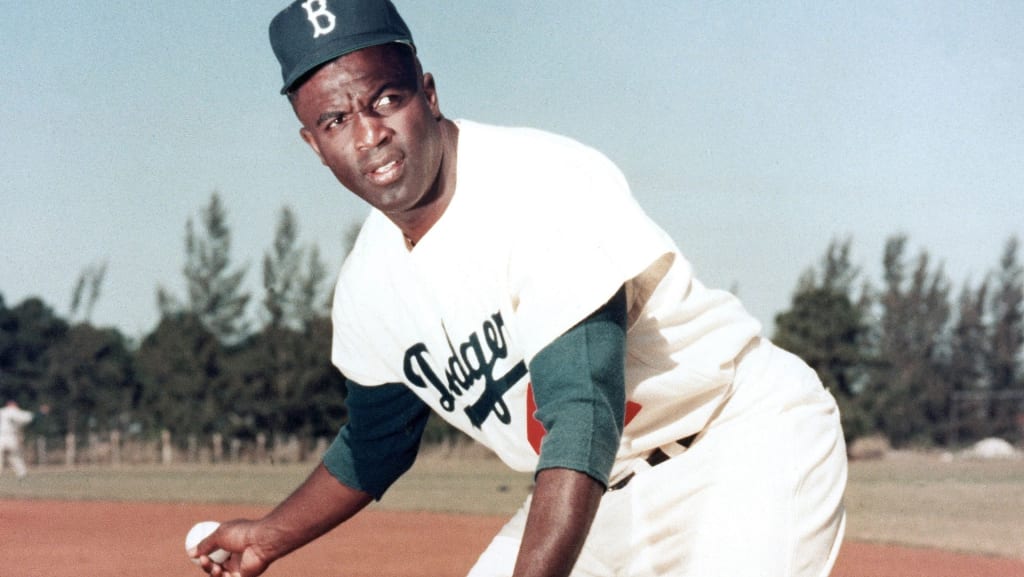
Jackie Robinson is widely celebrated for breaking Major League Baseball’s color barrier, but few realize that his athletic career and pioneering influence extend far beyond baseball. Before becoming a household name for his groundbreaking contributions to civil rights and sports, Robinson was a multi-sport athlete whose talents reached track and field—a discipline often associated with the Olympic Games. Though Robinson himself did not compete in the Olympics, his path and contributions are intrinsically tied to the history of race and sports, much like the legacy of African American athletes at the Olympic Games. Together, Robinson’s work and the Olympic stage laid the groundwork for sports as a powerful platform for societal change.
Jackie Robinson’s Athletic Beginnings
Before his historic role in baseball, Jackie Robinson displayed extraordinary versatility as an athlete. Born on January 31, 1919, in Cairo, Georgia, Robinson excelled in multiple sports during his time at Pasadena Junior College and later at the University of California, Los Angeles (UCLA). At UCLA, he became the first student to letter in four sports: baseball, basketball, football, and track. Notably, in track and field, Robinson was a standout in the long jump, winning the NCAA championship in 1940 with a mark of over 24 feet. This event was particularly significant, as it echoed the achievements of African American Olympians such as Jesse Owens, who had dominated the 1936 Berlin Olympics just a few years earlier.
Robinson’s success in athletics during an era marked by deep racial segregation showcased his exceptional talent and resilience. His achievements paralleled those of many Black athletes who would go on to excel on the Olympic stage, challenging both racial prejudices and societal norms.
The Olympics as a Stage for Progress
The Olympic Games have long been a platform for showcasing athletic excellence, but they have also become a battleground for broader social and political struggles. African American athletes, beginning with pioneers like Jesse Owens, used their performances to challenge racial inequality. Owens’ four gold medals at the 1936 Berlin Olympics humiliated Adolf Hitler’s ideology of Aryan supremacy and gave hope to millions of oppressed individuals worldwide.
Similarly, Robinson’s career—though outside the Olympics—mirrored the struggle for equality in sports. His integration into Major League Baseball in 1947 with the Brooklyn Dodgers became a watershed moment, symbolizing the breaking of racial barriers in American sports. His courage and success helped open doors for future athletes, including those who competed on the global stage of the Olympics.
Parallels Between Robinson and Olympic Legends
The fight for racial equality in sports has many icons, and Robinson’s legacy aligns with the struggles of Olympic athletes who pushed boundaries. For instance, Tommie Smith and John Carlos made history at the 1968 Mexico City Olympics with their famous Black Power salute during the medal ceremony. Their bold protest against racial injustice echoed Robinson’s bravery in facing hatred and discrimination to integrate baseball.
Furthermore, athletes like Wilma Rudolph, who overcame polio and poverty to win three gold medals at the 1960 Olympics, carried forward the torch of breaking barriers. Rudolph’s success as an African American woman in a segregated society paralleled Robinson’s efforts to dismantle racial prejudices in professional sports.
Robinson’s Influence Beyond Sports
Jackie Robinson’s contributions were not limited to his athletic achievements. His dignified resistance to racism and commitment to equality resonated beyond the baseball diamond. Robinson became an influential voice in the civil rights movement, working alongside leaders such as Martin Luther King Jr. and advocating for racial integration in all facets of American society.
The Olympic Games, much like Robinson’s career, became a stage for athletes to make statements that transcended sports. Whether through physical excellence or symbolic gestures, these athletes—past and present—used their platforms to highlight injustice and inspire change.
The Legacy of Jackie Robinson and the Olympics
While Jackie Robinson never competed in the Olympics, his pioneering work in breaking barriers closely aligns with the Olympic spirit of unity, perseverance, and excellence. The parallels between Robinson and groundbreaking Olympians—like Jesse Owens, Wilma Rudolph, and Tommie Smith—underscore the profound impact of sports in addressing societal injustices.
Robinson’s integration into Major League Baseball paved the way for countless African American athletes to achieve success and challenge stereotypes on both domestic and international stages, including the Olympics.
In conclusion, Jackie Robinson’s pioneering work stands as a testament to the transformative power of sports in breaking racial barriers. While he excelled on American fields, his legacy lives alongside the triumphs of Olympians who carried the same torch of justice and equality to the global stage. Together, these athletes remind us that the fight for inclusion and fairness in sports is inseparable from the broader struggle for human rights.
About the Creator
Badhan Sen
Myself Badhan, I am a professional writer.I like to share some stories with my friends.
Keep reading
More stories from Badhan Sen and writers in Gamers and other communities.
THE INFLUENCE OF MO FARAH'S OLYMPIC WINS ON LONG-DISTANCE RUNNING
Sir Mo Farah is a name synonymous with long-distance running excellence. His victories at the 2012 London Olympics and the 2016 Rio de Janeiro Olympics transformed him into a global sports icon, inspiring countless athletes worldwide and revitalizing interest in long-distance running. By securing gold medals in the 5,000 meters and 10,000 meters at two consecutive Olympic Games, Farah not only demonstrated extraordinary athleticism but also redefined what it means to be a champion in modern athletics. His influence on the sport can be felt in multiple dimensions, including cultural inspiration, the evolution of training methods, and the growing popularity of long-distance running worldwide.
By Badhan Senabout a year ago in Gamers
u4gm What Sigil of Power Does in Path of Exile 2
As Path of Exile 2 characters advance deeper into mid- and endgame content, raw stat upgrades lose much of their impact. At that stage, real damage gains usually come from mechanics that scale multiplicatively or interact directly with core resources like mana. For spell-based builds, one of the most efficient yet frequently underestimated tools is Sigil of Power.
By Asik Gxbx Hdjdh5 days ago in Gamers
Mastering the Pocket Exhaustion Debuff in Rush Royale Co-Op
The landscape of Rush Royale co-op has shifted dramatically with the rework of the Pocket Exhaustion enchantment. If you have spent any time in the higher dungeons recently, you likely noticed strange projectiles flying across the board.
By Richard Bailey4 days ago in Gamers



Comments
There are no comments for this story
Be the first to respond and start the conversation.