
THE OLYMPICS AND THE GLOBALIZATION OF SPORTS
How the Olympic Games Have Shaped Global Sports Culture and Commerce

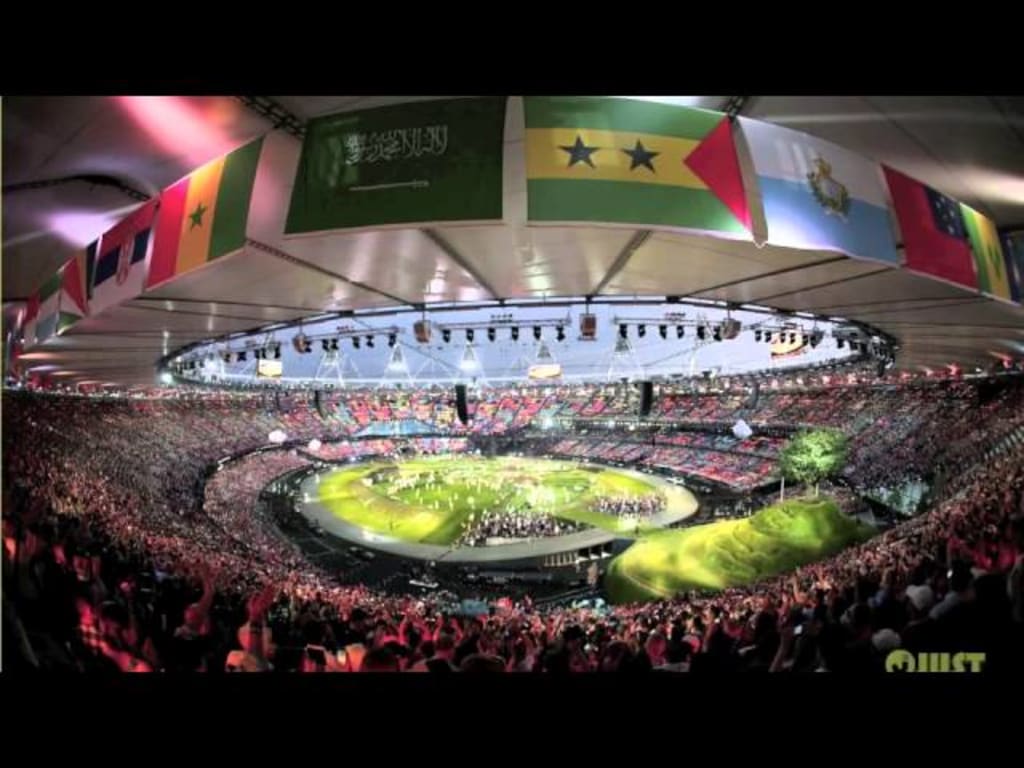
The Olympic Games are one of the most significant global events, uniting countries from around the world to celebrate athletic excellence. Since its inception in ancient Greece, the Olympics have evolved into a grand spectacle that is deeply intertwined with the globalization of sports. The modern Olympic Games, which began in 1896, are now a critical platform for international cooperation and competition, showcasing not only the prowess of athletes but also the influence of global media, technology, and politics. This essay explores the role of the Olympics in the globalization of sports, emphasizing how the Games promote cultural exchange, influence international relations, and shape the global sporting landscape.
(I)The Origins and Evolution of the Olympics
The ancient Olympic Games, held in Olympia, Greece, were part of religious festivals in honor of Zeus and were exclusively for Greek athletes. These early competitions were confined to one nation and were rooted in the cultural and political identity of Greece. In contrast, the modern Olympic Games, revived by Pierre de Coubertin in 1896, quickly grew beyond their original purpose. What began as a European-centered event became a global phenomenon as more countries participated, transcending geographic, economic, and political boundaries. Today, the Olympics are a symbol of international unity, with over 200 nations competing in various sporting disciplines.
(II)The Role of the Olympics in Promoting Globalization
One of the most Notable contributions of the Olympics to the globalization of sports is the broadening of its audience. Television, radio, and more recently, the internet, have enabled the Games to reach a global audience, ensuring that billions of people can witness the competitions in real-time. The Games have become a spectacle that is broadcasted across different continents, showcasing athletes from diverse backgrounds and cultures. This global reach has led to the popularization of many sports, some of which were once considered regional or niche activities. For example, sports like basketball, tennis, and volleyball have gained significant global followings due to their visibility during the Olympics.
Moreover, the Olympics facilitate the exchange of ideas and culture. Athletes from different countries interact, share their experiences, and form friendships that transcend national borders. This interaction fosters a sense of global camaraderie and promotes peace, with the Olympic motto “Citius, Altius, Fortius” (Faster, Higher, Stronger) symbolizing the universal human desire to achieve excellence. In this way, the Games serve as a vehicle for promoting intercultural understanding and global cooperation.
(III)Political and Economic Influence
The Olympics also play a significant role in international politics and diplomacy. Throughout history, the Games have been used as a tool for political expression and as a platform for promoting national interests. For example, the 1936 Berlin Olympics were used by Nazi Germany to showcase its ideology, while the 1980 Moscow Olympics were marred by a U.S.-led boycott in protest of the Soviet Union’s invasion of Afghanistan. Similarly, the 2008 Beijing Olympics were viewed as a way for China to assert its global presence and demonstrate its economic rise.
On an economic level, the Olympics are a massive global event that generates billions of dollars in revenue through ticket sales, sponsorships, broadcasting rights, and tourism. Hosting the Games is seen as a prestigious opportunity for countries to boost their international profile and promote their cities as global hubs. However, the economic impact of hosting the Olympics is a double-edged sword. While the Games can stimulate economic growth through infrastructure development and increased tourism, they also bring substantial financial risks. Many host cities, including Athens in 2004 and Rio de Janeiro in 2016, faced significant economic challenges after the Games, with large debts and underused infrastructure.
(IV)The Olympics and the Rise of Global Sports Leagues
As the Olympics have contributed to the globalization of sports, they have also influenced the rise of international sports leagues and competitions. The Olympics have helped to elevate certain sports to global prominence, and the athletes who excel in these arenas often transition to professional leagues that operate on a global scale. The International Basketball Association (NBA), for instance, has benefited from the exposure provided by the Olympics, with NBA players now representing their countries in the Games. Similarly, soccer’s global growth has been fueled by international competitions such as the FIFA World Cup, which aligns with the Olympic movement's goals of promoting global unity through sport.
The Olympics also contribute to the professionalization of sports. Athletes who perform well on the Olympic stage often gain international fame and lucrative contracts in professional sports leagues, further globalizing the reach of the sport. In turn, the success of these athletes leads to an increase in global viewership and participation in their respective sports, reinforcing the interconnected nature of global sports.
(V)Challenges and Criticisms
Despite the many benefits of the Olympics in promoting the globalization of sports, the Games are not without their challenges and criticisms. The commercialization of the Olympics, with its focus on corporate sponsorships and media deals, has led to concerns about the erosion of the original ideals of amateurism and fair competition. Additionally, issues such as doping scandals, corruption in the bidding process for host cities, and human rights concerns in some host countries have marred the reputation of the Games.
Furthermore, the increasing costs associated with hosting the Olympics have led to debates about the sustainability of the event. Some critics argue that the resources spent on constructing massive stadiums and infrastructure would be better allocated to addressing pressing social and economic issues, particularly in developing countries.
In The End
In conclusion, the Olympics have played a crucial role in the globalization of sports by fostering international cooperation, promoting cultural exchange, and influencing political and economic dynamics. As a global platform for athletic excellence, the Games continue to bring together countries from all corners of the world, transcending national borders and promoting a shared vision of human achievement. However, the Olympics also face challenges that require careful consideration to ensure that they continue to serve their original purpose of promoting peace, unity, and global understanding.
About the Creator
Badhan Sen
Myself Badhan, I am a professional writer.I like to share some stories with my friends.
Keep reading
More stories from Badhan Sen and writers in Gamers and other communities.
OLYMPIC ATHLETES AND THE FIGHT FOR WORKER'S RIGHTS
Olympic athletes, often celebrated for their extraordinary physical prowess and achievements on the global stage, face a unique set of challenges that stretch beyond the athletic arena. While they may appear to be part of an elite class of international performers, many athletes, particularly those in less commercially prominent sports, experience significant struggles related to labor rights. From exploitative contracts and sponsorship deals to a lack of healthcare and financial security, Olympic athletes have increasingly found themselves caught in a broader conversation about workers’ rights.
By Badhan Senabout a year ago in Gamers
Here Again
I know I have been teasing about coming back to content creation and just before, I either get sucked into work or life gets the best of me. 2025 was quite a year and I feel that resonates with everyone. At the begining of the year I got a new vehicle only to lose it about halfway through the year due to an accident. Thankfully no one was injured, and the worst damage done was to my vehicle and my wallet. But I also got a promotion at work, and although it has come with it's challenges I am still powering through it. I also recently lost my mother towards the end of the year and dealt with the emotions that come along with that. So although 2025 was quite rough and I had to really step away and see what was important to me, I believe I have found my way and will be coming back with more content and a new sense of direction. I wanted to create a community where gamers could come together no matter what we played on and honestly there are quite a few ways to complete that goal. I will be streaming four days a week, mostly solo games, and once I complete the story line on Where Winds Meet than that will be the community game as it is not only cross play across systems, but also cross save. I will also introduce PalWorld at some point. For the moment I will be completing out three solo games a week. I will be streaming on Twitch and when able I will upload the video to my Youtube channel. With my schedule, I will only be streaming every other week so as to not burn myself out creativetly. I will also be writing out game reviews as well as game walk throughs on here that will be written through experience of playing. I am also going to use every chance I get to remind people to return to our roots as communities and through these tough times to be a little kinder to one another. I will not entertain or put up with mindless unkindness in my community and those that attempt to do so will not have access to the community that is being built. On that note, I will not turn anyone away that is looking for a helping hand, as I am still growing I am not able to help out financially but I can provide a safe space on Discord and offer a place to play games. I play more than just I will be showcasing on Twitch, and when I am online I am almost always available and up for a game with friends. I have found that since being back in contact with some old friends of mine that I really do wish to come back into the scene and work towards my original goal of working from home. Do not get me wrong, I enjoy what I do for my personal career and I am actually quite fulfilled and rewarded at work. I do see myself being at my "day" job for a good while yet, as soon I wish to start into learning a new field this year. Two of them to be exact, between cyber security and nursing, I wish to further my education so as to further reach my goals. So I appreciate every view, read, comment, and share across my socials. So to wrap things up on this one, every other week I will be streaming on Twitch on Sunday, Monday, Wednesday and Saturday. I look forward to hearing from all of you as well as playing games together!
By Will Besaw5 days ago in Gamers
The Devil's Cut
“Comrade, finally you’re awake.” The voice was smooth, sensual. A flickering incandescent bar was all that lit the white, sterile room. All Vladimir remembered was everything going black. He tried to move his arms and found them strapped to the gurney.
By Matthew J. Fromm5 days ago in Fiction




Comments (1)
The Olympics serve as a powerful platform for global unity, but their commercialization and political challenges highlight the complexities of modern international sports.