
THE IMPACT OF POLITICAL PROTESTS ON THE OLYMPICS:A CASE STUDY
Analyzing the Influence of Political Protests on Olympic Games and International Relations.

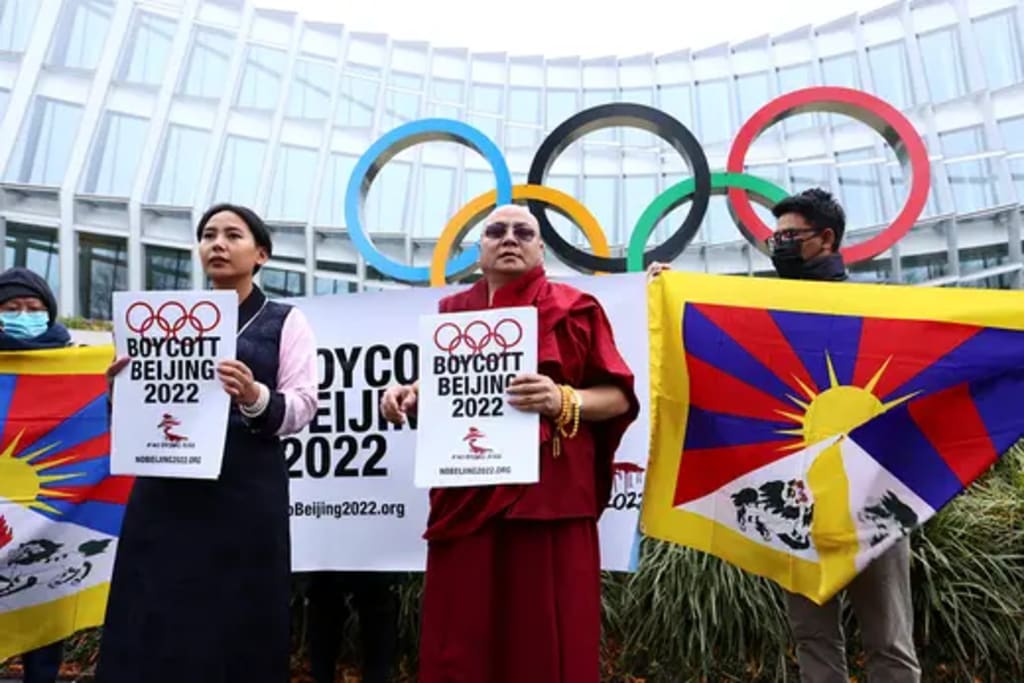
The Olympic Games, often referred to as the "greatest show on earth," bring together athletes from all over the world to compete in a celebration of human achievement and international unity. However, beneath the surface of sporting excellence, the Olympics have also been a stage for political protests. These protests reflect the complex relationship between sport, politics, and society. A notable case study in this context is the 1968 Mexico City Olympics, where political protests had a profound impact on the Games and sparked a wider conversation about human rights, social justice, and the role of sports in global politics.
(I)The 1968 Mexico City Olympics: A Political Climate in Turmoil
The 1968 Summer Olympics were held in Mexico City during a time of significant political unrest both within Mexico and globally. The Mexican government, led by President Gustavo Díaz Ordaz, was preparing to showcase the country's progress and modernization to the world. However, Mexico was also dealing with a growing student protest movement, which sought democratic reforms, greater political freedoms, and an end to corruption within the government.
The protests in Mexico escalated in the months leading up to the Olympics, culminating in a violent crackdown by the government just days before the Games began. On October 2, 1968, Mexican police opened fire on a student protest in the Tlatelolco Plaza, killing an unknown number of demonstrators. This event, now known as the Tlatelolco massacre, cast a shadow over the Olympic Games and highlighted the deep political divisions in the country.
(II)The Black Power Salute: A Symbol of Protest
The most iconic protest during the 1968 Olympics occurred on the medal podium for the men’s 200-meter sprint final. Two American athletes, Tommie Smith and John Carlos, who had won gold and bronze respectively, raised their fists in a Black Power salute as the American national anthem played. Both athletes were members of the Olympic Project for Human Rights (OPHR), an organization that sought to address racial discrimination and inequality, particularly in the United States.
Smith and Carlos’s gesture was a powerful form of protest against racial injustice, not only in the U.S. but around the world. Their raised fists symbolized solidarity with the civil rights movement, which was gaining momentum in the United States during the 1960s. Their actions were not without consequences. The International Olympic Committee (IOC) demanded that Smith and Carlos be removed from the Games, and the two athletes were sent home in disgrace. However, their protest became an iconic moment in Olympic history, inspiring future generations of athletes to use their platform for social and political causes.
(III)The Global Impact of the Protest
The Black Power salute at the 1968 Olympics was part of a larger wave of political protests that characterized the 1960s. The civil rights movement, the Vietnam War, and global decolonization efforts all created a climate of political activism. The protest by Smith and Carlos drew attention to racial inequality in the United States, but it also resonated with broader struggles for justice and freedom across the globe. Their protest highlighted the Olympic Games as a platform where social and political issues could not be ignored.
Despite the IOC’s condemnation of their actions, the protest was widely supported by various groups, including civil rights organizations, labor unions, and anti-war activists. The incident brought international attention to the ongoing struggles for racial equality and human rights, transcending the realm of sports and entering the larger political discourse.
(IV)The Role of the IOC and the Evolution of Protest in the Olympics
The 1968 protests marked a turning point in how political activism would be viewed in the context of the Olympics. The IOC, historically focused on maintaining the political neutrality of the Games, found itself in a dilemma. The global nature of the Olympics meant that political protests were inevitable, as the Games often coincided with times of political upheaval.
In subsequent years, the IOC has taken a more proactive approach to managing political protests, instituting rules to prevent demonstrations during the Games. Rule 50 of the Olympic Charter, which bans political protests on the field of play and the podium, has been a point of contention. However, as the world has evolved, the Olympics have seen more instances of athletes using their platform for activism, whether through gestures of solidarity, taking a knee, or using their social media presence.
For example, during the 2020 Tokyo Olympics, American sprinter Gwen Berry raised a fist on the podium after winning a bronze medal in the hammer throw, continuing the legacy of protest set by Smith and Carlos decades earlier. More recently, the 2022 Beijing Winter Olympics saw athletes from different countries taking stands on issues ranging from human rights abuses in China to climate change.
In The End
Political protests at the Olympic Games, as seen in the 1968 Mexico City Olympics, have had a lasting impact on both the world of sports and society at large. The Black Power salute by Tommie Smith and John Carlos remains one of the most memorable acts of protest in Olympic history, symbolizing the intersection of sports, politics, and social justice. Despite the IOC’s efforts to maintain political neutrality, the Olympics continue to be a stage for athletes to express their views on issues ranging from racial inequality to human rights.
The 1968 Mexico City Olympics serve as a reminder that the Olympics, while a celebration of human athleticism, are also embedded in the larger political and social context of the time. The legacy of protest in the Olympics continues to challenge the notion of sports as a purely apolitical event, demonstrating the power of athletes to influence change and bring attention to Global issues.
About the Creator
Badhan Sen
Myself Badhan, I am a professional writer.I like to share some stories with my friends.
Keep reading
More stories from Badhan Sen and writers in Gamers and other communities.
THE ROLE OF SPONSORS AND CORPORATIONS IN SHAPING THE OLYMPICS
The Olympic Games, one of the world’s most celebrated sporting events, have long been a platform for showcasing athletic prowess and fostering international unity. Behind the scenes, however, the event is also a major commercial enterprise, heavily influenced by the roles of sponsors and corporations. These entities contribute significantly to the success of the Olympics, shaping its structure, reach, and impact. This article explores the multifaceted role of sponsors and corporations in shaping the Olympics, highlighting their contributions, influences, and potential drawbacks.
By Badhan Senabout a year ago in Gamers
7 Intelligent Automation Skills That Define AI Digital Assistants
AI Digital assistants or virtual assistants are smart software applications/programs that use Artificial Intelligence to help you with your daily tasks. The software functions as a personal assistant that operates through voice and text commands. These tools use natural language processing and machine learning to understand exactly what you need. They can manage your schedule, emails, or even control your smart devices.
By Arthur Leo4 days ago in Gamers
Mirage League Coins Deserve More Attention
In PoE 3.28 Mirage League, many players collect Coins of Power, Knowledge, and Skill without much thought. At first glance, they seem like minor items, and it’s easy to just stash them. That’s a mistake. These coins can significantly improve level 20 skill gems by adding a hidden bonus. They act as a form of controlled corruption, giving your gems extra utility and making skills feel stronger. For players running red maps or refining builds, this system can noticeably change gameplay and make abilities more effective.
By Smsankar Goswami2 days ago in Gamers
My First Time Skiing and I Got Lost, Alone, in the French Alps
Looking back, I can trace some of my life’s biggest adventures to a simple action from my sister. She’d introduced me to Tommy (a very long time ago), a colleague of hers, who had overshared his penchant for Italian-looking women, and I ticked that box.
By Chantal Christie Weiss2 days ago in Humans



Comments
There are no comments for this story
Be the first to respond and start the conversation.