
The History of Video Games: From Pixels to Powerhouses
Tracing the Evolution of Gaming: From Arcade Classics to Virtual Realities
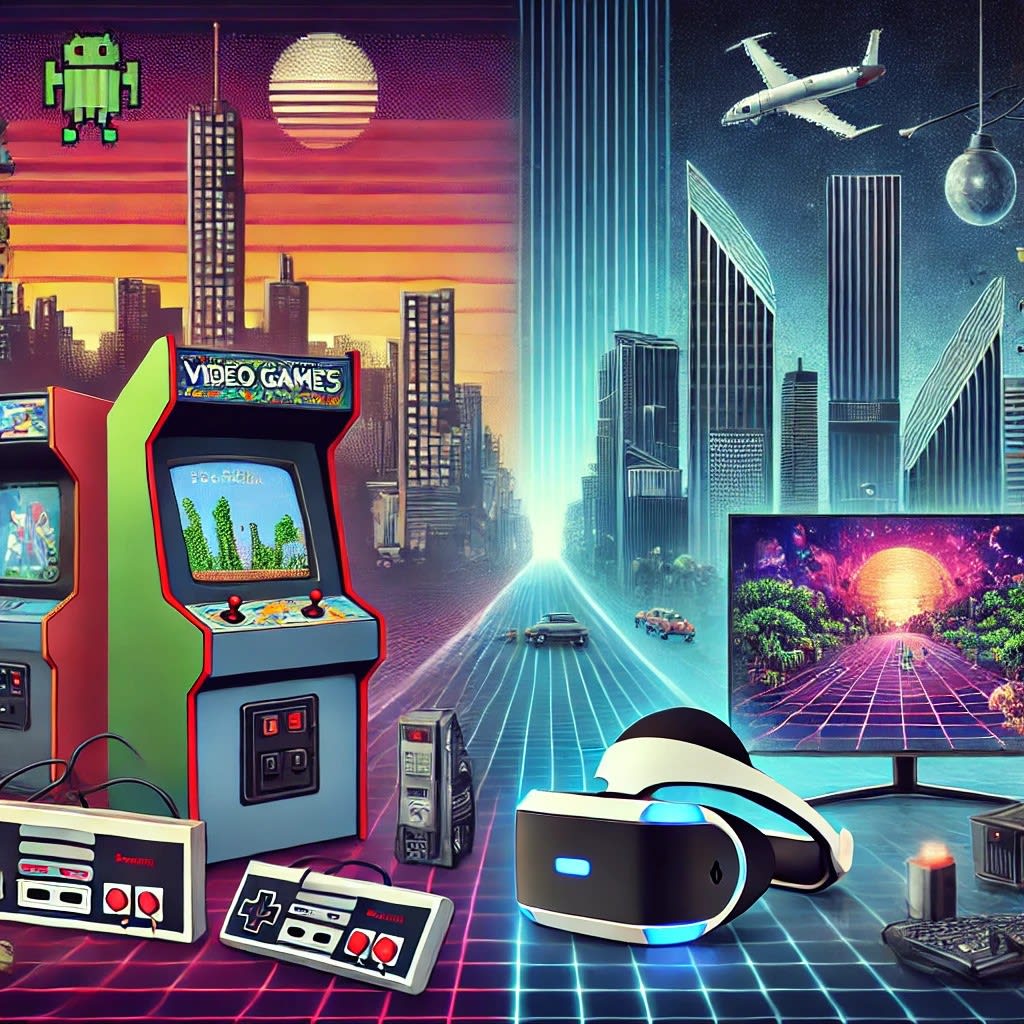
Video games have become a defining element of modern entertainment and culture, a global industry worth billions of dollars annually. Their evolution from simple pixelated graphics to the immersive virtual worlds we know today is a fascinating journey that intertwines technological innovation, artistic creativity, and social trends. Let’s delve into the history of video games, tracing their origins and highlighting key milestones that have shaped the medium.
The Birth of Video Games (1950s-1970s)
The origins of video games date back to the mid-20th century when early computer scientists began experimenting with interactive technology. One of the first recognizable video games was "Tennis for Two," created in 1958 by physicist William Higinbotham. Using an analog computer and an oscilloscope, the game simulated a simple tennis match, laying the groundwork for interactive entertainment.
In 1962, MIT student Steve Russell developed "Spacewar!," a game where players piloted spaceships and engaged in dogfights. "Spacewar!" was one of the first games to gain popularity in academic circles, showcasing the potential of computers as gaming platforms.
The commercial video game industry began to take shape in the 1970s. In 1971, Nolan Bushnell and Ted Dabney created "Computer Space," the first commercially available arcade game. However, it was the release of "Pong" in 1972 by Atari—founded by Bushnell—that truly launched video games into the mainstream. The simple yet addictive table tennis game captivated players and became a cultural phenomenon.
The Golden Age of Arcade Games (1970s-1980s)
The late 1970s and early 1980s are often referred to as the "Golden Age of Arcade Games." During this period, arcades became social hubs, and iconic games like "Space Invaders" (1978), "Pac-Man" (1980), and "Donkey Kong" (1981) captured the imaginations of millions.
"Pac-Man," designed by Toru Iwatani, was particularly groundbreaking. It introduced a unique gameplay concept, appealing to both male and female players and becoming a global pop culture icon. Meanwhile, "Donkey Kong," created by Nintendo’s Shigeru Miyamoto, marked the debut of Mario, who would go on to become one of gaming's most enduring characters.
The Rise of Home Consoles (1980s)
The advent of home video game consoles transformed the gaming landscape, making it possible for people to enjoy their favorite games in their living rooms. The Atari 2600, released in 1977, was one of the first successful home consoles, featuring interchangeable cartridges that allowed players to switch between games.
However, the early 1980s also witnessed the video game crash of 1983. An oversaturated market, coupled with poorly received games like "E.T. the Extra-Terrestrial," led to a dramatic decline in the industry’s fortunes. Many companies went bankrupt, and confidence in video games waned.
The industry’s revival came with the release of the Nintendo Entertainment System (NES) in 1985. The NES introduced iconic franchises like "Super Mario Bros.," "The Legend of Zelda," and "Metroid." Nintendo also implemented strict quality control measures to ensure better games, restoring consumer trust.
The 3D Revolution and the Rise of Sony (1990s)
The 1990s marked a technological leap with the transition from 2D to 3D graphics. Games like "Doom" (1993) pioneered first-person shooters, while "Super Mario 64" (1996) showcased the possibilities of fully realized 3D worlds.
During this era, Sony entered the gaming market with the PlayStation in 1994. The PlayStation’s use of CDs instead of cartridges allowed for larger and more complex games, attracting developers and gamers alike. Titles like "Final Fantasy VII" and "Metal Gear Solid" cemented the console’s success, making Sony a dominant force in the industry.
Online Gaming and the New Millennium (2000s)
The 2000s brought widespread internet connectivity, which revolutionized how games were played. Online multiplayer games like "World of Warcraft" (2004) and "Halo 2" (2004) created vibrant communities and introduced competitive gaming on a global scale.
Consoles like the Xbox 360, PlayStation 3, and Nintendo Wii diversified gaming experiences. The Wii, with its motion-sensing technology, appealed to casual gamers, while the Xbox 360 and PS3 catered to hardcore audiences with graphically intense games like "Call of Duty" and "Uncharted."
The Modern Era (2010s-Present)
The 2010s saw video games grow into a cultural and economic juggernaut. The rise of smartphones made gaming more accessible, with titles like "Angry Birds" and "Clash of Clans" reaching millions. Meanwhile, platforms like Steam and digital storefronts revolutionized game distribution.
Indie games flourished during this time, offering unique experiences. Titles like "Minecraft," "Undertale," and "Celeste" proved that small teams could create impactful games rivaling big-budget productions.
The current generation of gaming emphasizes realism, immersion, and inclusivity. Virtual reality (VR) and augmented reality (AR) technologies have expanded the boundaries of gameplay. Esports, with games like "League of Legends" and "Fortnite," have turned competitive gaming into a global phenomenon, complete with professional leagues and massive audiences.
Conclusion
From rudimentary experiments on oscilloscopes to sprawling virtual worlds with millions of players, the history of video games is a testament to human ingenuity and creativity. As technology continues to advance, the future of gaming promises even more groundbreaking experiences. Whether through VR, AI, or untapped innovations, video games will undoubtedly remain a cornerstone of global entertainment for generations to come.
About the Creator
Keep reading
More stories from writers in Gamers and other communities.
Palworld TCG Guide: Release Date, How to Play, and Bushiroad Card List
The survival gaming world was recently rocked by an announcement that many saw coming but few expected to be this ambitious. Pocketpair has officially pulled back the curtain on the Palworld Trading Card Game, a physical tabletop experience developed in partnership with the industry giants at Bushiroad.
By Richard Bailey5 days ago in Gamers
From Stories to Systems
For a long time, this space has been a bit… quiet. If you’ve stumbled across this blog before, you might have seen short stories, poems, or bits of fiction—creative experiments written at different points in my life. That part of me hasn’t disappeared. I still love storytelling, world-building, and exploring ideas through narrative.
By D. E. King5 days ago in Gamers
The Devil's Cut
“Comrade, finally you’re awake.” The voice was smooth, sensual. A flickering incandescent bar was all that lit the white, sterile room. All Vladimir remembered was everything going black. He tried to move his arms and found them strapped to the gurney.
By Matthew J. Fromm7 days ago in Fiction


Comments
There are no comments for this story
Be the first to respond and start the conversation.