
The Hidden Trap: How We're Being Misled by Online and Offline Betting Games
Pulling back the curtain on the psychology of gambling — and why, no matter how thrilling it feels, the odds are rarely in your favor.

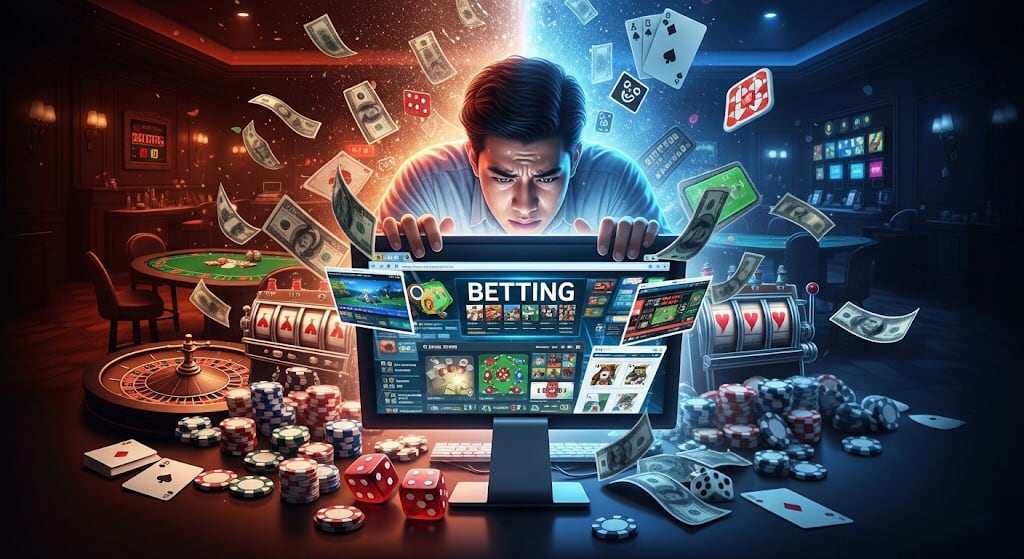
Betting games — whether it’s a flashy online casino app, a sports betting site, or a slot machine at your local casino — have become a massive part of today’s entertainment landscape. From the outside, they look like harmless fun: bright colors, exciting sound effects, and the promise of turning a few dollars into a big jackpot. But behind that high-energy surface lies a carefully designed system built to do one thing — keep you playing and make sure they win.
Many people don’t realize how betting platforms — both digital and physical — use subtle psychological tricks to keep players coming back for more, often at the expense of their mental health and financial well-being. Let’s take a closer look at the tactics being used, and how they turn what seems like a fun game into a sophisticated trap.
1. The Illusion of Winning
Have you ever played a game online where you get back half of what you bet — say, you bet $2 and win $1 — and the screen flashes “YOU WIN!” with confetti and sound effects? It feels like a win, even though you actually lost money.
This is no accident. Betting games are built to reward you just enough to keep you engaged. These small, frequent “wins” trick your brain into thinking you're on a roll, when in reality, you're slowly losing. The goal is to create a sense of progress and keep hope alive, even if you're constantly coming out behind.
Slot machines in casinos do the same thing. They’re programmed to make you feel like you're “close” to winning — even if you’re not — and that little hit of dopamine is enough to make you want to keep spinning.
2. Behind the Curtain: Algorithms and Stacked Odds
When you play an online casino game or place a bet on a sports app, you might assume you're taking a fair chance. But the truth is, many of these games are run by complex algorithms designed not to entertain — but to profit.
These algorithms control when and how often players win. They can adjust odds on the fly, depending on how people are playing. While the interface may look random, the system behind it is anything but. The house always has the edge, and even when players do win, it's carefully calibrated — just enough to keep others hooked.
Casinos in the real world aren’t any more forgiving. Everything from the lack of clocks and windows (so you lose track of time) to the layout of the room is designed to keep you playing longer. It’s not just about luck; it’s about subtle manipulation.
3. The Bait of Bonuses and Promotions
“Get $100 free with your first deposit!” “Your first bet is risk-free!” Sound familiar? These offers are everywhere, and they sound tempting. But hidden in the fine print are terms that make them nearly impossible to benefit from.
That “free $100”? You probably have to wager it 20 or 30 times before you can cash out — meaning you’d need to bet thousands of dollars just to see any of that bonus. This tactic, known as “bait and switch,” is designed to lure people in with a deal that looks too good to pass up, only for them to end up spending more than they ever intended.
And unfortunately, most players don’t take the time to read the fine print — until it’s too late.
4. Influencer Marketing and Fake Testimonials
Scroll through social media and you’ll likely find influencers showing off big wins on betting platforms, encouraging you to try your luck. But here’s the reality: many of these “wins” are staged or come from accounts with special privileges. Influencers are often paid to promote these games and may receive better odds or fake demo accounts to make it look easy.
These fake success stories play directly on people’s emotions — especially those who are financially vulnerable or desperate for a way out. They create the illusion that gambling is a shortcut to wealth, when in fact, it’s often a fast-track to debt.
5. Addictive Design: Built to Keep You Hooked
Gambling games are not just entertaining — they’re engineered to be addictive. From the sounds of coins dropping to the spinning animations and fast-paced play, everything is designed to release dopamine in your brain, the same chemical involved in addiction to drugs or sugar.
The more you play, the more your brain craves that next “high.” Small wins give you a buzz, and losses drive you to chase after that feeling again. It’s a vicious cycle, and it’s incredibly hard to break — especially when the game is designed to feel like you’re so close to winning.
6. The “Near Miss” Trap
Have you ever felt like you “almost” won? Maybe your slot machine showed two matching symbols and the third was just one space off. Or your team was ahead until the final minute. That feeling of being this close to a big win triggers a powerful response in the brain — and it makes people want to try again, thinking the next bet might be the one.
But statistically, a near miss is no different than a total loss. It’s just another trick used to keep you emotionally invested.
Final Thoughts: Awareness Is Your Best Defense
Betting games are not just harmless fun. They’re sophisticated systems built to extract as much money as possible from players — all while making them feel like they’re in control.
If you enjoy the occasional game, there’s nothing wrong with that — as long as you go in with open eyes. Set limits, be wary of promotions, and never gamble with money you can’t afford to lose. And if you see someone being lured in by flashy influencer promos or promises of easy winnings, don’t be afraid to speak up.
At the end of the day, the house always wins — and the safest bet you can make is choosing not to play their game at all.
About the Creator
Taimoor Khan
Hi, I’m Taimoor Khan. Writing is my way of capturing the quiet moments of life that often go unnoticed.
Keep reading
More stories from Taimoor Khan and writers in Gamers and other communities.
The Secret Code of Mona Lisa: Unraveling the Hidden Mysteries Behind Leonardo da Vinci’s Masterpiece
More than five centuries ago, a man painted a portrait of a woman that would go on to become the most iconic artwork in history. The man was Leonardo da Vinci—artist, engineer, inventor, and visionary. The painting: Mona Lisa. While many admire it for its enigmatic smile and artistic mastery, the Mona Lisa is far more than just a beautiful painting. It is a puzzle—one layered with hidden meanings, mysterious symbols, and secret knowledge that may have been too dangerous to express openly at the time.
By Taimoor Khan6 months ago in Chapters
Here Again
I know I have been teasing about coming back to content creation and just before, I either get sucked into work or life gets the best of me. 2025 was quite a year and I feel that resonates with everyone. At the begining of the year I got a new vehicle only to lose it about halfway through the year due to an accident. Thankfully no one was injured, and the worst damage done was to my vehicle and my wallet. But I also got a promotion at work, and although it has come with it's challenges I am still powering through it. I also recently lost my mother towards the end of the year and dealt with the emotions that come along with that. So although 2025 was quite rough and I had to really step away and see what was important to me, I believe I have found my way and will be coming back with more content and a new sense of direction. I wanted to create a community where gamers could come together no matter what we played on and honestly there are quite a few ways to complete that goal. I will be streaming four days a week, mostly solo games, and once I complete the story line on Where Winds Meet than that will be the community game as it is not only cross play across systems, but also cross save. I will also introduce PalWorld at some point. For the moment I will be completing out three solo games a week. I will be streaming on Twitch and when able I will upload the video to my Youtube channel. With my schedule, I will only be streaming every other week so as to not burn myself out creativetly. I will also be writing out game reviews as well as game walk throughs on here that will be written through experience of playing. I am also going to use every chance I get to remind people to return to our roots as communities and through these tough times to be a little kinder to one another. I will not entertain or put up with mindless unkindness in my community and those that attempt to do so will not have access to the community that is being built. On that note, I will not turn anyone away that is looking for a helping hand, as I am still growing I am not able to help out financially but I can provide a safe space on Discord and offer a place to play games. I play more than just I will be showcasing on Twitch, and when I am online I am almost always available and up for a game with friends. I have found that since being back in contact with some old friends of mine that I really do wish to come back into the scene and work towards my original goal of working from home. Do not get me wrong, I enjoy what I do for my personal career and I am actually quite fulfilled and rewarded at work. I do see myself being at my "day" job for a good while yet, as soon I wish to start into learning a new field this year. Two of them to be exact, between cyber security and nursing, I wish to further my education so as to further reach my goals. So I appreciate every view, read, comment, and share across my socials. So to wrap things up on this one, every other week I will be streaming on Twitch on Sunday, Monday, Wednesday and Saturday. I look forward to hearing from all of you as well as playing games together!
By Will Besaw5 days ago in Gamers
Dominating with Dual-Wield Pistols in CoD BO7: Tips That Work
Dual-wield pistols have always had a place in Call of Duty, but in Black Ops 7 they feel sharper, faster, and more dangerous than before. With the right setup and mindset, running akimbo pistols is no longer just for flashy clips. It is a real option for close-range control, fast pushes, and aggressive objective play. Players who understand how these weapons behave can turn tight spaces into their own territory and force enemies to fight on uncomfortable terms.
By Smsankar Goswami2 days ago in Gamers
How to Succeed at the Benson Directory®
Congratulations and welcome to the Benson Directory® employee #22391! As our newest call handler, you will have the privilege of speaking with dozens of unique and interesting people on a daily basis as well as the opportunity to earn bonuses for high performance. Contained within this handbook you will find a set of ease to follow instructions designed to help you settle in to your new role and begin paving the way to success.
By S. A. Crawford2 days ago in Fiction



Comments
There are no comments for this story
Be the first to respond and start the conversation.