
THE GLOBAL IMPACT OF THE BEIJING 2008 OLYMPICS OPENING CEREMONY
The Global Impact of the Beijing 2008 Olympics Opening Ceremony: A Spectacle of Culture Diplomacy and National Pride.

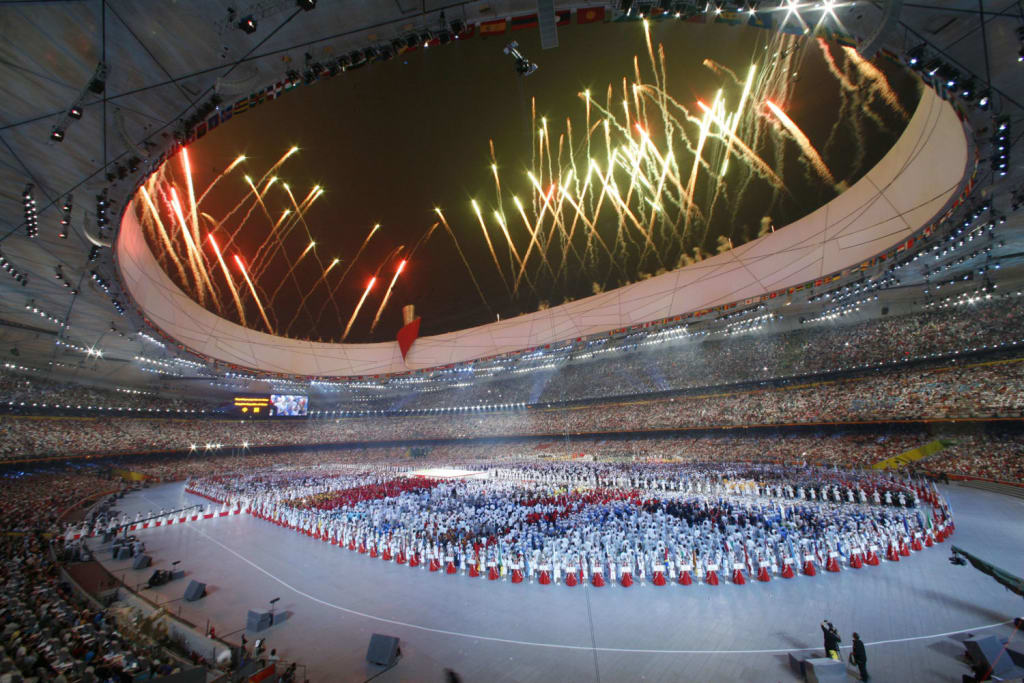
The Beijing 2008 Olympics Opening Ceremony was a breathtaking spectacle that captured the world's attention and left an indelible mark on global culture, politics, and the Olympic Games themselves. Held on August 8, 2008, at the Bird's Nest Stadium in Beijing, this event not only showcased China's rich cultural heritage but also positioned the country as a major player on the global stage. The ceremony’s artistic brilliance, state-of-the-art technology, and symbolism made it a historic occasion that had far-reaching implications in various domains.
Artistic and Cultural Representation
The Beijing 2008 Opening Ceremony was a magnificent fusion of traditional Chinese art, history, and modern technology. Directed by Chinese filmmaker Zhang Yimou, the event featured over 15,000 performers, all coming together to tell the story of China's evolution, from its ancient dynasties to its modern-day prominence. The ceremony's theme was rooted in the idea of "One World, One Dream," which sought to emphasize unity and peace through sport. The symbolism was deeply embedded in each performance, such as the opening drum performance, where 2,008 drummers symbolized China's 5,000-year-old civilization.
One of the most significant cultural highlights of the ceremony was the use of Chinese calligraphy, which flowed across the stage through dynamic projections. The sequence of visual representations captured the artistry of Chinese culture, blending ancient traditions with modern technology. The famous Peking opera, the dramatic Chinese masks, and the ancient dragon dance were incorporated to showcase China's rich heritage. This immersion in Chinese culture introduced the world to the nation's depth and diversity, making it a cultural milestone.
Technological Innovations
The Beijing 2008 Olympics Opening Ceremony was a technological marvel, utilizing advanced effects to create breathtaking visuals. The Bird's Nest Stadium, with its striking design by Herzog & de Meuron, became an icon in itself, contributing to the ceremony’s futuristic aura. One of the most extraordinary aspects of the ceremony was its innovative use of multimedia and light projections, creating mesmerizing effects. The dynamic LED screens, laser lights, and 3D projections combined with live performances created an immersive experience for viewers.
The ceremony's technological sophistication also extended to the famous "footprints in the sky" sequence. In this segment, 2,008 LED-lit footprints appeared on the floor of the stadium and rose into the air, signifying China’s long history and ambitious future. This awe-inspiring effect was a perfect illustration of how modern technology and traditional themes could blend seamlessly, leaving audiences across the world spellbound.
Political Significance
The Beijing Olympics marked a significant moment in China’s rise as a global power. The Opening Ceremony was not merely a display of China's historical and cultural heritage, but also a reflection of the country's ambitions to assert itself on the world stage. The 2008 Olympics was China’s opportunity to showcase its transformation into a modern, prosperous nation. By hosting the Games, China aimed to demonstrate its economic strength, technological prowess, and commitment to international cooperation.
Politically, the ceremony also had a symbolic aspect as it marked China’s re-entry into the global spotlight after years of being somewhat isolated due to its political system. The opening event was a demonstration of China's ability to host an event of this magnitude and manage its international image. The portrayal of China as a peaceful, culturally rich nation was designed to counter criticisms, especially those surrounding human rights issues. The opening ceremony, with its focus on unity and peace, was a direct counter to the political controversies that had surrounded the Games in the lead-up.
Global Impact
The global impact of the Beijing 2008 Opening Ceremony extended beyond the immediate excitement of the event itself. It marked a turning point in the way the world viewed China, not only as a growing economic power but as a cultural and technological force. The stunning display of national pride, the scale of the event, and the technical precision of the performance brought global attention to China’s development and modernity. The success of the ceremony also set a new benchmark for future Olympic Games, raising the bar for the Opening Ceremony to come.
On a broader scale, the event helped to increase international tourism to China, with people around the world wanting to visit the host country after seeing such an extraordinary cultural presentation. The Olympics provided China with a platform to introduce its cultural products, from food to fashion, to a wider global audience. Moreover, the ceremony also played a key role in enhancing China’s soft power, as it demonstrated its cultural richness and modern capabilities to the rest of the world.
Legacy
The legacy of the Beijing 2008 Olympics Opening Ceremony continues to resonate in the world of sports, entertainment, and global diplomacy. The event not only set new standards for creativity and spectacle in Olympic ceremonies but also reshaped the way nations approach the Olympics as a tool for soft power and cultural exchange. It highlighted the importance of cultural diplomacy and the potential of the Olympics to foster international understanding and peace.
In conclusion, the Beijing 2008 Olympics Opening Ceremony was a spectacular blend of artistic brilliance, technological innovation, and political symbolism. Its global impact was profound, shaping the way the world viewed China and elevating the Olympics to new heights. It was not just a celebration of sport but a showcase of China’s rich culture, economic power, and vision for the future, leaving an unforgettable impression on millions around the world.
About the Creator
Badhan Sen
Myself Badhan, I am a professional writer.I like to share some stories with my friends.
Keep reading
More stories from Badhan Sen and writers in Gamers and other communities.
THE EVOLUTION OF OLYMPIC CEREMONIES OVER TIME
The Olympic Games, one of the largest and most prestigious international sporting events, have evolved significantly over time, particularly when it comes to the grand ceremonies that accompany the event. From humble beginnings in ancient Greece to the modern spectacle of today, Olympic ceremonies have undergone numerous transformations, showcasing the world’s cultural diversity and technological advancements.
By Badhan Senabout a year ago in Gamers
Palworld TCG Guide: Release Date, How to Play, and Bushiroad Card List
The survival gaming world was recently rocked by an announcement that many saw coming but few expected to be this ambitious. Pocketpair has officially pulled back the curtain on the Palworld Trading Card Game, a physical tabletop experience developed in partnership with the industry giants at Bushiroad.
By Richard Bailey3 days ago in Gamers
From Stories to Systems
For a long time, this space has been a bit… quiet. If you’ve stumbled across this blog before, you might have seen short stories, poems, or bits of fiction—creative experiments written at different points in my life. That part of me hasn’t disappeared. I still love storytelling, world-building, and exploring ideas through narrative.
By D. E. King4 days ago in Gamers



Comments (1)
What a great article to use a possible lecture in a Western Civ. course.