
THE FUTURE OF VIRTUAL REALITY AND THE OLYMPICS
Revolutionizing the Spectator Experience and Athlete Training in the Olympic Era.

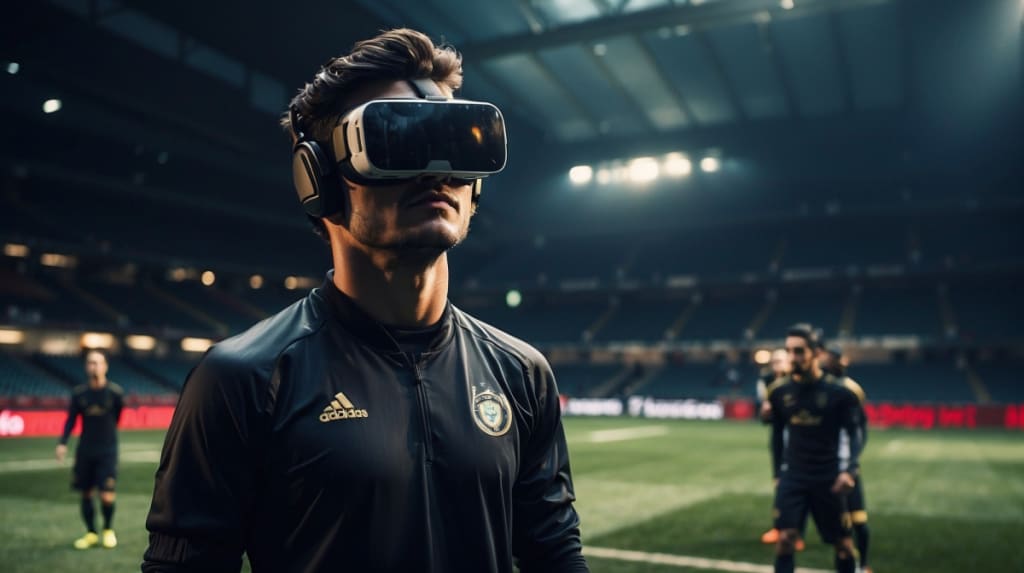
As the world continues to advance in technology, the integration of Virtual Reality (VR) into various industries is becoming more widespread, and one area that stands to benefit tremendously from this innovation is the Olympic Games. Traditionally a global stage for athletic prowess, the Olympics are evolving, with the potential to incorporate VR in ways that could change how we experience, interact with, and consume the Games. From viewing events in immersive environments to virtual participation, the future of VR in the Olympics looks promising, offering a unique blend of technology and tradition.
(I)Enhancing Fan Experience
One of the most immediate impacts of VR on the Olympics will be on the fan experience. Watching the Olympics from home or even in a stadium can often feel distant, despite high-definition broadcasts and digital platforms. However, VR has the potential to bring fans closer to the action than ever before. Imagine sitting front row at the 100-meter sprint final or watching the Gymnastics floor routine from an athlete’s perspective. With VR headsets, viewers could attend events virtually, giving them a near-realistic experience that feels as if they are physically present in the venue, no matter their actual location.
This kind of immersive experience could also allow for greater interaction. Fans might not just watch athletes perform, but could also explore the Olympic Village, wander through virtual recreations of iconic Olympic landmarks, or even access behind-the-scenes content that was once reserved for a select few. This level of engagement would redefine how fans interact with the Games and bring the Olympics closer to the everyday viewer.
Moreover, VR can be leveraged to create augmented-reality (AR) broadcasts, allowing viewers to access interactive stats, live performance data, or instant replays in 360 degrees while they watch an event. Such integration would not only enhance understanding but also enrich the emotional connection to the sport.
(II)Virtual Competitions and Inclusion
Beyond spectatorship, VR could also facilitate virtual competitions, allowing athletes to train or compete in virtual environments. While we are still far from having VR Olympics in the same way we have traditional games, VR competitions could become a part of the Olympic agenda. Some potential scenarios could involve esports (which are already gaining traction globally) or simulated competitions where athletes can engage in digital versions of their sport.
Inclusivity could also be one of the key benefits of VR at the Olympics. People with physical disabilities, or those who cannot travel to see the Games in person, could use VR technology to “participate” in the events from their homes. VR can offer an unprecedented level of inclusivity by making it possible for anyone with the proper technology to feel part of the Olympic experience.
Additionally, VR might open the doors to a completely new form of virtual sport. As technology improves, entirely digital events could take place in virtual arenas, where athletes could compete through avatars or robots, incorporating elements of skill, strategy, and creativity in ways that physical sports might not allow. These virtual events could even become a mainstay of future Olympic Games, possibly attracting younger, tech-savvy audiences who are accustomed to digital spaces.
(III)Training and Simulation
Training is another area where VR is poised to revolutionize the Olympics. Today, athletes use sophisticated training methods, but VR can add a new dimension to their preparation. For example, an athlete could use VR to simulate specific competition scenarios, training in virtual environments that closely replicate the exact conditions of an Olympic event. A swimmer could train in a virtual pool designed to mimic the Olympic pool’s dimensions and conditions, while a track athlete could rehearse their sprint in a simulated Olympic stadium.
Coaches and athletes could also use VR to review past performances, replaying their routines or matches from different angles in virtual spaces, enabling them to analyze their form and techniques in unprecedented ways. This technology could significantly improve training efficiency and performance by providing instant feedback without the need for actual physical trials.
(IV)Innovations
The role of VR in transforming Olympic broadcasts is another exciting development. VR could take the traditional broadcasting experience to the next level by allowing viewers to experience sports in fully immersive 360-degree views. Instead of watching a 2D feed from a camera positioned in the stands, a viewer might be able to choose a VR vantage point—whether that’s floating above the race track or sitting in the stands next to an Olympic legend.
For sports that rely on precision, such as archery, VR could provide viewers with real-time, interactive replays from multiple angles, offering a more comprehensive understanding of the competition. Furthermore, VR broadcasts could also incorporate social features, allowing fans from around the world to watch together in a virtual stadium, cheering on their favorite athletes in real-time, regardless of their physical location.
(V)Challenges and Ethical Considerations
Despite its exciting potential, the integration of VR into the Olympics comes with challenges. One of the biggest hurdles is ensuring that the technology is accessible to a global audience. VR headsets, while becoming more affordable, are still out of reach for many people, especially in developing countries where the Olympics are often followed with immense enthusiasm.
Privacy and data security will also be major concerns. As VR systems collect vast amounts of data to enhance personalization and interaction, protecting users' privacy will be paramount. Additionally, ensuring fair access and avoiding monopolization by larger tech companies will require careful regulation.
Moreover, the growing presence of VR in the Olympics must not detract from the core values of physical competition and human achievement. There is a delicate balance between embracing new technology and maintaining the authenticity of the Games, which are rooted in human physical performance.
End
The future of Virtual Reality and the Olympics presents a host of exciting possibilities, from transforming the way fans experience the Games to enabling virtual participation and enhancing athlete training. While challenges remain in terms of accessibility and privacy, the promise of a more immersive, interactive, and inclusive Olympic experience is undeniable. As technology continues to evolve, VR has the potential to redefine not just how we watch the Olympics, but also how we engage with sports in the future, creating a bridge between the virtual and the physical worlds.
About the Creator
Badhan Sen
Myself Badhan, I am a professional writer.I like to share some stories with my friends.
Keep reading
More stories from Badhan Sen and writers in Gamers and other communities.
THE OLYMPIC GAMES AND THE RISE OF GLOBAL BRANDS
The Olympic Games have long been a platform not only for athletic excellence but also for the growth and exposure of global brands. The Games, which trace their origins back to ancient Greece, have evolved into one of the world’s most significant events, attracting millions of spectators and media attention from around the world. As the Olympics has grown in scale and importance, the rise of global brands has become increasingly intertwined with the event. Over the years, corporate sponsorship, advertising, and partnerships have transformed the Olympics into a massive commercial enterprise. This essay explores how the Olympic Games have contributed to the rise of global brands and how this relationship has shaped both the Games and the business world.
By Badhan Senabout a year ago in Gamers
The Future of Gaming with Cross Platform Game Development
The gaming industry is evolving faster than ever, and one major reason behind this shift is cross platform game development. Players today expect games to work smoothly across mobile, PC, console, and even web platforms without losing quality or performance. For developers and publishers, this approach is no longer optional. It is becoming a practical way to reach a wider audience, reduce development effort, and stay competitive in a crowded market. As technology advances, cross platform game development is shaping how games are built, launched, and experienced worldwide.
By gammming world 3 days ago in Gamers
U4gm Smarter Temple Runs in PoE 2: Hotfix 0.4.0d Explained
Path of Exile 2 players have been buzzing about Hotfix 0.4.0d—and for good reason. This patch didn’t just tweak numbers; it fundamentally changed how the Vaal Temple works, making it more strategic, more rewarding, and more engaging.
By Dangyc Dingabout 23 hours ago in Gamers


Comments (1)
It would be something to see well be a part of a gymnastic routine from the gymnast's perspective or even divers. That would really make the Olympics fun to watch and participate in a way. Great article.