
THE FUTURE OF SUSTAINABLE OLYMPIC VENUES AND GREEN INITIATIVE
Innovative Designs and Practices Shaping Eco-Friendly Sports Infrastructure for the Future.

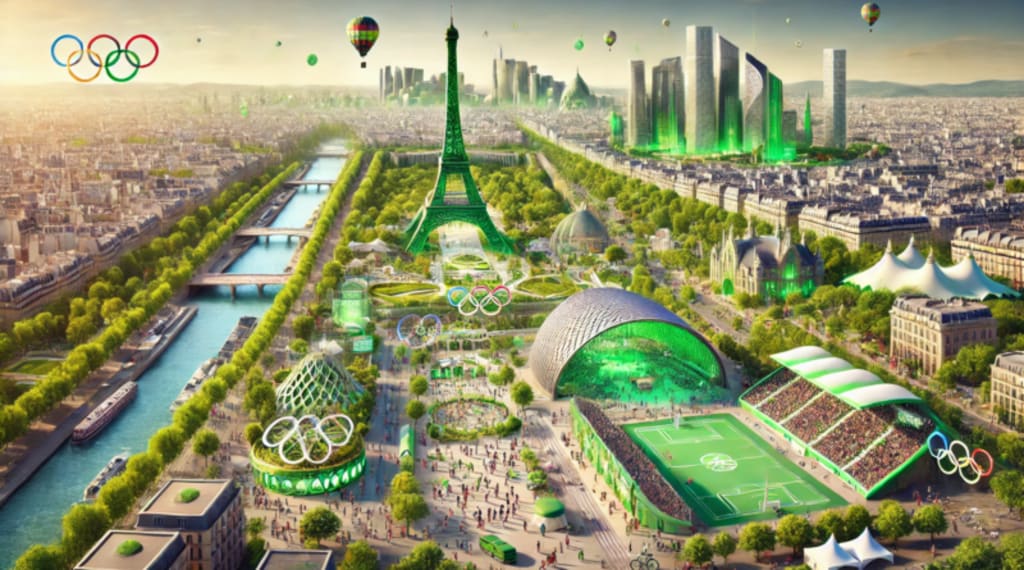
The Olympic Games have long been a symbol of international unity, athletic excellence, and global spectacle. However, the environmental footprint of hosting the Games has been a growing concern. As climate change and sustainability continue to dominate global discussions, the International Olympic Committee (IOC) and host cities are under increasing pressure to design venues and implement practices that promote sustainability. The future of Olympic venues and green initiatives represents a shift toward more environmentally responsible, energy-efficient, and socially inclusive Games.
(I)Evolution of Olympic Sustainability
Historically, Olympic Games have left lasting environmental impacts. The construction of monumental venues, the influx of tourists, and the energy consumed during the events have led to a substantial ecological footprint. For instance, the 2008 Beijing Olympics, while an architectural marvel, were criticized for their massive carbon emissions and resource consumption. The 2016 Rio Olympics also raised concerns over waste management, deforestation, and water consumption.
In response to these challenges, the IOC has increasingly focused on sustainable practices. In 2014, the IOC launched its "Agenda 2020," a framework designed to reshape the Games and ensure that sustainability is a core principle. This plan emphasizes the integration of environmental, social, and economic considerations in every aspect of the Games, from planning and construction to legacy and waste management.
(II)Green Building and Design Innovations
A Key component of sustainable Olympic venues is the emphasis on green building and design. Recent Olympic venues, such as those used in the 2020 Tokyo Games (held in 2021 due to the pandemic), have incorporated cutting-edge technologies and design principles to reduce environmental impact. For instance, the Tokyo 2020 Olympic Stadium, designed by architect Kengo Kuma, was built with environmentally friendly materials, including wood sourced from sustainably managed forests. It was also designed to be highly energy-efficient, reducing both heating and cooling costs.
In the future, Olympic venues will likely adopt even more advanced sustainability measures. One example is the use of modular and temporary venues. Instead of constructing massive, permanent structures, cities can use modular designs that can be disassembled and repurposed after the Games. The 2024 Paris Olympics will feature several venues that use this approach, including a temporary swimming pool that will be removed after the competition. This not only reduces construction waste but also minimizes the need for long-term maintenance and infrastructure.
(III)Renewable Energy and Carbon Neutrality
One of the most important green initiatives for future Olympics is the shift toward renewable energy sources. The IOC has set ambitious goals for the Games to achieve carbon neutrality, which includes offsetting carbon emissions generated by the event. Host cities are expected to incorporate renewable energy sources, such as solar, wind, and hydropower, to power Venues, transportation systems, and other infrastructure.
For example, the 2020 Tokyo Olympics were powered by renewable energy, with a significant portion coming from solar and wind energy. The Olympic Village was also designed with sustainability in mind, featuring energy-efficient buildings, smart technology to monitor energy use, and waste reduction practices.
Future host cities will likely go beyond just renewable energy to incorporate advanced energy management systems, smart grids, and the use of zero-emission vehicles for transport. The Paris 2024 Olympics, for instance, plans to use renewable energy for 100% of the event’s power needs, furthering the trend toward carbon-neutral Games.
(IV)Waste Management and Circular Economy
Another Key focus for sustainable Olympics is waste management. The Games generate vast amounts of waste, including plastic bottles, food packaging, and construction debris. Managing this waste in an eco-friendly way is essential for reducing the environmental impact.
The Tokyo 2020 Games introduced several innovative waste management strategies. For instance, the Games featured a "zero waste" goal, with organizers aiming to recycle 65% of waste and reduce plastic usage. Athletes' medals were even made from recycled electronic waste, such as old smartphones and laptops. Additionally, the Tokyo Games promoted the use of sustainable materials for uniforms and merchandise.
Future Olympic Games will likely continue to focus on the principles of a circular economy, where materials are reused, recycled, and repurposed. By adopting this model, future host cities can significantly reduce waste and minimize their environmental footprint.
(V)Social Sustainability and Legacy
Sustainability in the context of the Olympics is not only about the environment; it also involves social sustainability. The future of Olympic venues will be shaped by the need to create lasting positive impacts on local communities. This involves promoting inclusivity, creating jobs, and leaving behind valuable infrastructure for the host city’s residents.
The concept of a "legacy" is central to the IOC’s sustainability efforts. Rather than building large, underused venues after the Games, future Olympics will prioritize the creation of multi-use venues that serve the local population long after the Games are over. The London 2012 Olympics is a prime example, where venues like the Olympic Park have been repurposed for public use, including sports facilities, parks, and commercial spaces.
In the future, the creation of Olympic venues will take into account the needs of local communities, ensuring that the venues are not just temporary structures for the Games but long-term assets that contribute to the economic and social being of the area.
In The End
The future of sustainable Olympic venues and green initiatives represents a paradigm shift in how the Games are planned, executed, and experienced. With advancements in green building technologies, renewable energy, waste management, and social sustainability, the Olympics can become a model for large-scale events that prioritize environmental and social responsibility. As the world continues to face climate challenges, the IOC and host cities must ensure that the Games not only celebrate athletic achievement but also contribute to a more sustainable and equitable world. By doing so, the Olympics can secure a future that is not only green but also inclusive and resilient.
About the Creator
Badhan Sen
Myself Badhan, I am a professional writer.I like to share some stories with my friends.
Keep reading
More stories from Badhan Sen and writers in Gamers and other communities.
THE ROLE OF SOCIAL MEDIA IN SHAPING THE FUTURE OLYMPICS
The role of social media in shaping the future Olympics is becoming increasingly significant as it transforms the way audiences interact with the Games, athletes, sponsors, and the broader sports community. From enhancing fan engagement to revolutionizing marketing strategies, social media is deeply intertwined with the Olympic experience, influencing both the present and future trajectory of this global event.
By Badhan Senabout a year ago in Gamers
All Valorant Gameplay Guide 2026
Valorant remains one of the most played and searched competitive shooters in the United States, and in 2026 it continues to attract both new and returning players. Developed by Riot Games, Valorant combines precise gunplay with tactical abilities, rewarding discipline, teamwork, and thoughtful decision-making rather than reckless action.
By Games Mode Ona day ago in Gamers




Comments (1)
The future of the Olympics focuses on sustainability, innovation, and social responsibility.