
THE FUTURE OF BASEBALL/SOFTBALL IN THE OLYMPICS
Revisiting the Diamond:The Path Forward for Baseball and Softball in the Olympic Games.

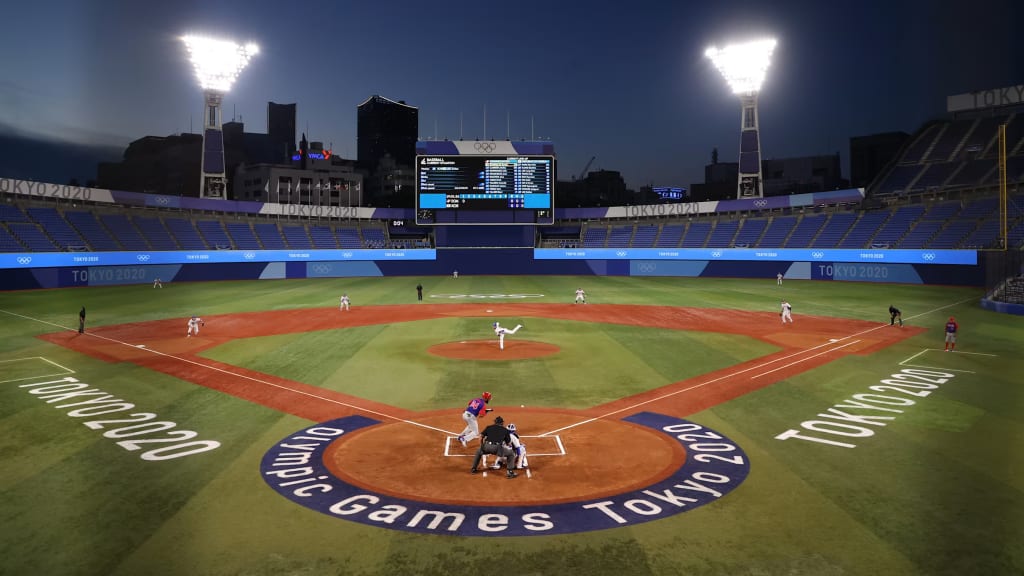
Baseball and softball, two sports that were once integral to the Olympic Games, have experienced a complicated and fluctuating journey in the international sports scene. After being removed from the Olympic program after the 2008 Beijing Olympics, the sports made a strong comeback in the 2020 Tokyo Olympics. This return sparked conversations about the future of baseball and softball in the Olympic Games and their potential growth within the global sports community.
Historical Context: Baseball and Softball’s Olympic Journey
Baseball was first introduced to the Olympic Games in 1992 in Barcelona, while softball made its Olympic debut in 1996 in Atlanta. Both sports had a growing global appeal, especially in countries like the United States, Japan, and parts of Latin America. However, despite their popularity, baseball and softball were both removed from the Olympics after the 2008 Beijing Games, primarily due to concerns over the lack of worldwide participation, issues regarding the absence of professional athletes, and the dominance of a few nations in the sport.
The International Olympic Committee (IOC) voted to remove baseball and softball from the 2012 London Games, and their exclusion continued for the 2016 Rio Olympics. However, the sports’ supporters, led by the World Baseball Softball Confederation (WBSC), lobbied to have them reinstated. Their efforts paid off when baseball/softball was added to the program for the 2020 Tokyo Olympics, which created a new era of optimism for their future in the Olympic movement.
The Return of Baseball and Softball in 2020 Tokyo Olympics
The Tokyo 2020 Olympics marked the return of baseball/softball after a 13-year hiatus. The sport's re-entry was especially meaningful for countries with a strong baseball/softball culture, such as Japan, the United States, South Korea, and the Dominican Republic. The Tokyo Games showcased the talent and excitement that baseball and softball brought to the Olympic stage, reigniting enthusiasm and interest in the sports worldwide.
The men’s baseball competition featured teams from the United States, Japan, South Korea, Mexico, and others. Japan, the host nation, captured the gold medal, defeating the United States in a dramatic final. In softball, the United States emerged victorious, claiming their fourth Olympic gold medal in the sport.
The success of baseball and softball in Tokyo showed the world the appeal and excitement these sports bring to the Olympic Games. The presence of professional athletes, particularly from Major League Baseball (MLB) in the United States, added a new level of skill and intensity to the competition, which was one of the factors that contributed to the sports’ re-entry into the Olympics.
Challenges and Prospects for the Future
Despite the success of baseball and softball in Tokyo, the future of the sports in the Olympics remains uncertain. After the 2020 Tokyo Olympics, both baseball and softball were not included in the official program for the 2024 Paris Olympics. This exclusion has sparked concerns about the longevity of the sports in the Olympic movement. The IOC evaluates the inclusion of sports every four years, and sports need to demonstrate a broad global appeal and growing participation to remain on the program.
One of the main challenges for baseball and softball is their limited global presence, especially compared to other Olympic sports. While both sports are extremely popular in countries like the United States, Japan, and several Latin American nations, their global reach is not as extensive as sports like basketball, soccer, or athletics. Additionally, both sports face competition from other emerging sports such as skateboarding and surfing, which have gained recognition in recent years.
Another issue for baseball and softball is the absence of professional athletes during the Olympic competition. Many top athletes, particularly from MLB, were unable to participate in the Tokyo Games due to scheduling conflicts with the league season. While this issue was temporarily resolved for the 2020 Olympics, the IOC may want to ensure that sports can attract the best players in the world, which could lead to challenges for baseball and softball’s long-term inclusion in the Games.
Strategic Growth and Global Expansion
For baseball and softball to remain part of the Olympic program in future Games, the sports will need to demonstrate strategic growth and global expansion. The WBSC has focused on expanding the sport’s presence in emerging regions, particularly in Europe and Africa, where baseball and softball are not yet as popular. Initiatives to promote the sport in these regions, such as development programs, international competitions, and coaching education, will be critical to growing the sport's global footprint.
The sports' continued inclusion in the Olympic Games also depends on their ability to attract a younger audience. As the IOC increasingly focuses on sports that appeal to younger generations, baseball and softball will need to adapt to changing preferences. Both sports have the potential to expand their appeal through innovations in formats, such as shorter, more dynamic games, and through integrating technology for fan engagement.
Conclusion: The Future Outlook
The future of baseball and softball in the Olympics remains a topic of debate, with both challenges and opportunities ahead. The return of these sports to the Tokyo 2020 Olympics demonstrated their potential to add excitement and global appeal to the Games, but their exclusion from the 2024 Paris Games suggests that they may face an uphill battle to secure long-term inclusion. The key to their continued presence in the Olympics lies in expanding their global reach, engaging a younger audience, and ensuring the participation of professional athletes. If baseball and softball can address these challenges, they could remain an integral part of the Olympic Games for years to come.
About the Creator
Badhan Sen
Myself Badhan, I am a professional writer.I like to share some stories with my friends.
Keep reading
More stories from Badhan Sen and writers in Gamers and other communities.
THE SKILL OF ARCHERY IN THE OLYMPICS
The Skill of Archery in the Olympics Archery, one of the oldest and most revered sports in history, has a prominent place in the Olympic Games. Its inclusion in the modern Olympics dates back to 1900 in Paris, making it a key element of the Games' early history. Over the decades, archery has evolved from a traditional skill and hunting practice into a highly competitive Olympic sport that demands immense precision, focus, and mental fortitude.
By Badhan Senabout a year ago in Gamers
7 Context Clues AI PCs Read Before Linking to Nearby Devices
Your AI-powered computer does something remarkable every time it spots a nearby device. The machine analyzes multiple signals before deciding whether to connect with your smartphone or smart speaker. This process happens in milliseconds yet involves complex decision-making that most users never notice.
By Judy Watson3 days ago in Gamers
GTA Evolution: Rockstar, Controversies, and the Upcoming Game Experience
Grand Theft Auto has never been defined solely by crime or chaos. From its earliest releases to the era of Grand Theft Auto V, the series has consistently explored what happens when players are given freedom without instruction. Over time, GTA evolved into a space where habits, instincts, and repeated decisions matter more than objectives or skill offering a revealing look at player behavior inside GTA’s open world, shaped by curiosity, repetition, and the absence of enforced rules.
By Enzo Marcellia day ago in Gamers




Comments (2)
Hey, just wanna let you know that this is more suitable to be posted in the Unbalanced community 😊
Team sports are a great addition, but I still like the individual events. Good work.