
The Forgotten Lore of Zelda
Timeline Chaos and Canonical Headaches

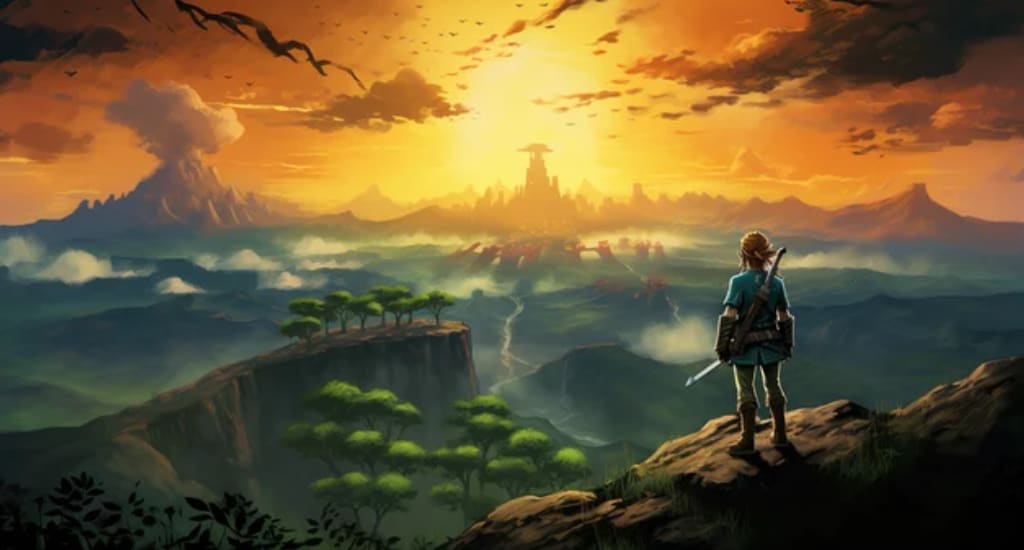
If there’s one thing The Legend of Zelda series loves more than breaking pots and hoarding rupees, it’s breaking fans’ brains with its convoluted, ever-shifting timeline. Nintendo has given us a mythos so tangled that even the Triforce of Wisdom might not be enough to make sense of it. From split timelines to reincarnating heroes, from ambiguous myths to outright contradictions, Zelda lore is less of a neatly woven tapestry and more of a dungeon where the walls keep rearranging themselves.
So grab a Lon Lon Milk, settle in, and let’s dive into the beautiful mess that is Zelda’s fractured chronology—where every answer leads to three new questions, and Nintendo occasionally shrugs and says, "Sure, why not?"
The Great Timeline Debacle: Nintendo’s Official (But Not Really) Solution
For decades, fans meticulously pieced together theories about how every Zelda game connected. Some insisted it was all one linear tale. Others argued for parallel worlds. The debates raged in forums, YouTube videos, and probably over a few heated family dinners. Then, in 2011, Nintendo dropped Hyrule Historia, a book that finally—finally!—revealed the official timeline.
And oh, what a timeline it was.
Instead of a single thread, we got a three-way split after Ocarina of Time. One branch where Link wins (Wind Waker), one where he loses (A Link to the Past), and one where he… gets sent back in time to relive his childhood (Majora’s Mask)? Sure, why not. It was like Nintendo took every fan theory, tossed them into a Cucco coop, and published whatever survived the chaos.
But here’s the kicker: even the official timeline has more holes than a Moblin’s armor. Where does Breath of the Wild fit? What about Tears of the Kingdom? Nintendo’s response has essentially been, "It’s somewhere way, way down the line… probably. Don’t think about it too hard."
Fan Theories: From Plausible to "Did You Hit Your Head on a Deku Nut?"
When Nintendo leaves gaps, fans rush in with theories ranging from brilliant to "I need to lie down."
Some argue that Skyward Sword’s time loops create alternate realities, meaning there could be infinite Zeldas—a concept that would make Doc Brown from Back to the Future quit time travel altogether. Others suggest that Link’s Awakening is all a dream (which, okay, fair), but then extend that logic to claim every game is just a different Link’s dying hallucination. Cheery, I know.
Then there’s the infamous "Zelda is Schizophrenic" theory, which posits that every character is just Zelda imagining her own fractured psyche. (Please don’t take this one seriously. Or do. I’m not the timeline police.)
The point is, when Nintendo refuses to give straight answers, the fandom compensates with enough speculation to fill the Great Sea.
Nintendo’s Greatest Trick: Canon? What Canon?
Here’s the beautiful thing about Zelda lore: Nintendo doesn’t really care about rigid consistency. They’ve outright said that gameplay comes first, story second. This is why we have:
- Ganon(dorf) dying and resurrecting more times than a soap opera villain.
- Rito evolving from Zoras in Wind Waker, but both species coexisting in Breath of the Wild.
- The Master Sword sleeping in a forest, then a temple, then a sky island, like it’s playing an eternal game of hide-and-seek.
And let’s not even get started on the geography of Hyrule, which rearranges itself like a drunk cartographer between games.
Nintendo’s approach is less "carefully constructed mythos" and more "vibes-based storytelling."
- Does it feel right for the game? Cool, throw it in.
- Does it contradict something from 20 years ago? Eh, the fans will figure it out.
Where Do We Go From Here? (Probably Another Timeline Split)
With Tears of the Kingdom introducing ancient Zonai lore and yet another version of Ganondorf, the timeline is—shockingly—even more of a mess. Some cling to the hope that Nintendo will release an updated Hyrule Historia 2: Timeline Boogaloo. Others have accepted that Zelda’s canon is a choose-your-own-adventure book where every page is on fire.
But maybe that’s the charm. The Legend of Zelda isn’t about rigid history—it’s about myth, legend, and the freedom to reinterpret. It’s a series where a talking tree can tell you the fate of the world, a chicken can be the deadliest enemy, and a timeline can branch more wildly than a Deku Sprout.
So the next time someone tries to argue about where Four Swords Adventures fits in the grand scheme of things, just smile, pour yourself a virtual milk, and say: "Timeline? What timeline?"
Because honestly? Even Nintendo isn’t sure.
About the Creator
Geek Peek
Geek Peek is your go-to hub for all things fandom, pop culture, and geek life. From deep dives into beloved universes to hot takes on trending shows, we celebrate the stories that shape our world.
Call of Duty Warzone Will Change How You Experience Battle Royale Forever
Few games have managed to dominate the battle royale genre and redefine modern multiplayer experiences like Call of Duty Warzone. Developed by Infinity Ward and Raven Software, and released on Xbox, Warzone brings intensity, precision, and unpredictability to a massive, fast-paced battlefield where every match tells its own story of survival and tactics.
By Lukáš Hrdlička7 days ago in Gamers


Comments
There are no comments for this story
Be the first to respond and start the conversation.