
The Evolution of Soulsborne Bosses
From kings to demigods


FromSoftware is a Japanese video game developer that has cemented their legacy in the gaming industry through the creation of a series of challenging and intricately designed action RPGs, collectively known as the “Soulsborne” franchise. This series includes titles such as Demon’s Souls, the Dark Souls trilogy, Bloodborne, Sekiro: Shadows Die Twice, and Elden Ring.
Central to these games’ appeal are their boss battles, which are known for their difficulty, creativity, and ability to evoke a range of emotions from players. So in this article, lets explore how fromsoftware bosses has evolved over the years and how it inspires the next generation of Soulsborne bosses.
Demon’s Souls
Demon’s Souls laid the foundation for what would become the Soulsborne series. The bosses in this game introduced players to the concept of high-risk, high-reward combat. Bosses like Vanguard and Phalanx introduced unique challenges to players with their larger than life presence and special abilities that forced players to think outside the box in order to defeat their foes. However, their appearance only set the stage for what’s to come for later bosses in the game.
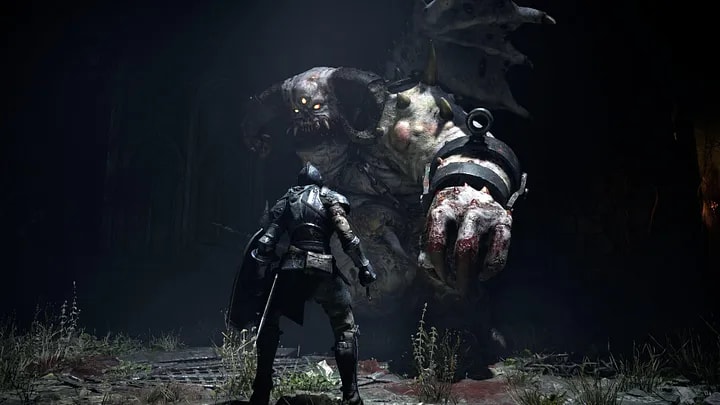
For instance, bosses like Tower Knight, Flamelurker, and the Old Hero intimidated players with their imposing size and aggressive attack patterns, forcing players to be on the defensive. Should players get greedy to deal some damage, they are instantly reminded of the boss’s strength as they get hit with a powerful attacks with a large area of effect (AOE).
The bosses in Demon’s Souls teaches players that these kind of bosses require patience as they whittle down their HP until they were given a chance to deal significant damage. However, it also leads them to believe that they could probably brute force their way through the game by investing all of their experience points in strength, which they would soon learn to be a grave misunderstanding.

For example, bosses like Fool’s Idol is a foe that specializes in long distance magic attacks and trickery that serves as the foil to any strength builds. Even gimmick bosses like Maiden Astraea and Adjudicator forces players with focused strength builds to rely on their special gameplay mechanics and discover a weakness instead of trying to muscle their way through the game.
With that in mind, every boss in the game introduces a new gameplay mechanic or requirement that forces players to adapt to their situation in order to defeat their foes. Whether this meant learning their attack patterns, explore the arena to discover a weakness, or even teaching players to take a moment to level up and come back at a later point in time.
Of course, this all culminates to the final boss of Old King Allant who serves as the anthesis of Demon’s Souls by testing player’s mastery of the game’s mechanics and their ability to adapt to a fast-paced and unpredictable opponent. Old King Allant has everything that has challenged players in previous encounters such as AOE attacks, aggressive behaviors/attack patterns, long ranged attacks, and a special attack that takes away your hard earned levels.
It is by defeating the final boss that proves your skill and mastery of the game mechanics and what fromsoftware studios has challenged you beat. While Demon’s Souls serves as the first of many Soulsborne titles, it stands the title that has set the standard for boss battles in future installments.
Dark Souls
With the release of Dark Souls in 2011, the game serves as the spiritual successor of Demon’s Souls and expanded the formula established by the former game by offering more complex bosses that challenged players to new heights.
While the bosses in Demon’s Souls exhibited a varied range of difficulty, it challenged player’s notions of what a difficult boss battle is. However, the bosses in Dark Souls supersedes its predecessor by featuring aggressive behaviors and slow but well-timed attack patterns with a large area of effect.

In fact, every main area boss in Dark Souls was designed to be physically larger, towering over players to incite a sense of intimidation and dread as they face off against monsters and fallen deity like lords. Bosses like the Centipede Demon, Great Grey Wolf Sif, and the Gaping Dragon are aggressive non-humanoid foes that challenged players due to their size, mobility, and fast-paced attack patterns that is reminiscent of the Flamelurker from Demon’s Souls.
Meanwhile bosses like Gravelord Nito, Bed of Chaos, Seath the Scaleless, and Gwyn Lord of Cinder challenges the players with their magical abilities, aggressive attack patterns, and large AOE’s that match their dark legends and epic lore. While each of these bosses can be defeated by utilizing a certain mechanic or exploiting an in-game weakness, they served as the blueprint of main boss encounters for future fromsoftware games.

Dark Souls also first introduced the second phase boss battle mechanic in the form of Ornstein and Smough. The duo is notorious and iconic among Soulsborne bosses due to the fact that players had to fight two different bosses in a small arena. In addition, players who defeated one must face the other which can either be a lightning powered Smough or a gigantic Ornstein.
This encounter alone pushed players to their limits and forced them to be economic with their heals, master their dodges, and to be patient throughout the whole encounter. As a result of their uniqueness and difficulty, Ornstein and Smough served as the first of many bosses with additional phases that push players past their breaking points.

Dark Souls also featured its first expansion pack that increases the difficulty of boss encounters by emphasizing and expanding on the most challenging aspects and behaviors of the base game bosses. From what was seen to the most challenging aspects of the base game’s boss encounters, players really struggled with bosses that were durable, agile, highly aggressive, and featured a variety of AOE attacks.
This meant that every boss in the Artorias of the Abyss DLC were faster, stronger, and even more mobile than any base game boss, which forced players to improve their reaction times and builds. DLC bosses such as Sanctuary Guardian, Artorias the Abysswalker, Black Dragon Kalameet, and Manus, Father of the Abyss, pushed players beyond their skills and challenged any notions that the DLC’s difficulty would be the same as the base game.
Dark Souls 2
Following the success of Dark Souls, the bosses of Dark Souls 2 had a larger emphasis on humanoid foes and presented players a unique set of challenges that would be extremely punishing if they were not aware of their surroundings.
As many of the bosses difficulty largely relied on environmental factors that naturally put players at a disadvantage, players needed to explore the world and make proper preparations that evens the playing field. While this design choice wasn’t as well received as the developers had thought, it taught Soulsborne players the value of exploration and discovery, and punished those who were trying to brute force their way through the game.

For example, the Lost Sinner’s arena is a dark cell that makes it difficult for players to see the prisoner from moving about unless they light the cell with a key found from a different area. This trend of environmental factors drastically impacting boss encounters has forced players to utilize the boss arena’s to their advantage.
Despite every Dark Souls 2 boss featuring some kind of environmental factor in its encounter, this creative choice was carried over to the three expansion packs, Crown of the Sunken King, Crown of the Old Iron King, and Crown of the Ivory King.

The expansion pack trilogy brought some of the most memorable and difficult bosses in the series that challenged players in different ways. For instance, Sinh, the Slumbering Dragon, and Elana, the Squalid Queen, in the Sunken King DLC forced players to be on the run from large scale attacks and enemy summons.
The Fume Knight and Sir Alonne in the Old Iron King DLC tested players’ endurance and combat skills with their aggressive and intricate attack patterns. In the Ivory King DLC, the Burnt Ivory King required players to manage multiple threats in a unique, phased battle. While Dark Souls 2 is still considered to be the black sheep in the Soulsborne series, the bosses that were featured has set for what's to come in future games.
Bloodborne
With the release of Bloodborne, fromsoftware studios shifted their focus to redefine the Soulsborne formula by incorporating faster, more aggressive combat, with an emphasis on offensive playstyles. In fact, due to Bloodborne’s gameplay, it punishes players who are strictly defensive and encourages them to learn how to dive in and dodge every attack that comes their way.
As bosses in this game were more visceral and horrific to fit the game’s Gothic horror theme, bosses like Father Gascoigne served as an early-game skill check, teaching players the importance of parrying and adaptability. Meanwhile bosses like Vicar Amelia, Darkbeast Paarl, and Amygdala served as a means to teach players how to aggressively dodge erratic attack patterns with large AOEs.
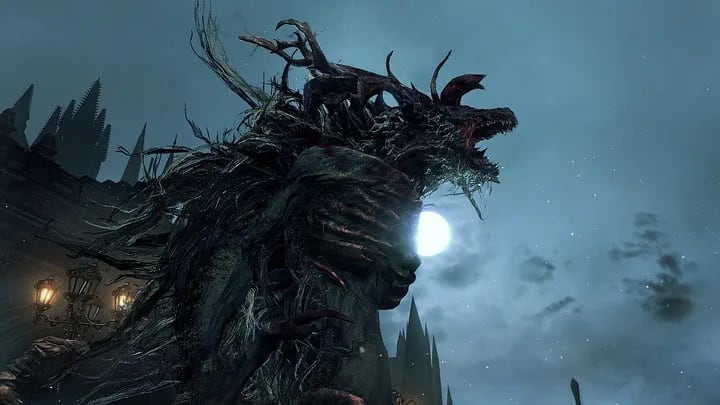
This fast paced aggressive gameplay was properly reflected in the Old Hunters DLC where it significantly expanded the range and complexity of boss fights and introduced more complex second phases to the DLC main bosses. For instance, Ludwig the Accursed showcased a transformation mid-fight and introduces new attack patterns and abilities that increases the fight’s difficulty.
Meanwhile bosses like the Living Failures and Laurence, the First Vicar, added unique attacks like meteor showers and fiery explosions. Lady Maria of the Astral Clocktower, on the other hand, showcased special techniques and combination attacks which served as the base for future warrior type bosses in future fromsoftware games.

Of course, this all culminates with the DLC’s boss, the Orphan of Kos, who serves as a relentless and brutal opponent, pushing players to their limits with its erratic and unpredictable attacks. With a harrowing atmosphere, the Orphan of Kos encounter makes the fight a test of endurance and skill which is needed for those who has still yet to fight the Gehrman, The First Hunter and the Moon Presence in the base game.
Dark Souls 3
Dark Souls 3 is often seen as a blend of the best elements from the previous games, with a faster combat system that is reminiscent of Bloodborne and a design philosophy that emphasized memorable, challenging boss encounters like previous Souls games. As a result, nearly every Dark Souls 3 boss relied on mobility and fast-paced attack patterns that is matched with a second phase that amplified their abilities to another level.
Early game bosses such as Iudex Gundyr, Vordt of the Boreal Valley, and the Abyss Watchers were all fast-paced encounters that required players to be agile and focused. The fast-paced nature of these encounters were meant to teach players to be just as aggressive and agile as these bosses, similarly to Bloodborne. It also served as skill check to prepare players for what is to come in mid to late game boss encounters.
Dark Souls 3 bosses also featured a grand and cinematic feel with intricate cutscenes and multi-phase fights that adds an epic aesthetic to the encounter, allowing players to feel more immersed in the experience and to add additional figurative weight on these encounters.
For instance, Aldrich Devourer of Gods, Dancer of the Boreal Valley, Yhorm the Giant, Oceiros the Consumed King, the Twin Princes, the Nameless King, and the Soul of Cinder all felt like the climax of their respective stories and their abilities and attack patterns only amplified that feeling. In addition, their aggressive behaviors, special grapple animations, and special phases are not only built from previous bosses, but also goes on to inspire future Soulsborne bosses in a similar fashion.
The DLCs for Dark Souls 3 continued to expand on these aspects and, as a result, have introduced some of the series’ most innovative and challenging bosses. Sister Friede in the Ashes of Ariandel DLC offered a three-phase fight, each phase ramping up in difficulty and complexity by adding new attack patterns, invisibility, elemental attacks, more large scale AOE attacks, and devastating combination attacks that can one shot players.
Meanwhile, The Ringed City DLC brought bosses with high natural defenses and health bars that really pushed players to be patient and methodical. For example, Darkeater Midir is a colossal dragon that required precise dodging and timing, and Slave Knight Gael served as a culmination of Soulsborne bosses that featured multiple phases and a range of attack patterns that demanded mastery of the game’s mechanics. This need of mastery would influence the next generation of fromsoftware games and bosses.
Sekiro: Shadows Die Twice
Sekiro: Shadows Die Twice is a departure from the traditional Soulsborne formula and opted for a new gameplay design that required a mastery of the controls. As the game had an emphasis on parrying and precision rather than dodging and stamina management, the game’s bosses are less about wearing down health bars and more about mastering the game’s unique mechanics in order to defeat them.

Unlike the towering monsters and beasts found in previous fromsoftware games, the majority of Sekiro’s bosses are human. However, due to Sekiro’s focus on dynamic swordplay and parrying, it requires players to focus on breaking the enemy’s posture rather than depleting their health. This led to intense, rhythmic duels where timing and precision were crucial.
While some beast-like bosses such as the Guardian Ape, Divine Dragon, and the Demon of Hatred are harder to implement this mechanic, they also feature second phases that introduce new attacks and erratic behaviors that makes them challenging in their own right.

However, this all culminates in the game’s final boss with Isshin, the Sword Saint, providing a four phase boss fight that feels like a gauntlet of challenges that players have to go through almost perfectly. As majority of Isshin’s attacks have a large damage output, range, and elemental damage, it forces players to utilize the space around them in order dodge these attacks.
While, the four phase boss mechanic has yet to be reintroduced, Isshin’s attack pattern and special attacks were well received due to their visually stunning and epic nature that heightened the narrative stakes. Despite the difficulty of trying to dodge and parry these attacks, it would go forward and influence the next generation of Soulsborne bosses.
Elden Ring
Elden Ring is the latest fromsoftware game that combines open-world exploration with intricate boss battles. It has taken everything it has learned from its predecessors and implements it within its own world and, as a result, has became one of the best and most challenging game to date.
The bosses in Elden Ring exhibit a highly aggressive behavior that is reminiscent of Bloodborne bosses, and are further characterized with high mobility, powerful, and a cinematic-esque feel that is very reminiscent of Dark Souls 3. As a result, Elden Ring bosses utilize attacks with large AOEs, and many of them have a special attack animations that is not only visually stunning, but can potentially one shot players if they are not careful, carefully blending jaw-dropping awe and frustrating despair.

Due to the number of bosses in Elden Ring, the game features a mix of boss encounters from colossal world-shaking battles to brutal and visceral fights to even intimate skill-based fights. Every one of these encounters challenges players and forces them to think about their builds, analyze their surroundings, and carefully learn the bosses attack patterns.
For example, bosses like Starscourge Radahn, Dragonlord Placidusax, Maliketh the Black Blade, Lichdragon Fortissax, and the Elden Beast are colossal bosses that are epic by scale and design. They all feature a move set that is a mix of long range attacks, brutal grab animations, and devastating special moves that catches people off guard, making them just as memorable as they are difficult to defeat.
Meanwhile boss encounters like Commander Niall, Malenia Blade of Miquella, and Radagon of the Golden Order serve as the anthesis of intimate duels that rely on skill, a mastery of dodging, and well timed attacks in order to defeat them. While some dungeon bosses in Elden Ring are slightly stronger enemies found in the open world, the main bosses serve as an amalgamation of bosses from previous fromsoftware titles.
Malenia, for instance, is regarded as the hardest boss in the Soulsborne franchise due to her agility, swordplay, combination attacks, and an ability to heal after dealing damage to the players. However, she was able to earn that title and notoriety because her boss design was inspired from her predecessors like Lady Maria from Bloodborne, Sister Friede from Dark Souls 3, and even Knight Artorias from Dark Souls.

Due to every Elden Ring boss being a byproduct from a previous Soulsborne boss or enemy, the game’s Shadow of the Erdtree DLC, continued fromsoftware’s design trend of expanding on the most difficult aspects of boss battles into its additional content. From what was seen in the DLC, it stands as one of the most challenging expansion packs to date.
DLC bosses such as the Divine Dancing Lion, Rellana the Twin Moon Knight, Midra Lord of Frenzied Flame, Messmer the Impaler, and Bayle the Dread all expand on qualities on what makes the base game’s bosses hard. From what is seen in the base game, the DLC bosses are more aggressive, mobile, and utilize special skills and abilities that are extremely difficult to dodge, giving players less time to heal and counterattack.

In addition, Elden Ring bosses have a more cinematic feel to it, creating a deeper sense of immersion for players as they progress through the game. As a result of this, players feel the inherent sense of danger when they face against these monsters and fallen god like warriors. While the psychology behind these difficult games can be stress inducing, it can also provide players catharsis for defeating such a powerful foe.
Despite the increased level of difficulty and some backlash from many casual players, Soulsborne bosses are representing the studio’s legacy and notoriety of creating the hardest bosses imaginable and Elden Ring stands as the latest testament to that philosophy.
What is the Future of Soulsborne Bosses?
When it comes trying to guess what the future of Soulsborne bosses will be like in new fromsoftware games, just by looking at the studios history and at some of the most notorious bosses, they will likely be aggressive, agile, and worthy to their respective lore.

While every Soulsborne boss requires a level of commitment and dedication in order to defeat them, they exhibit a range of abilities and behaviors that is entirely unique. However, for longtime Soulsborne players facing off bosses across multiple fromsoftware games will almost seem nostalgic for them as many of them exhibit similar behaviors and personalities.
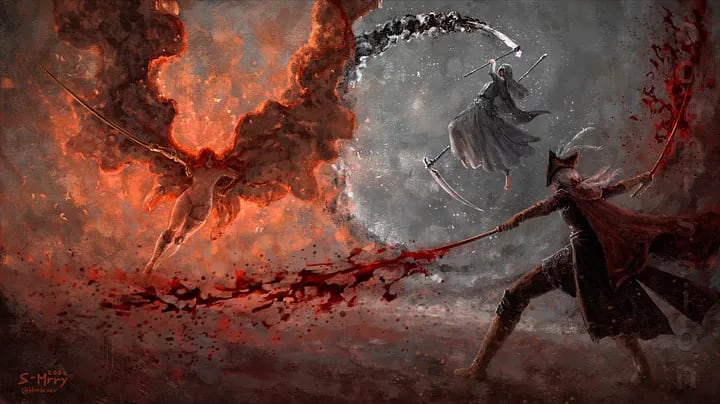
Whether its recognizing how Bayle the Dread’s explosive roar animation is like Manus Father of the Abyss or seeing how the Abyss Watchers fiery swings and combination attacks are like Lady Maria’s phase two, there is a clear line of historical significance in the development of these bosses. While this line of development is more of a stylistic choice for game design, there is no denying that the history of these difficult bosses are slowly being made with every new title.
If you liked what you read, be sure to like and follow for more related content!
About the Creator
Jay Kobayashi
A starving writer from LA who aspires to be plagiarized one day. I like to write about academic pieces that identifies philosophy and psychology in pop culture, and sometimes random fun pieces that interests me or the algorithm!
Keep reading
More stories from Jay Kobayashi and writers in Gamers and other communities.
Is Elden Ring’s DLC Difficulty Justifiable?
Elden Ring has gotten widespread acclaim for its challenging yet rewarding gameplay. However, with the release of the game’s Shadow of the Erdtree DLC, it has sparked up a debate in the community for its difficulty, with many players commenting that the game is “too hard to play”. Considering that the developers are notorious for making naturally difficult games and bosses, should this be a surprise or did the developers at fromsoftware go too far?
By Jay Kobayashi2 years ago in Gamers
Gears 5 Will Shock You With Its Darkest Story Yet on Xbox
Few action games manage to combine raw intensity with emotional storytelling as effectively as Gears 5. As a key title from Xbox, it carries forward a legacy built on explosive combat while daring to explore deeper, more personal themes. This balance between spectacle and substance is what makes the experience stand out.
By Lukáš Hrdlička6 days ago in Gamers
The BAFTA Awards
By now, in a stunning departure from recent years, most of the world is aware of what happened at the BAFTA film awards. Social Media Headlines will tell you the bare bones: that John Davidson, a Tourette's Syndrome advocate, shouted a racial slur at two Actors of Colour, Michael B Jordan and Delroy Lindo.
By Natasja Rose4 days ago in Psyche



Comments (1)
Such a great, informative piece! Awesome work, I learned a lot about these bosses and they all sound really interesting.