
THE EVOLUTION OF SKI JUMPING
From Skiing Origins to Olympic Heights:The Evolution of Ski Jumping.

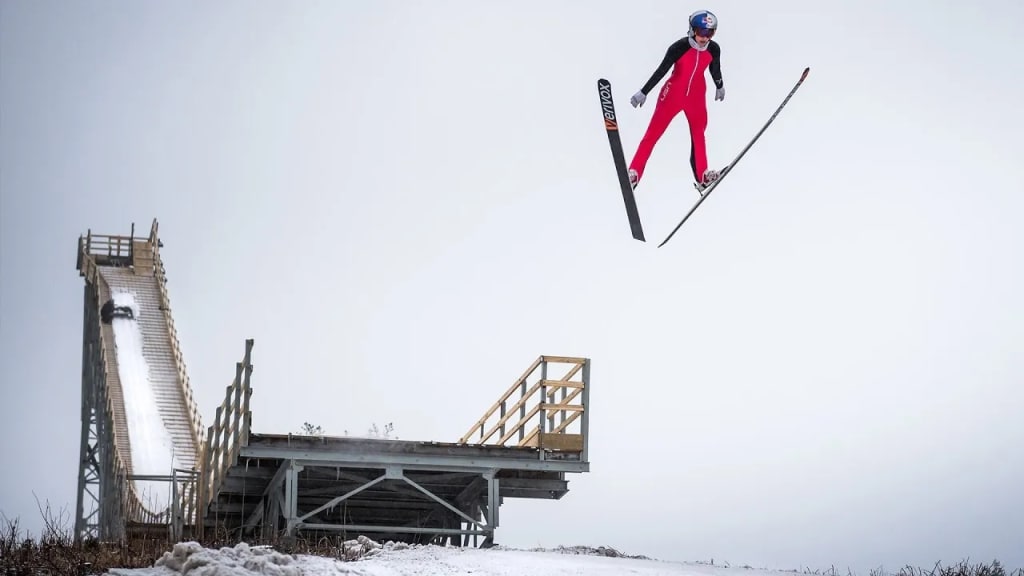
THE EVOLUTION OF SKI JUMPING
Ski jumping is one of the most thrilling and iconic events in the Winter Olympics, blending athleticism, precision, and adrenaline. It has evolved significantly since its inception, from its rudimentary beginnings in the 19th century to the high-flying spectacle it is today. The evolution of ski jumping can be traced through various stages, including technological advancements, changes in competition formats, and the increasing specialization of athletes in the sport.
Origins of Ski Jumping
Ski jumping originated in Norway in the late 19th century, with the first known ski jump competition taking place in 1862 in the town of Haldane. Initially, the sport was a way for Norwegians to show off their skills in navigating the rugged terrain of the Nordic landscape. Skiers would perform jumps as part of their daily routines, but it was not until a competition in Norway that ski jumping began to formalize as a competitive event.
The early competitions were held over natural hills, with athletes competing for distance rather than style or technique. The jumpers would take off from wooden ramps, which were far less advanced than the specialized in-run ramps of today. These primitive competitions were a far cry from the well-defined jumps seen at the Winter Olympics today. However, it laid the foundation for the modern sport of ski jumping.
The First International Ski Jumping Competitions
By the early 20th century, ski jumping had spread beyond Norway. The first World Ski Championship was held in 1925, establishing ski jumping as an international sport. The event allowed athletes from different countries to compete against each other, solidifying the sport’s international appeal. It was during these early competitions that the basic form and structure of modern ski jumping began to take shape.
The Evolution of the Jumping Hill and Technique
One of the most significant developments in ski jumping came with the evolution of the hill itself. The ski jumps gradually became larger and more specialized, with innovations like the addition of a take-off ramp, which allowed athletes to launch themselves higher into the air. Ski jumping hills also evolved from natural hills to artificial ones, designed specifically for the sport.
The introduction of the "V-style" jump in the 1980s was another milestone in the sport’s evolution. Athletes began to spread their skis in a "V" shape during flight, which helped them achieve longer distances by improving aerodynamics. This technique was pioneered by Norwegian jumper, Jan Boklöv, and initially met with skepticism. However, as athletes began to adopt the V-style, it became the standard technique for the sport. The shift marked a turning point in the sport’s competitiveness, as jumpers using the V-style could consistently achieve much longer distances than those who relied on the traditional parallel ski style.
Technological Advancements
Technology has played a crucial role in the evolution of ski jumping. The skis used in the sport have undergone major transformations in terms of materials, design, and length. Initially, skis were made of wood and were relatively short. However, with advancements in materials like fiberglass and carbon fiber, modern skis are lighter, stronger, and more flexible, providing jumpers with greater control and distance. The length of skis has also increased over the years, helping jumpers achieve higher jumps and longer flights.
The development of sophisticated aerodynamic suits is another area where technology has influenced ski jumping. In the past, athletes wore thick, heavy clothing that limited their performance. Today, ski jumpers wear tight-fitting suits made from lightweight, aerodynamic materials that minimize drag and allow for better control in the air.
Ski Jumping in the Winter Olympics
Ski jumping made its Olympic debut at the first Winter Games in 1924 in Chamonix, France. The event has been a staple of the Winter Olympics ever since, with men’s ski jumping being a regular part of the program. Women’s ski jumping was introduced much later, with the first women’s Olympic ski jumping competition taking place at the Sochi 2014 Winter Games, marking a significant step forward in gender equality in the sport.
Over the years, the format of ski jumping events at the Olympics has evolved, with changes to the number of jumps and the scoring system. In modern competitions, athletes perform two jumps, and their scores are based on distance, style, and technique. These changes have made the sport more dynamic and competitive, as athletes are pushed to continually improve their skills and techniques.
The Future of Ski Jumping
Today, ski jumping continues to captivate audiences worldwide. It is a sport that combines athleticism, precision, and high-risk excitement. The current era is marked by extremely high jump distances, with world records regularly being broken. Ski jumping has become a highly specialized discipline, with athletes dedicating their careers to perfecting their skills and advancing the sport.
Looking to the future, it is likely that technology will continue to shape the evolution of the sport, from the development of new materials for skis and suits to more sophisticated training techniques. Additionally, the continued growth of women's ski jumping and increased representation of female athletes is expected to play a major role in the evolution of the sport, bringing new talent and excitement to the Olympic stage.
In conclusion, ski jumping has come a long way from its humble beginnings in the Norwegian mountains. It has evolved into one of the most exciting events in the Winter Olympics, thanks to advancements in technique, technology, and the growing international appeal of the sport. With its continued growth and innovation, ski jumping will remain a captivating spectacle for years to come.
About the Creator
Badhan Sen
Myself Badhan, I am a professional writer.I like to share some stories with my friends.
Keep reading
More stories from Badhan Sen and writers in Gamers and other communities.
THE HISTORY OF ALPINE SKIING IN THE WINTER OLYMPICS
The History of Alpine Skiing in the Winter Olympics Alpine skiing has become one of the most thrilling and watched events in the Winter Olympics, but its journey to prominence in the Games has been gradual and fascinating. With roots in the snowy mountains of Europe, alpine skiing made its Olympic debut in the 1930s and has since grown to represent a key aspect of the Winter Olympic Games.
By Badhan Senabout a year ago in Gamers
U4gm Energy Shield, Spirit, and Skill: Witch Meta Explained
If you’ve been diving into Path of Exile 2 lately, you’ve probably noticed that some Witch builds just feel… unstoppable. Fast clears, consistent DPS, and solid survivability seem baked into the top-tier setups. The secret isn’t a single skill or flashy item—it’s a combination of Energy Shield, Spirit stacking, and skill scaling, carefully balanced to create a meta-defining powerhouse.
By Billo Nali3 days ago in Gamers
Best GPU for Ryzen 5 3600 in 2026: The Ultimate Guide
The Ryzen 5 3600 remains one of the most popular processors in the world. Even in 2026, it powers millions of gaming rigs. But as modern games like Grand Theft Auto VI and The Elder Scrolls VI push graphics fidelity to new heights, your old GPU might be struggling.
By Aveloria Thessar6 days ago in Gamers



Comments (1)
Hey, just wanna let you know that this is more suitable to be posted in the Unbalanced community 😊