
THE ECONOMIC IMPACT OF THE 2016 RIO OLYMPICS ON BRAZIL
An Analysis of Costs,Benefits,and Legacy Effects.

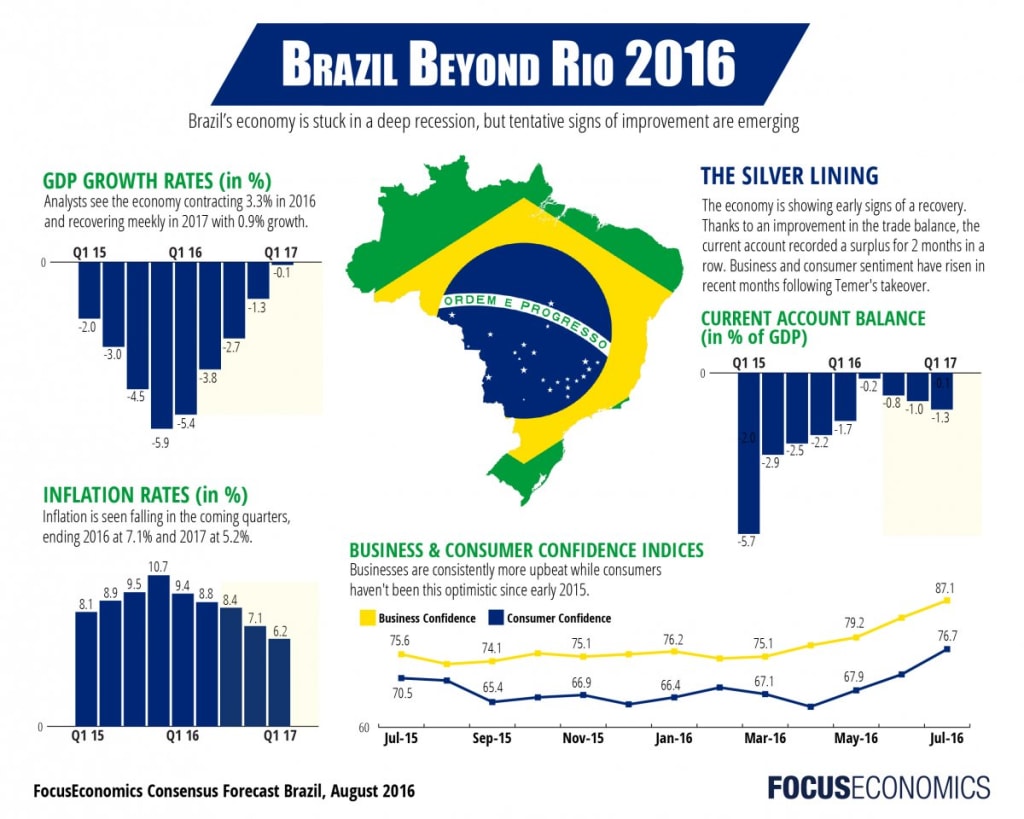
The 2016 Rio Olympics held in Brazil were expected to be a turning point for the country's economy, offering long-term benefits through infrastructure development, increased tourism, and improved global stature. However, the economic impact of the Games was a mixed story, with both positive and negative consequences, which were shaped by the country's pre-existing economic situation, political turmoil, and management of the event.
(I)Preparation and Costs
The Rio Olympics were initially seen as an opportunity for Brazil to showcase its growth as an emerging market, with investments made in infrastructure, sports facilities, and urban development. However, the Games' preparation was marred by rising construction costs and delays. The total cost of the Olympics was estimated at $13.1 billion, a significant increase from the original projections of about $2.8 billion. A substantial portion of this was allocated for building and upgrading infrastructure, including the Olympic Village, new sports venues, roads, and the expansion of the Rio de Janeiro metro system.
Much of the funding came from the federal government and private sector investments, but Brazil's economy was already struggling with recession and rising debt, which meant that the country was running on borrowed money and facing austerity measures. This created a financial burden that would weigh heavily on the country long after the Olympics concluded.
(II)Economic Downturn and Recession
When Brazil was awarded the 2016 Olympics in 2009, the country was experiencing economic growth, but by the time the Games took place, the situation had changed dramatically. Brazil was in the midst of a severe recession, which began in 2014 and lasted several years. The economy shrank by 3.8% in 2015, and unemployment rose, reaching 11.3% by the time of the Games. The country's political instability, including the impeachment of President Dilma Rousseff, further compounded the challenges.
This economic downturn meant that the expected benefits of the Olympics, such as a boost to employment, tourism, and business activity, were significantly diminished. The economic impact of the Olympics was therefore far less than anticipated, and many of the promised job opportunities for locals never materialized. The public sector faced cuts in social spending and investment, leaving citizens feeling the strain of both economic recession and the perceived misuse of resources for the Olympics.
(III)Tourism and Global Exposure
While the Rio Olympics did bring increased tourism to Brazil, the long-term benefits were undercut by the overall economic decline. During the Olympics, Rio saw an estimated 500,000 visitors, bringing in substantial revenues. The influx of tourists, particularly from overseas, contributed to short-term spending in sectors like hospitality, transportation, and retail.
However, many of the expected long-term boosts to tourism did not materialize, as the country's reputation was tarnished by its ongoing recession and political instability. Additionally, after the Games, the economic slowdown and concerns over safety and political turmoil led to a sharp decline in foreign visitors to Rio and Brazil as a whole.
(IV)Infrastructure and Legacy
A major component of the Olympic legacy was the infrastructure development. New sports venues, transportation systems, and other facilities were designed to serve both the Olympics and future development. Some key projects included the Barra Olympic Park, the Rio Metro Line 4, and the Olympic Village. While these projects improved the city's infrastructure, many of the new facilities were either underused or unprofitable post-Games.
For instance, the Olympic Village was initially envisioned as a major residential area, but it faced significant challenges in transitioning from an athlete accommodation to a commercial property. In the case of the sports venues, many were left unused, and their upkeep proved costly. Critics argue that the economic benefits of the Olympic infrastructure were overstated and that the focus on glamorous projects diverted attention away from the long-standing needs of Brazilian citizens, such as healthcare, education, and poverty alleviation.
(V)Long-Term Economic Impact
In the longer term, the economic impact of the Rio Olympics was more negative than expected. Brazil's already fragile economy and the political uncertainty surrounding the country made it difficult to turn the Olympics into a sustainable economic boost. The recession, combined with the high costs of hosting the Games, meant that Brazil was left with a heavy financial burden in the years following the event.
The expected boost to Brazil’s global reputation and investment in the country did not materialize as planned. Instead, the country experienced further economic decline, which led to increased skepticism about the efficacy of hosting the Games during a period of economic instability.
End
The economic impact of the 2016 Rio Olympics was a mix of both short-term gains and long-term challenges. While there were immediate benefits in terms of tourism and infrastructure development, the Games also left Brazil with a legacy of debt, underutilized facilities, and a deeper economic crisis. The high costs of hosting the Olympics, compounded by the country’s pre-existing economic struggles, led many to question the wisdom of pursuing such an expensive event during a period of economic downturn.
In hindsight, the 2016 Rio Olympics serve as a cautionary tale for future host cities about the importance of aligning large-scale events with stable economic conditions and sustainable planning. The Games were a short-term success in terms of global exposure and tourism but failed to provide the lasting economic benefits that Brazil had hoped for.
About the Creator
Badhan Sen
Myself Badhan, I am a professional writer.I like to share some stories with my friends.
Keep reading
More stories from Badhan Sen and writers in Gamers and other communities.
WHY PARIS IS EXCITED FOR THE 2024 OLYMPICS
The excitement surrounding the 2024 Summer Olympics in Paris is palpable, as the city prepares to host the world’s largest sporting event for the third time in its history. Paris was awarded the honor of hosting the Games on September 13, 2017, after a competitive bidding process. The 2024 Olympics promise to be a celebration of sport, culture, and innovation, blending the rich history of Paris with the future of international sporting events. Here are several key reasons why Paris is buzzing with anticipation for the 2024 Olympics:
By Badhan Senabout a year ago in Gamers
Animal Crossing: New Horizons 3.0 Update Review:
After 1,410 hours across five years and loving this game enough to gift it to multiple friends, I never expected to be writing this review. When Nintendo declared version 2.0 the "final major update" back in November 2021, we all accepted that New Horizons' story was complete. Four years later, here we are with version 3.0, released January 14, 2026, and I have complicated feelings about this surprise resurrection.
By Parsley Rose about 16 hours ago in Gamers
Stardew Valley Friendship Decay: How the 1.7 Social Update Changes Everything
Relationships in Pelican Town have always been a delicate dance of daily greetings and carefully selected gifts. You spend seasons chasing down Sebastian in his basement or waiting for Haley by the fountain, all to see those little red hearts fill up.
By Richard Bailey7 days ago in Gamers
Rachel Reviews: The Spiral Archive by Pieter Hendrik
It's difficult for me to know where to start with a review of this book as it was, for me, an entirely unique experience and one that I'll probably never have again. I don't want that to be interpreted as unenjoyable but it has left me scratching my head a little and ruminating on its content, its themes and its characters.
By Rachel Deeming2 days ago in BookClub


Comments
There are no comments for this story
Be the first to respond and start the conversation.