
THE CULTURAL LEGACY OF THE 1980 MOSCOW OLYMPICS
The Cultural Legacy of the 1980 Moscow Olympics:Bridging East and West Through Sport and Art.

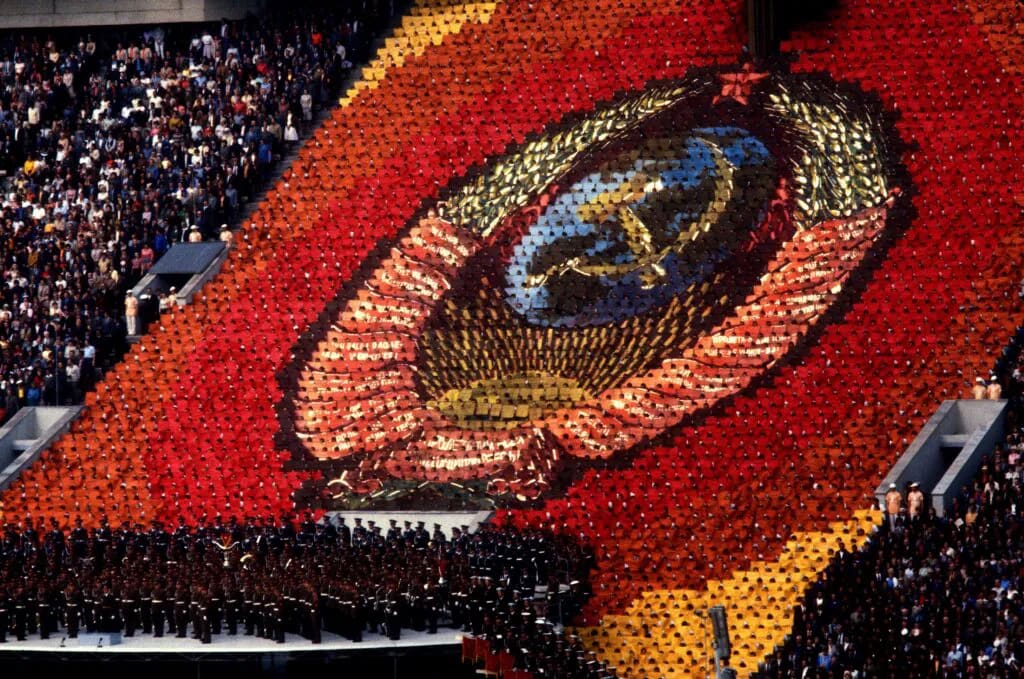
The 1980 Moscow Olympics, officially known as the Games of the XXII Olympiad, were a landmark event not only in the history of the Olympic Games but also in the broader cultural and political context of the time. Held in Moscow, Soviet Union (USSR), from July 19 to August 3, 1980, the event was marked by both sporting achievements and international political tensions, reflecting the Cold War climate of the era. Beyond the athletic competitions, the 1980 Olympics had a significant cultural legacy that impacted both the host country and the global community.
(I)Political Context and Boycott
One of the most defining features of the 1980 Moscow Olympics was the boycott by several Western countries, led by the United States, in protest of the Soviet Union’s invasion of Afghanistan in December 1979. The U.S. was joined by over 60 countries, including Canada, Japan, and most of Western Europe, which severely impacted the participation of athletes and teams from these countries. Only 80 countries competed, the lowest since the 1930s. The boycott had profound effects on the Games, not only by diminishing the international competition but also by overshadowing the Olympic spirit of unity and peace that the event traditionally symbolizes.
Despite the political tensions, the Soviet Union, under the leadership of Leonid Brezhnev, sought to showcase its political strength, cultural pride, and technological advancement through the Olympics. The event became a tool for the Soviet government to project an image of the USSR as a powerful, modern, and successful nation.
(II)Cultural and Propaganda Significance
The 1980 Moscow Olympics were used extensively for propaganda purposes. The Soviet government saw the Games as an opportunity to promote its ideological values of communism, the superiority of the Soviet system, and its status as a global superpower. The opening ceremony, held at the Luzhniki Stadium, was a spectacle of Soviet strength, featuring an array of athletes, military displays, and representations of Soviet culture and history. This was intended to present the USSR as a progressive and unified country to the rest of the world, despite the political climate surrounding the Games.
Culturally, the Moscow Olympics symbolized the USSR’s technological and organizational prowess. The event was broadcast to millions of people worldwide, and the USSR used it to promote its space exploration achievements, scientific advancements, and the Soviet way of life. The mascot, a friendly bear named Misha, became an enduring symbol of the Games, representing the hospitality and charm of Soviet culture.
However, the Soviet Union also faced criticism for its restrictions on media coverage and censorship, limiting the extent to which the global community could freely witness the realities of life in the USSR. This dynamic created a stark contrast between the carefully curated image presented during the Olympics and the political and social conditions that were often suppressed under the regime.
(III)Impact on Soviet Society
The 1980 Moscow Olympics had a significant impact on Soviet society, both positively and negatively. For the people of the USSR, the Games were a source of national pride. The Olympics offered a rare opportunity for Soviet citizens to experience global attention and engage with the international community. The Olympic venues in Moscow and other cities were built or renovated, contributing to the development of infrastructure, including sports complexes and transportation networks. These improvements, though criticized for their focus on Olympic-related projects at the expense of domestic needs, contributed to the growth of sports and recreation in the country.
On the downside, the absence of athletes from many Western countries led to a diminished sense of global solidarity. The Games, traditionally a venue for fostering international peace and cooperation, were instead framed by a narrative of division and rivalry. This divisiveness was not lost on the citizens of the Soviet Union, many of whom viewed the political boycott as an indication of the ongoing tensions between East and West.
(IV)Long-Term Cultural Legacy
The 1980 Moscow Olympics left a lasting cultural legacy in several ways. First, it contributed to the global recognition of Soviet achievements in sports, particularly in disciplines like gymnastics, wrestling, and track and field. Soviet athletes such as Viktor Saneyev, Nikolai Andrianov, and Olga Korbut became international heroes, further strengthening the perception of the USSR as a dominant force in the Olympic Games.
Moreover, the Games accelerated the development of international sports diplomacy. While the political boycott hindered global participation, the event also highlighted the role of sport in bridging divides between countries. Over time, despite the tensions of the Cold War, sports continued to serve as a diplomatic tool, contributing to improved relations in later decades.
The Olympics also helped modernize Soviet culture in some respects, paving the way for greater engagement with the international community. While political censorship remained pervasive, the event sparked interest in Western media, fashion, and entertainment. Soviet citizens gained greater access to international news and entertainment, influencing popular culture in the years that followed.
In The End
The cultural legacy of the 1980 Moscow Olympics was shaped by the political tensions of the Cold War, the use of the Games for Soviet propaganda, and the personal achievements of athletes who competed under extraordinary circumstances. While the boycott limited the participation of Western countries and diminished the universality of the Olympic experience, the Games nonetheless left a mark on the world. The Moscow Olympics demonstrated the power of sports to project national identity, influence international perceptions, and inspire future generations of athletes. Despite the political backdrop, it remains a key event in the history of both the Olympic Games and the Soviet Union.
About the Creator
Badhan Sen
Myself Badhan, I am a professional writer.I like to share some stories with my friends.
Keep reading
More stories from Badhan Sen and writers in Gamers and other communities.
THE IMPACT OF THE OLYMPICS ON URBAN DEVELOPMENT
The Olympic Games, one of the most prestigious international sporting events, are not only a platform for global athletic achievement but also a powerful catalyst for urban development. The host cities experience a significant transformation, often leading to both positive and negative outcomes in terms of infrastructure, economic growth, and social change. Over the years, the Olympics have shaped the development of cities, influencing everything from the creation of sports facilities to the revitalization of neglected neighborhoods. However, while the event promises short-term benefits such as enhanced global visibility and increased tourism, the long-term impact of the Olympics on urban development is complex and multifaceted.
By Badhan Senabout a year ago in Gamers
Master the New Economy: The Best Way to Use Magic Dust After Update 34.0
The recent arrival of Update 34.0 in Rush Royale has completely shifted the ground beneath our feet. For long-time players, the game once felt like a steady climb of critical damage and equipment grinding. Now, the developers have introduced a total rework of the gear system, replaced enchantments with artifacts, and redefined how we value our most precious resources.
By Richard Bailey4 days ago in Gamers



Comments (1)
What a great World history lecture.