
The Advent of Virtual Reality (2010s-Present)
The VR Revolution: From Sci-Fi Dreams to Immersive Reality

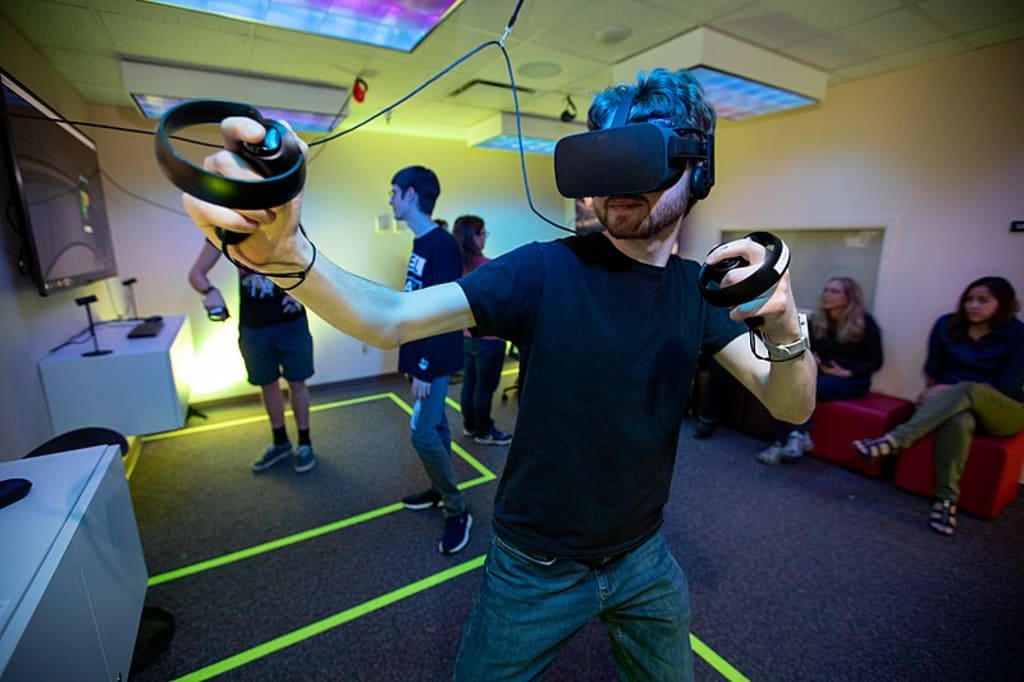
The emergence of virtual reality (VR) in the 2010s marked a transformative period in the realm of immersive technology, reshaping the landscape of how individuals engage with digital content and experiences. Although the conceptual origins of VR can be traced back several decades, it was in the 2010s that a convergence of advancements in hardware, software, and accessibility paved the way for a new era.
At the forefront of this revolution was the release of the Oculus Rift in 2016. Conceived by Palmer Luckey and developed by Oculus VR, a company later acquired by Facebook, the Rift represented a watershed moment in consumer VR technology. Offering a more affordable yet sophisticated VR experience, the Oculus Rift democratized access to immersive technology, bringing it within reach of a broader audience.
The gaming industry played a pivotal role in propelling the adoption of VR. Developers began creating captivating and interactive experiences that took advantage of the medium's unique capabilities. As a result, VR headsets from companies like HTC, Sony, and Valve entered the market, enriching the landscape with diverse options. Equipped with features such as motion tracking, hand controllers, and improved display resolutions, these headsets heightened the sense of presence and immersion for users.
Beyond the confines of gaming, VR found applications in a myriad of fields, including healthcare, education, and enterprise. In the medical sector, professionals embraced VR for simulations and training, providing a risk-free virtual environment for practicing complex procedures. The education sector leveraged VR to offer students virtual field trips, historical reenactments, and interactive learning experiences. Meanwhile, in the business world, virtual meetings and collaborative environments gained prominence, particularly with the global expansion of remote work.
While VR took center stage, the 2010s also witnessed the ascendancy of augmented reality (AR). Distinguishing itself from VR, AR overlays digital information onto the real world, creating a blended experience. Products like Microsoft's HoloLens and various mobile AR applications exemplified the potential of seamlessly integrating digital and physical realities.
As technology progressed, VR headsets evolved to become more compact, wireless, and capable of delivering higher-quality visuals. The advent of standalone VR devices, exemplified by products like the Oculus Quest, eliminated the need for external sensors or a tethered connection to a computer. This not only enhanced user-friendliness but also increased portability, allowing users to experience VR without being tethered to a specific location.
Looking ahead, the continuous development of VR technology promises even more immersive experiences. Advancements in haptic feedback, eye-tracking, and artificial intelligence are poised to further elevate the level of realism and engagement in virtual environments. The impact of VR on entertainment, education, healthcare, and various industries is expected to expand, influencing how people interact with digital content in the years to come.
The entertainment sector, in particular, stands to undergo a profound transformation as VR becomes increasingly intertwined with traditional forms of media. VR experiences offer new possibilities for storytelling, allowing users to step into the narrative and become active participants. The potential for immersive cinematic experiences, virtual concerts, and interactive narratives holds promise for revolutionizing the way we consume and engage with entertainment content.
In education, VR is poised to play a pivotal role in revolutionizing the learning experience. Virtual field trips can transport students to historical landmarks, outer space, or even microscopic realms, providing a level of engagement and understanding that traditional methods may struggle to achieve. Hands-on simulations in science, medicine, and other fields can offer students practical experience in a controlled virtual environment, fostering better retention and comprehension of complex subjects.
Healthcare, too, stands to benefit significantly from the ongoing advancements in VR technology. Surgical simulations and medical training in virtual environments enable healthcare professionals to refine their skills and knowledge without putting patients at risk. VR is also being explored for therapeutic purposes, such as treating phobias, PTSD, and anxiety disorders. The ability to create controlled, immersive environments can aid in exposure therapy and other therapeutic interventions.
In the realm of business and enterprise, VR is becoming an invaluable tool for collaboration, training, and remote work. Virtual meetings and collaborative environments provide a sense of presence, making remote collaboration more engaging and effective. Training programs conducted in virtual spaces can simulate real-world scenarios, allowing employees to hone their skills in a risk-free environment. The increasing integration of VR into various industries is likely to reshape workflows, communication methods, and training approaches.
As VR technology continues to advance, addressing challenges such as motion sickness and improving the realism of virtual environments will be crucial for broader adoption. Additionally, ensuring that VR experiences are inclusive and accessible to diverse populations will play a pivotal role in maximizing the technology's impact.
About the Creator
Keep reading
More stories from AKHTAR PIPERDI and writers in Gamers and other communities.
Online Multiplayer and Connectivity (2000s-2010s)
Golden Age of Gaming: How the 2000s-2010s Revolutionized Online Multiplayer Remember huddled around a friend's console, controllers clutched in sweaty palms, trash-talking and cheering as pixels danced on the screen? That was the golden age of online multiplayer gaming, a decade that transformed how we connected, competed, and experienced games. Buckle up, because we're blasting back to the 2000s-2010s, a time when broadband became our best friend, consoles turned into social hubs, and titles like World of Warcraft and Halo forged online communities that stretched across continents.
By AKHTAR PIPERDI2 years ago in Gamers
How Fortnite Became More Than Just a Game
When Fortnite launched in 2017, it was widely seen as just another multiplayer video game. Nearly a decade later, that view no longer fits reality. Fortnite has grown into a global digital platform that blends gaming, creativity, entertainment, and social interaction. This transformation did not happen overnight, and it did not rely on hype alone. Instead, it was driven by consistent innovation, community involvement, and a shift in how people use online spaces.
By Games Mode On6 days ago in Gamers
Rsvsr Buried City Blueprint Farming: Top Loot Spots in ARC Raiders
In ARC Raiders, loot is everything. The thrill of the game isn’t just about shooting or surviving—it’s about finding the best blueprints and gear before anyone else does. And if you want to maximize your rewards, the Buried City map is where you need to be. With its complex layout, hidden containers, and vertical structures, it’s packed with high-value loot spots—but only if you know where to go.
By Billo Nali5 days ago in Gamers
Affection and Healing for Yourself
During the night of the last quarter moon, I gathered my ritual supplies. I carefully handled the chunk of black tourmaline that would protect me from your overall negative and narcissistic energy. I carefully walked the house with my stick of selenite in hand, asking the universe to cleanse our working space.
By Alisha Wilkins ✒️🦋🖋️4 days ago in Fiction


Comments
There are no comments for this story
Be the first to respond and start the conversation.