
THE 2004 ATHENS OLYMPICS AND THE CONTROVERSIAL DELAY
Racing Against Time:The Delays,Challenges,and Triumphs of the 2004 Athens Olympics.

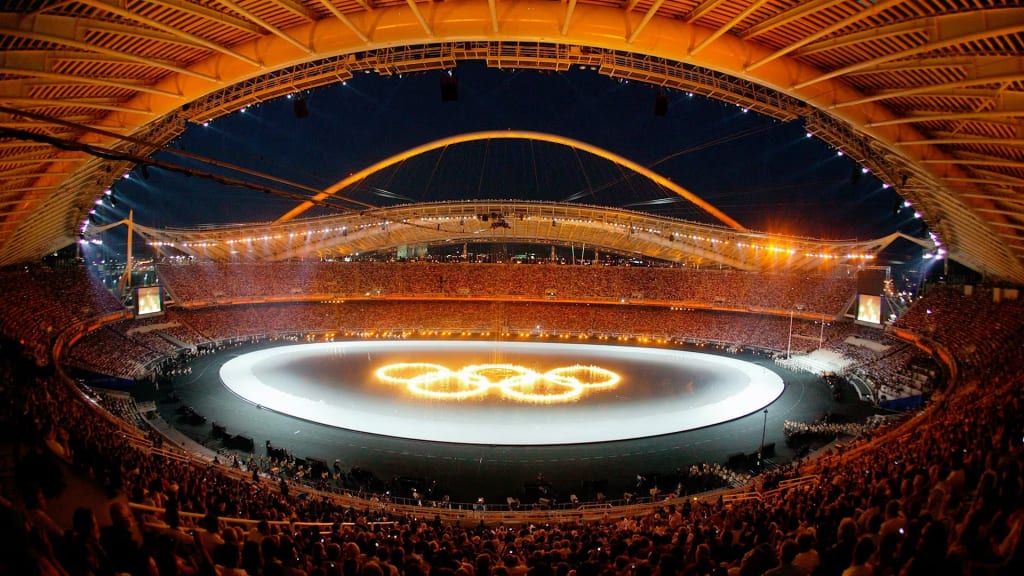
The 2004 Athens Olympics, officially known as the Games of the XXVIII Olympiad, were meant to mark a triumphant return of the Olympics to its birthplace, Greece. After a long gap of 108 years since the first modern Olympic Games in Athens in 1896, the Greek capital was set to showcase its rich history and cultural heritage to the world. However, the journey to the 2004 Athens Olympics was fraught with significant challenges, most notably the controversial delay in the completion of the necessary infrastructure and venues. These issues led to a series of setbacks and criticisms that overshadowed the Games in the lead-up to the event. This article explores the controversies surrounding the delay, the impact it had on the Olympics, and how the Games ultimately overcame these challenges.
The Bidding Process and Initial Expectations
Greece's bid to host the 2004 Olympics was initially met with enthusiasm, as the Games were returning to their historical home. In 1997, Athens was awarded the Games over other contenders, including Rome, Stockholm, and Cape Town. The decision was hailed as a celebration of the Olympic movement's history and an opportunity for Greece to showcase its contributions to Western civilization.
The IOC’s decision was not just symbolic but also strategic. It was viewed as a chance to revitalize Athens and modernize the city’s infrastructure, which had long been considered outdated compared to other European capitals. The Greek government promised a grand transformation of Athens and surrounding areas, with extensive development plans to build new sports facilities, improve transportation, and upgrade the city’s general infrastructure.
However, as the preparations began, it became evident that meeting these ambitious goals would be far more challenging than anticipated.
The Controversial Delay in Construction
One of the most significant controversies surrounding the 2004 Athens Olympics was the delay in completing critical infrastructure projects and sports venues. Several key facilities, including the Olympic Village, the main stadium, and various sports venues, were far behind schedule, sparking widespread concern both in Greece and internationally.
(I)Construction Challenges:
From the beginning, the Greek organizing committee faced significant construction delays. Many projects, which were originally scheduled for completion years before the Games, were running behind schedule due to a combination of factors, including bureaucratic inefficiencies, labor strikes, budget overruns, and poor planning. There were also issues with land acquisition, which delayed the development of necessary sites for venues. The delays became more apparent as the Games' opening date drew nearer, raising doubts about Greece’s ability to meet the expectations of the International Olympic Committee (IOC).
(II)Budget Overruns and Financial Issues:
Initially, the Greek government and Olympic organizers had projected that the cost of the Games would be approximately $1.6 billion. However, as the Games neared, costs spiraled out of control, and the final figure was closer to $15 billion. This sharp increase in budget was partly due to the extensive construction delays and the need for last-minute changes to projects in order to meet IOC standards. The financial strain on Greece was immense, leading to growing public criticism and concern over the long-term economic impact of hosting the Games.
(III)International Criticism:
As delays persisted, Athens faced mounting international criticism. The IOC, which had closely monitored the preparations, expressed growing concerns about the completion of venues. Some of the delay was attributed to poor project management, while others pointed to the country’s tendency to focus on grand plans without adequate logistical preparation. By the summer of 2003, less than a year before the Games, the organizing committee was still scrambling to complete several major venues, and the Greek government was forced to admit that many projects would not be ready on time. This set off alarms both at home and abroad, with concerns about the safety, logistics, and overall readiness of the Games.
The Race Against Time
With just months remaining before the opening ceremony, Athens entered a critical period where the entire city seemed to be in a race against time. The Greek government committed vast resources to ensure that the necessary venues would be completed, and workers were pushed to finish the last-minute projects. The final months before the Games were marked by a frantic push to finish construction, with workers laboring around the clock to meet deadlines.
In the lead-up to the Games, the media in Greece and internationally extensively covered the ongoing delays. Much of the reporting focused on the state of unfinished venues, incomplete transportation networks, and the overall chaos surrounding the preparations. The perception was that Greece had mismanaged its opportunity, and there were growing fears that the Games would be a disaster.
One of the most iconic images of this period was the unfinished Olympic Village, which was supposed to house thousands of athletes. Initially, it seemed unlikely that the apartments would be ready on time, but the Greek authorities worked overtime to ensure that the Village would be ready for the opening of the Games.
The Successful Turnaround
Despite the setbacks, the 2004 Athens Olympics were ultimately deemed a success, thanks in large part to the determination of the organizing committee and the Greek government. Several key factors contributed to the turnaround:
(I)Completion of Venues:
By the time the Games began in August 2004, almost all of the venues had been completed, albeit under pressure. The Olympic Stadium, designed by Spanish architect Santiago Calatrava, was finished just in time for the opening ceremony, though some elements, including landscaping, were completed in the final days before the Games began. The Olympic Village, while incomplete in some respects, was ready to accommodate athletes, and transportation infrastructure, though not perfect, was functional enough to support the influx of visitors.
(II)Impressive Opening Ceremony:
The opening ceremony of the 2004 Athens Olympics, directed by renowned Greek filmmaker Theodoros Terzopoulos, was a stunning spectacle that showcased Greek history, culture, and mythology. The ceremony was widely praised for its creative and emotional tribute to Greece’s legacy as the birthplace of the Olympics. It helped shift the narrative from the controversies surrounding the delays to the grandeur of the event.
(III)Athletic Achievements:
Once the Games began, the focus shifted to the athletes, and the competition itself was a highlight. Greece, as the host nation, won an impressive number of medals, including gold in the men’s high jump and the women’s 400-meter hurdles. The Games also saw standout performances from athletes like American swimmer Michael Phelps, who won his first Olympic gold medal in Athens, and Jamaican sprinter Veronica Campbell, who claimed gold in the 200 meters.
(IV)Positive Legacy:
In the years following the Games, Athens' Olympic venues were repurposed for other uses, although some were left abandoned due to Greece's financial struggles. Nonetheless, the Games helped modernize the city’s infrastructure, improve public transportation, and leave a lasting legacy in the sports culture of Greece. The Games also highlighted the importance of effective project management and planning for future Olympic hosts.
Conclusion: The Legacy of the 2004 Athens Olympics
The 2004 Athens Olympics were marked by significant controversy surrounding construction delays, budget overruns, and logistical problems. These issues created a narrative of uncertainty and concern as the Games approached. However, despite these challenges, the event ultimately became a success, showcasing Greece's ability to host the Olympic Games under difficult circumstances.
The experience of Athens in 2004 served as a cautionary tale for future Olympic hosts, underscoring the importance of early preparation, realistic budgeting, and effective project management. While the Games were a triumph for many athletes and for Greece as a host nation, they also highlighted the challenges that come with organizing an event of such magnitude. The 2004 Athens Olympics will always be remembered for its dramatic buildup and the resilience of the Greek people in overcoming significant obstacles to deliver the Games.
About the Creator
Badhan Sen
Myself Badhan, I am a professional writer.I like to share some stories with my friends.
Keep reading
More stories from Badhan Sen and writers in Gamers and other communities.
THE 1996 ATLANTA OLYMPICS AND THE CENTENNIAL GAMES
The 1996 Atlanta Olympics, officially known as the Games of the XXVI Olympiad, were a significant milestone in the history of the Summer Olympics. Celebrating the centennial anniversary of the modern Olympic Games, these Games were dubbed the Centennial Games, symbolizing 100 years since the first modern Olympics in Athens in 1896. The Atlanta Olympics were marked by a mix of achievements, controversies, and challenges, but they also set the stage for the evolution of the Olympic Games in the 21st century. This article explores the significance of the 1996 Atlanta Olympics, highlighting its historical context, organizational challenges, and the impact it had on the Olympic movement.
By Badhan Senabout a year ago in Gamers
The Future of Gaming with Cross Platform Game Development
The gaming industry is evolving faster than ever, and one major reason behind this shift is cross platform game development. Players today expect games to work smoothly across mobile, PC, console, and even web platforms without losing quality or performance. For developers and publishers, this approach is no longer optional. It is becoming a practical way to reach a wider audience, reduce development effort, and stay competitive in a crowded market. As technology advances, cross platform game development is shaping how games are built, launched, and experienced worldwide.
By gammming world a day ago in Gamers
Ludacris and Nelly draw backlash over bookings at MAGA-coded music festival
Ludacris and Nelly headlining a mostly right-wing event is good for them. It’s also great for the genre of hip hop. The two rap veterans have showcased their talents on other stages. Why can’t they perform for mostly MAGA folks and grab that bag?
By Skyler Saundersabout 23 hours ago in Beat



Comments (1)
Another great historical article. Was this also when swimmers were doing that thing known as cupping to help them swim better. Not sure there were a lot of odd things to improve speed and/or endurance in some events.