
THE 1984 LOS ANGELES OLYMPICS AND THE COMMERCIALIZATION OF THE GAMES
Transforming the Olympics into a Profitable Global Enterprise.

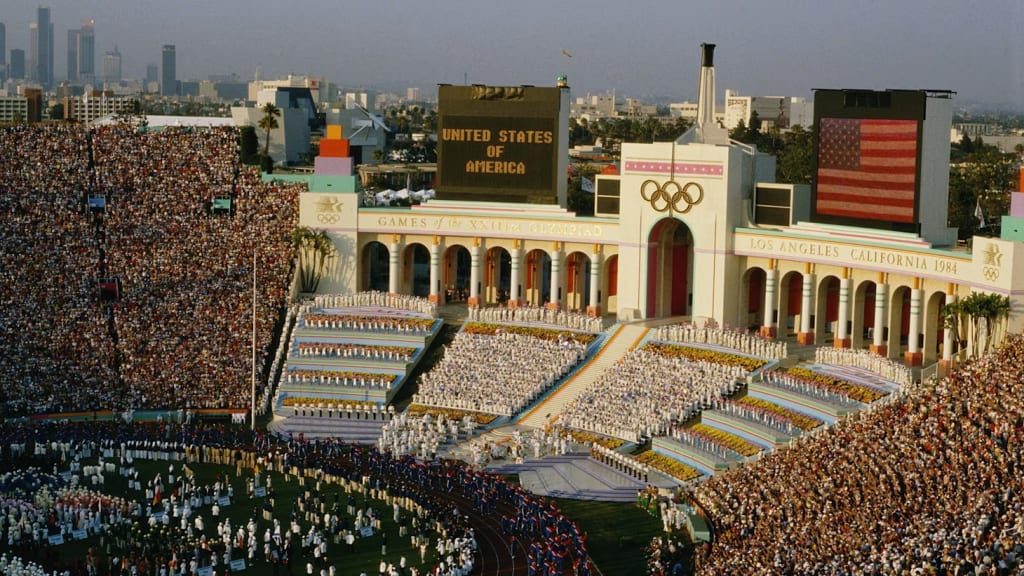
The 1984 Los Angeles Olympics marked a turning point in the history of the modern Olympic Games. Unlike any previous iteration, the Los Angeles Games were celebrated for their innovative approach to financing and organizing a global sporting event. They not only showcased athletic excellence but also redefined how the Olympics could operate as a profitable enterprise, leveraging corporate sponsorships, media rights, and marketing strategies. The 1984 Games demonstrated that the Olympics could thrive without heavy government funding, paving the way for the modern, commercialized Olympics we see today.
Background: A Controversial Bid and a Boycott
The 1984 Olympics were awarded to Los Angeles during a time of uncertainty for the Olympic movement. The financial disaster of the 1976 Montreal Olympics, which left the city in significant debt, had made potential host cities wary of bidding for the Games. When Los Angeles proposed hosting the Olympics, it was the sole candidate, as other cities were hesitant to take on the financial risks.
Adding to the challenges was the Cold War context. Just four years earlier, the United States had boycotted the 1980 Moscow Olympics to protest the Soviet invasion of Afghanistan. In retaliation, the Soviet Union and its allies boycotted the Los Angeles Games, citing concerns over security and anti-Soviet sentiment in the United States. Despite this boycott, the 1984 Olympics became a major success, drawing athletes from 140 countries and capturing the imagination of global audiences.
A New Approach: Privatization and Corporate Sponsorship
The financial success of the Los Angeles Olympics can largely be attributed to the vision of Peter Ueberroth, the president of the Los Angeles Olympic Organizing Committee (LAOOC). Ueberroth and his team adopted a groundbreaking model that relied on private funding rather than taxpayer money. They secured significant revenue through corporate sponsorships, television rights, and ticket sales.
(I)Corporate Sponsorships: Ueberroth introduced an innovative sponsorship program that limited the number of corporate partners in each category, creating exclusivity and higher value for sponsors. Companies like McDonald’s, Coca-Cola, and Visa paid millions to be associated with the Games, and their branding became synonymous with the event.
(II)Television Rights: The LAOOC capitalized on the growing global appeal of the Olympics by selling broadcasting rights to major networks. In the U.S., ABC paid a record $225 million for the exclusive rights to broadcast the Games, and networks in other countries followed suit. This move ensured that the Games would reach a massive global audience while providing the organizing committee with a substantial source of revenue.
(III) Ticket Sales: The Games also benefited from strong ticket sales, as events were held in existing venues across Los Angeles. By avoiding the construction of costly new facilities, the LAOOC minimized expenses and maximized profits. Popular events, such as athletics, gymnastics, and swimming, drew large crowds, contributing significantly to the event’s financial success.
The result of these strategies was a surplus of over $200 million—a stark contrast to the financial losses of many previous Olympics. This surplus was reinvested into sports programs in the U.S., creating a lasting legacy for the 1984 Games.
The Impact of Commercialization on the Olympics
The 1984 Olympics set a new standard for how the Games could be managed and funded, and their success demonstrated the viability of a privately financed model. This approach not only ensured financial stability but also significantly influenced the commercialization of future Olympics.
The Games highlighted the potential of corporate partnerships in enhancing the Olympic experience. Sponsors were integrated into the Games through advertisements, branding, and promotional campaigns, which increased their visibility and reinforced their association with the Olympic values of excellence, unity, and achievement. While this integration was widely praised for its innovation, it also sparked debates about the role of commercial interests in an event meant to celebrate amateur athletics.
The success of the 1984 Olympics also changed the relationship between the International Olympic Committee (IOC) and host cities. Future hosts increasingly adopted the Los Angeles model, focusing on maximizing revenue through sponsorships, media deals, and ticket sales. However, this shift also led to concerns about the growing influence of commercial entities on the spirit of the Games.
The Athletes and Their Achievements
Despite the Soviet-led boycott, the 1984 Los Angeles Olympics featured numerous memorable performances and celebrated athletes. The absence of Soviet and Eastern Bloc athletes allowed athletes from other nations to shine, creating a unique competitive dynamic.
- Carl Lewis: The American track and field star dominated the Games, winning four gold medals in the 100m, 200m, long jump, and 4x100m relay. His achievements mirrored those of Jesse Owens in the 1936 Berlin Olympics and cemented his status as a global icon.
- Mary Lou Retton: Retton became the first American woman to win the all-around gymnastics gold medal, captivating audiences with her athleticism and charisma.
- Sebastian Coe: The British middle-distance runner defended his gold medal in the 1500m, solidifying his place as one of the greatest runners in history.
- The U.S. Basketball Team: The men's basketball team, featuring future NBA stars like Michael Jordan and Patrick Ewing, won gold, further enhancing the Games' appeal.
These and other standout performances ensured that the athletic achievements of the 1984 Olympics were not overshadowed by the commercial innovations or the geopolitical tensions of the time.
Criticism and Controversies
While the 1984 Olympics were hailed as a financial and organizational success, they were not without criticism. Some observers argued that the heavy reliance on corporate sponsorship and branding diluted the Olympic spirit, turning the Games into a commercial spectacle rather than a celebration of amateur sport. Critics also pointed to the lack of participation from Eastern Bloc countries, which impacted the level of competition in certain events.
Additionally, the exclusivity of corporate sponsorship deals raised concerns about accessibility and inclusivity, as small businesses and non-sponsoring brands were effectively shut out of Olympic-related marketing opportunities.
Legacy of the 1984 Los Angeles Olympics
The 1984 Los Angeles Olympics had a lasting impact on the Olympic movement. Their financial success inspired future host cities to adopt similar models, emphasizing fiscal responsibility and corporate partnerships. The event also demonstrated the power of sports as a platform for global marketing and cultural exchange.
Moreover, the Games revitalized the Olympic brand at a time when the movement faced significant challenges, including political boycotts and financial instability. The 1984 Olympics proved that the Games could adapt to modern economic realities while maintaining their appeal to global audiences.
Conclusion
The 1984 Los Angeles Olympics were a watershed moment in Olympic history. By embracing commercialization and private funding, the organizers redefined how the Games could be financed and managed, setting a precedent for future events. While the Games faced criticism for their commercial focus, they were undeniably successful in showcasing athletic excellence, celebrating global unity, and ensuring the financial sustainability of the Olympic movement. The 1984 Olympics remain a landmark event that demonstrated the transformative power of innovation in the world of sports.
About the Creator
Badhan Sen
Myself Badhan, I am a professional writer.I like to share some stories with my friends.
Keep reading
More stories from Badhan Sen and writers in Gamers and other communities.
THE 1992 BARCELONA OLYMPICS AND THE RETURN OF DREAM TEAM BASKETBALL
The 1992 Barcelona Olympics marked a groundbreaking moment in the history of the Olympic Games, particularly for basketball. It was in this event that the iconic "Dream Team" was introduced to the world, forever changing the landscape of international basketball and global sports. The 1992 Olympics were a milestone not only for the United States but also for the broader development of basketball as a global phenomenon. The success and dominance of the U.S. men's basketball team, composed of the greatest players of the time, cemented its place in Olympic history and brought international attention to the sport.
By Badhan Senabout a year ago in Gamers
How Fortnite Became More Than Just a Game
When Fortnite launched in 2017, it was widely seen as just another multiplayer video game. Nearly a decade later, that view no longer fits reality. Fortnite has grown into a global digital platform that blends gaming, creativity, entertainment, and social interaction. This transformation did not happen overnight, and it did not rely on hype alone. Instead, it was driven by consistent innovation, community involvement, and a shift in how people use online spaces.
By Games Mode Ona day ago in Gamers
Arc Raiders Review: Pure Multiplayer Experience
Arc Raiders is designed around clarity, pressure, and cooperation. Instead of overwhelming players with layers of systems, it strips the multiplayer shooter down to its essentials and rebuilds tension from the ground up. Developed by Embark Studios, the game positions teamwork and survival above spectacle. For players curious about how closely they align with this design philosophy, the Arc Raiders purity test has become a popular way to measure commitment within the community.
By Enzo Marcelli5 days ago in Gamers
Wild Card Weekend Recap: What Happens Now?
I think I figured out why I love Wild Card Weekend so much. It's because it's the first playoff anything of the calendar year. The NFL season starts in the fall, and once upon a time, the champion was crowned either on or slightly before New Year's. The evolution of the NFL schedule has resulted in the playoffs starting just into the New Year, and currently, the final week of the season falls on the first weekend of the New Year, with Wild Card Weekend coming a week after that. So yes, chronologically, the NFL's Wild Card Weekend serves as the first playoff anything of the calendar year.
By Clyde E. Dawkins7 days ago in Unbalanced




Comments (1)
This is a great historical piece and now that the Olympics are coming back to Los Angeles in the next Summer Olympics or is the Winter Olympics. We will see how far various changes were made to venues as well as other aspects of the Games.