
THE 1968 MEXICO CITY OLYMPICS AND THE BLACK POWER SALUTE
An Iconic Protest Against Racial Injustice.

The 1968 Mexico City Olympics: A Defining Moment for Protest and Civil Rights
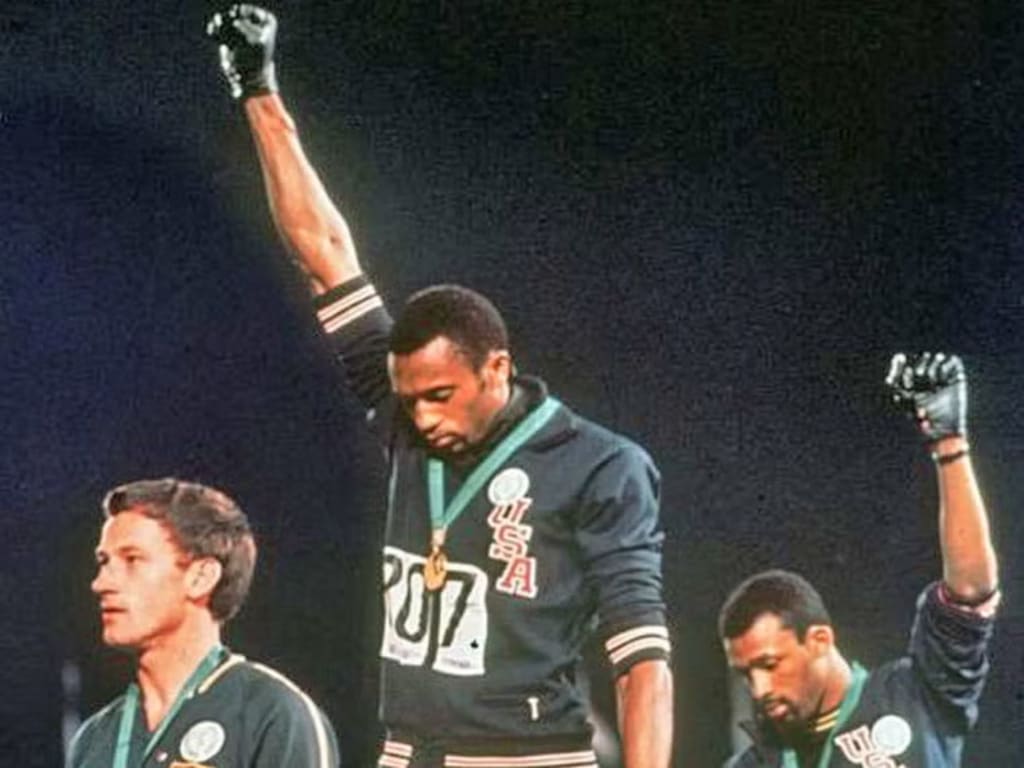
The 1968 Summer Olympics, held in Mexico City, were not only a major sporting event but also a pivotal moment in history that brought political and social issues to the global stage. The Mexico City Olympics are especially remembered for the iconic Black Power salute by American athletes Tommie Smith and John Carlos, which highlighted the struggles of African Americans and became one of the most powerful symbols of the civil rights movement.
A Time of Social and Political Upheaval
In the 1960s, the United States was in the midst of significant social change. The civil rights movement was gaining momentum, challenging segregation and racial inequality, and advocating for the rights of African Americans. At the same time, protests against the Vietnam War were intensifying, and there was growing tension around issues of global inequality, injustice, and oppression.
The Olympic Games, a global spectacle watched by millions, provided a platform for athletes to express their personal beliefs and opinions. The Games were held in Mexico City, a city marked by political unrest, with student protests against the government taking place just weeks before the event. The stage was set for the Olympics to be a place where athletes could make bold statements about the world around them.
The Black Power Salute: A Historic Gesture
The most famous protest at the 1968 Mexico City Olympics occurred on October 16 during the medal ceremony for the men’s 200-meter race. Tommie Smith, who had won the gold medal, and John Carlos, who had earned the bronze, decided to use their moment on the podium to speak out against racial injustice. As the U.S. national anthem played, the two athletes raised their fists in the Black Power salute, a gesture that symbolized solidarity with the ongoing struggle for civil rights and social equality for African Americans.
Smith and Carlos were both members of the Olympic Project for Human Rights (OPHR), a movement that sought to use the Games to protest racial inequality and advocate for change. The Black Power salute was a direct challenge to the institutionalized racism in the United States, and it reflected the athletes' commitment to the struggle for justice and equality. The raised fists symbolized black pride, unity, and defiance in the face of adversity.
The protest was not just about race in America; it also had a global dimension, as Smith and Carlos spoke out against the oppressive treatment of people of African descent worldwide, particularly in apartheid-era South Africa, and in Latin America and other parts of the world.
Immediate Reactions and Consequences
The Black Power salute at the 1968 Olympics sparked immediate controversy. Many people, particularly in the U.S., were outraged by what they saw as a disrespectful act toward the national anthem and the American flag. Smith and Carlos faced intense backlash from the American public, politicians, and some of their fellow athletes. Both were reprimanded by the International Olympic Committee (IOC) and the United States Olympic Committee (USOC), which considered their actions to be politically motivated and not in line with the Olympic Charter's guidelines on political neutrality.
Despite the criticism, Smith and Carlos stood firm in their beliefs and later explained that their gesture was a call for justice and equality, not an attack on the United States. They felt it was essential to use their platform to bring attention to the injustices that African Americans were facing, including discrimination, violence, and inequality in education, housing, and employment. The protest was a pivotal moment in the civil rights movement, showing that athletes could use their fame to bring attention to social and political issues.
Long-Term Impact on Civil Rights and the Olympics
The Black Power salute became a defining moment in the civil rights movement, solidifying the role of sports as a vehicle for social change. The gesture by Smith and Carlos helped raise global awareness of racial inequality and contributed to the broader dialogue on civil rights, not only in the United States but also around the world.
In the years that followed, the salute continued to inspire other athletes and activists. It influenced future protests and demonstrations, especially in the world of sports, where athletes like Muhammad Ali, Billie Jean King, and Colin Kaepernick would later follow in their footsteps by using their platform to speak out against injustice.
At the same time, the protest at the 1968 Olympics also marked the beginning of a shift in the relationship between the Olympic Games and political activism. The event demonstrated that athletes could use the global stage to call attention to critical social issues. However, the IOC’s response to the protest—punishing the athletes and banning them from the Olympic Village—raised questions about the Games’ commitment to free expression and political neutrality.
Legacy and Reflection
Over time, the Black Power salute has come to be regarded as one of the most significant moments in Olympic history, symbolizing the power of protest and the role of athletes in social change. In the years following the 1968 Olympics, Smith and Carlos were widely acknowledged for their bravery and for the impact their actions had on the civil rights movement.
Today, the 1968 Black Power salute is remembered as a powerful moment in both sports history and the ongoing struggle for racial equality. It serves as a reminder that the Olympics, despite being an event focused on athletic achievement, have the potential to amplify important political and social issues. Tommie Smith and John Carlos’ protest continues to inspire generations of athletes and activists who seek to use their platforms to advocate for justice and equality.
The 1968 Mexico City Olympics, with the Black Power salute at its center, will forever be a turning point in the history of both the Olympic Games and the broader struggle for civil rights around the world.
About the Creator
Badhan Sen
Myself Badhan, I am a professional writer.I like to share some stories with my friends.
Keep reading
More stories from Badhan Sen and writers in Gamers and other communities.
HOW THE OLYMPICS AFFECT THE HOST CITY
The Olympics are one of the world’s most significant sporting events, bringing together countries and athletes from all over the globe. While the Games are a global spectacle, they have profound and lasting impacts on the host city. From economic boosts to infrastructural developments, and cultural exchange to environmental concerns, the Olympics shape the host city in multiple ways, both positive and negative.
By Badhan Senabout a year ago in Gamers
The Gym Where Iron Transformed Lives
The gym was hidden between a bakery and a closed-down bookstore, its faded sign barely visible from the street. The windows were dusty, the paint on the walls chipped, and the metal door creaked every time someone pushed it open. To most people, it looked like a forgotten place. But for those who stepped inside, it was a space where lives quietly transformed.
By The best writer 5 days ago in Gamers
U4gm Why Ranked Play in Call of Duty: Black Ops 7 Is the Ultimate Test of Skill
Call of Duty: Black Ops 7 isn’t just another fast-paced shooter—it’s a test of skill, strategy, and teamwork. For casual players, Quick Play delivers fun and chaos, but for those who want to prove themselves in the competitive arena, Ranked Play is the real deal. This mode isn’t just about racking up kills; it’s about outsmarting your opponents, controlling the map, and working seamlessly with your team.
By Dangyc Ding7 days ago in Gamers


Comments
There are no comments for this story
Be the first to respond and start the conversation.