
Stardew Valley Moss Guide: Why This 1.6 Resource is More Valuable Than You Think
From "Green Gunk" to Gold: Mastering the Hidden Value of Moss in Stardew Valley 1.6

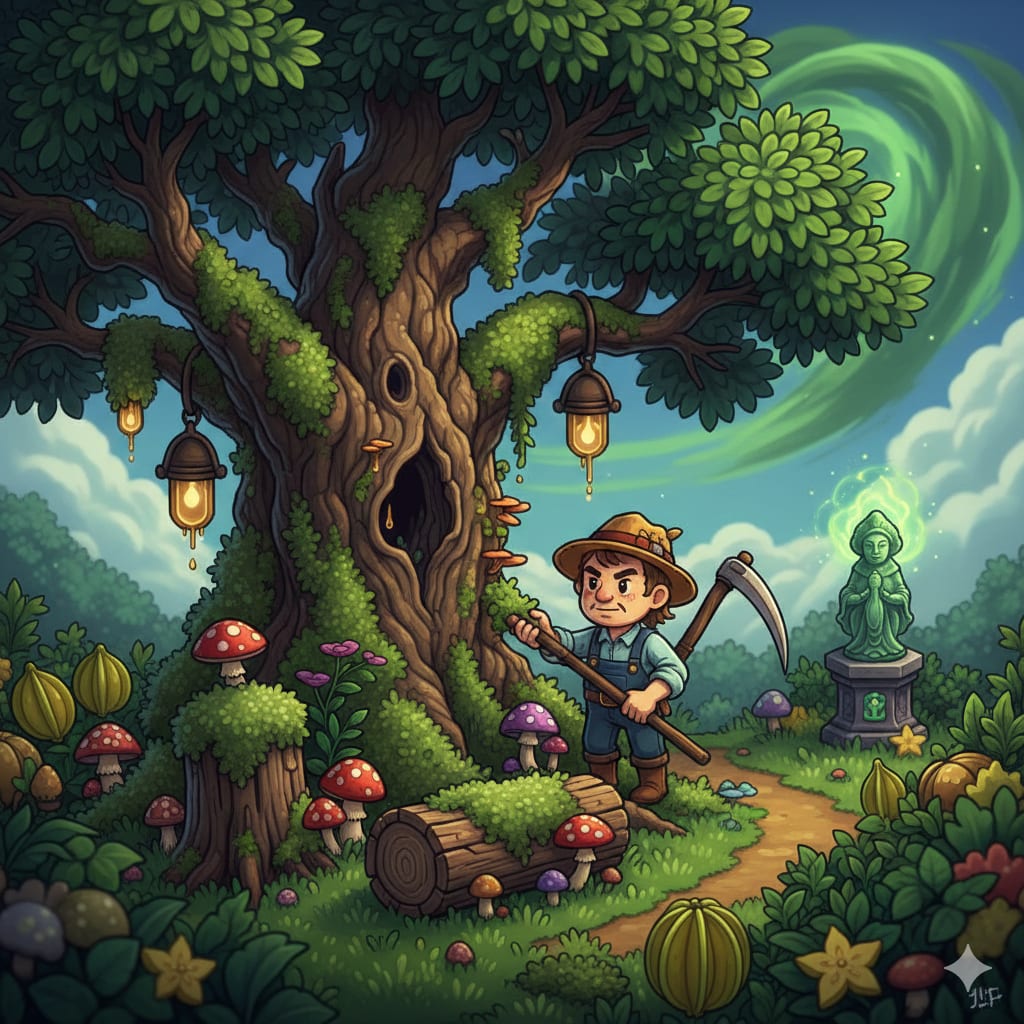
For years, the appearance of green fuzz on the oak and maple trees of Pelican Town was nothing more than a visual indicator of rain or a sign that you had neglected your farm’s landscaping. When the 1.6 update arrived, everything changed.
What was once mere aesthetic clutter transformed into Moss, a versatile and essential resource that has quietly become a bottleneck for late-game crafting and high-efficiency farming.
If you are still swinging your scythe with reckless abandon just to "clean up" your farm, you are likely throwing away one of the most useful materials in the game. Understanding the secret utility of moss is the difference between a struggling farm and a streamlined empire.
What Exactly Is Moss and How Does It Grow?
Moss is a unique resource that primarily grows on common trees—Oak, Maple, and Pine. Unlike weeds, which can spread aggressively and destroy your crops, moss is entirely harmless. It clings to the bark, thickening over time until it is ready for harvest.
The growth rate of moss is tied directly to the weather. While it grows slowly during normal sunny days, it thrives in the humidity of the rain. However, the true "Gold Rush" for moss occurs during the Green Rain summer weather event. During this surreal phenomenon, moss grows at an exponential rate, covering almost every tree in the valley and even sprouting in large clumps on the ground.
Harvesting it is simple. You can use any tool, but the Scythe is the most efficient choice because it requires no stamina and won't accidentally chop down the tree itself. If you are in a rush, a quick swipe as you run past your grove is all it takes to build up a healthy stockpile.
The Crafting Powerhouse: Why You Need Thousands of Moss
The reason "how to farm moss" has become such a high-volume search term isn't just curiosity. It is a requirement for some of the most powerful new items introduced by ConcernedApe. If you want to optimize your farm layout or progress through the endgame, you will need a staggering amount of this green fluff.
The Mushroom Log Meta
The Mushroom Log is perhaps the most significant addition for players looking to maximize passive income with low overhead. To craft one, you need 10 Moss and 15 Hardwood. While that sounds cheap, a truly efficient mushroom farm requires dozens, if not hundreds, of these logs.
Mushroom logs produce various fungi based on the types of wild trees surrounding them. If you surround your logs with mossy trees, the quality and quantity of the mushrooms improve. This creates a beautiful synergy: you need moss to build the logs, and you need to leave moss on your trees to boost the logs' output.
Deluxe Worm Bins and Speed-Gro
Fishing enthusiasts and crop min-maxers also have a high demand for moss.
- Deluxe Worm Bins: These upgrade the standard bin to produce Deluxe Bait, which reduces the delay before a fish bites and increases the size of the fishing bar. Crafting these requires a steady supply of moss.
- Hyper Speed-Gro: For those aiming to squeeze three or four harvests out of a single season, Hyper Speed-Gro is the holy grail. It requires moss as a key ingredient, making it a literal fertilizer for your financial growth.
Statue of Blessings
For the completionists and those seeking daily buffs, the Statue of Blessings is a literal game-changer. This late-game "Power of Mastery" reward grants a unique blessing every morning—ranging from extra luck to energy buffs. The recipe? A whopping 333 Moss. If you have been clearing your trees daily, hitting this number can feel like an impossible mountain to climb.
The Secret Utility: Why You Should Stop Clearing It
Beyond crafting, moss serves a mechanical purpose that many players overlook. It acts as a natural buffer and a visual cue for your farm's health.
When a tree is covered in moss, it doesn't hinder the tree's growth or the production of syrup in Tappers. In fact, many players have found that a "wild" aesthetic actually requires less maintenance. By allowing moss to grow, you are essentially "priming" your farm for the next Green Rain event.
There is also the matter of Speed-Gro synergy. Many players don't realize that moss can be traded or used in recipes that significantly cut down the time spent on mundane tasks. If you treat moss like a weed, you are treating a resource like trash.
How to Effectively Farm Moss
If you have already cleared your farm and find yourself in a deficit, don't panic. You can cultivate a moss farm with a bit of planning.
- Plant a dedicated "Wild Grove": Use an area of your farm—or better yet, the Cindersap Forest or the Railroad—to plant a dense cluster of trees.
- Leave the Tappers off: While you can harvest moss from tapped trees, it is easier to see and swipe from bare trunks.
- Wait for the Rain: Your yield will be significantly higher if you harvest only after a rainy day.
- The Green Rain Strategy: During the Green Rain event in Summer, drop everything else. Ignore the mines, ignore your social standing with Pierre, and go outside. Use a high-level scythe to clear the entire map. You can easily walk away with over 1,000 units of moss in a single day if you are diligent.
For more detailed breakdowns on crop timings and how moss-based fertilizers affect your bottom line, you might want to check out the Stardew Valley Wiki or dive into the community discussions on the Stardew Valley Subreddit. These resources are invaluable for staying updated on the nuances of the 1.6 mechanics.
Environmental and Aesthetic Benefits
We often talk about Stardew Valley in terms of "gold per day," but there is something to be said for the atmosphere. The 1.6 update leaned heavily into the "wild" side of farming. Moss-covered trees give your farm a sense of age and wisdom. It looks lived-in.
Furthermore, the "Mossy Tree" variant provides a different loot table when chopped down. If you are looking for specific seeds or unique drops, keeping a few mossy ancients around is statistically beneficial.
Embrace the Fuzz
The "Secret Utility" of moss isn't just one single thing; it is the fact that it touches almost every pillar of the game: crafting, farming, fishing, and mastery. It is a bridge between the early game's manual labor and the late game's automated efficiency.
Stop clearing your moss. Keep it for your Mushroom Logs to ensure high-quality Chanterelles and Purple Mushrooms.
Save it for the Statue of Blessings to get those vital daily buffs.
Hoard it for Hyper Speed-Gro to dominate the Starfruit and Ancient Fruit markets.
Next time you see that green tint on your Oak trees, leave it alone. Let it grow. Your future self, standing in front of a row of Deluxe Worm Bins and a Statue of Blessings, will thank you. The 1.6 update made the valley a little greener, and it’s time we start seeing that green as gold.
About the Creator
Richard Bailey
I am currently working on expanding my writing topics and exploring different areas and topics of writing. I have a personal history with a very severe form of treatment-resistant major depressive disorder.
Keep reading
More stories from Richard Bailey and writers in Gamers and other communities.
Stardew Valley Friendship Decay: How the 1.7 Social Update Changes Everything
Relationships in Pelican Town have always been a delicate dance of daily greetings and carefully selected gifts. You spend seasons chasing down Sebastian in his basement or waiting for Haley by the fountain, all to see those little red hearts fill up.
By Richard Bailey2 months ago in Gamers
The Honed Ashlar, Part 1 of 5
Part 1: The Scaffolding of Ruin The bus ride into the city had felt like being swallowed by a cold, metallic throat. Silas leaned his forehead against the vibrating window of the Greyhound, watching the California coastline transform from a dream of salt and gold into a nightmare of concrete ribs. To everyone else on the bus, the skyline of Tinseltown was a promise—a soaring monument to ambition. To Silas, it was a Structural Failure.
By Nathan McAllister4 days ago in Gamers



Comments
There are no comments for this story
Be the first to respond and start the conversation.