
Running Faster Battles is a Matter of Planning
In some sessions, combat can slow things down. With a few options in play, it can run much faster.

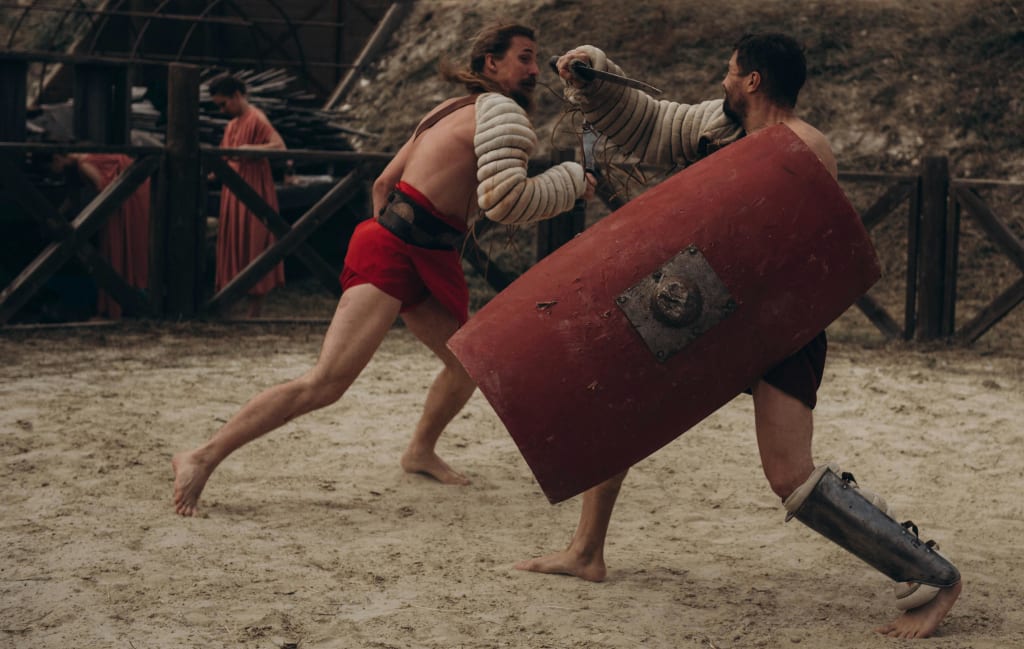
Combat can be the bane of any game. A badly run combat can slow a game down, making an otherwise fun session boring and more of an annoyance. However, if the players and referee don’t mind a little preparation ahead of time and some extra teamwork, combats can be run quicker and much more efficiently. With a few basic options, combats will run much smoother and thus faster, allowing everyone to enjoy the entire session.
Make Sure Everyone Knows What They Can Do
It should always be imperative that players know what their characters should do. While this seems obvious, some players want to play complicated characters without really figuring out their ins and outs, while others just want to role-play. This means that they’re always looking up rules and/or slowing things down, especially in combat.
You have two options:
- You can limit players to only characters that they are willing to figure out all of its moving parts: No player can play something more complicated than they are willing to figure out how it works. Yes, this will cause some anger and frustration, but it’s a common sense restriction: Don’t drive a car you’re not willing to learn to drive.
- Work out some sort of tag-team combination so that one player runs the character while the other gets him to do what the first player requires. In essence, Player One gives Player Two some sort of directive, and then Player Two figures out how to accomplish it. There is the potential for misunderstanding between the players, but this allows a player to role-play characters they wouldn’t normally be interested in playing, or be able to play due to lack of mastery.
Roll Once For Initiative, Maybe
You need to eliminate dice rolls whenever possible, and the easiest cut is rolling for initiative. As such, once initiative has been rolled, let that stand for the entire combat. There are plenty of ways to change or modify initiative order (D&D’s Hold and Ready actions, for example), so players, NPCs, and monsters are not necessarily stuck in their assigned initiative order. In some cases, this can speed things up.
Of course, you could eliminate even the roll for initiative. The usual default is one of two systems: Either go with the highest Dexterity (or equivalent) plus any adjustments, or create an “Initiative” score of 10 plus any adjustments. You then just use that in place of the initiative roll; this should save you at least a minute or two.
[Yes, a lot of referees and games do exactly this already (D&D 5E, for example) and games like Champions have their own variants. However, some don’t, so it’s included in case someone doesn’t. Also, this opens the door for automating simpler combats, as you can decide that if the character would hit on an average to-hit roll it’s now an auto-hit doing average damage, thus speeding up minor combats. This reduces them pure tactics, but don’t forget that they use up resources just like any full combat.]
Enforce a Time Limit
One of the biggest problems is that some players simply take too long deciding what they will do. While it’s important to give everyone the best possible chance in combat, and that implies giving them time to decide, allowing them to take too long to make a decision can slow them down. It can also allow indecision to reign, creating a situation where the player is so unsure of a decision that they may not make a decision unless forced. By enforcing a time limit, this situation is negated and wasted time is eliminated.
Ten to fifteen seconds is the recommended limit. If a player objects, remind them that they have all of the time that other players take to make their decisions, as well as whatever time the referee takes, to make their decision. This also gives them to look up any information that they need to; it usually doesn’t take long to look up something specific. They also have time to ask questions about specific issues. If a player takes too long, that player is skipped and the character can defend itself but otherwise does nothing that round; play passes to the next player.
[If you have a player that has issues with this, you could always temporarily assign the character to another player during combat. The original player could then just assign a general goal (“I want to hit the orc!”) and rolls for the character while the other player is essentially in control of the specific actions of the character. This is great for players who just want to role-play but not worry about combat or for new players; it’s also good for guest players who don’t want to learn the intricacies of the combat system.]
Get The Players to Help Out
Some combats have a lot of moving parts, i.e., combatants, roving spells, and non-combatants. Depending on the number of those “moving parts,” a referee can spend a lot of time moving them around and updating areas of effect. If the map is big enough and there are enough parts, this can get hard to manage. However, if the players can get enlisted to move the various parts under the control of the referee, this would speed up moving everything into place for the next turn of combat.
You could also enforce personal responsibility of familiars, minions, and areas of effect, so that individual players are responsible for anything they either bring or summon to the battle. In some cases, this could slow down or stop some characters (the guy who likes yelling, “I summon my army of rats!” is now going to seriously debate summoning swarms), at least until they get other players to help them. Nonetheless, by limiting parts the referee is forced to deal with and making the players deal with it, you can speed up combats.
Also, splitting the party just became a little more interesting: Any players whose characters are not with the party can be put into charge of some of the parts. Better yet, not only do they get to command the parts but they can also do any rolls for them as well. Not only does this give them something to do, but it also divides your work which multiplies your speed in dealing with the combat.
By using these methods, you should be able to speed combat up immensely, or at least make it more interesting to the players. This will, in turn, make your games faster and/or give you more time to role-play every session; everyone wins. This also gives you the option of creating more dramatic combat scenes, but you do whatever works for your group and its needs.
About the Creator
Jamais Jochim
I'm the guy who knows every last fact about Spider-man and if I don't I'll track it down. I love bad movies, enjoy table-top gaming, and probably would drive you crazy if you weren't ready for it.
Keep reading
More stories from Jamais Jochim and writers in Gamers and other communities.
Unbound Spellbooks
Anyone can have a leather-bound book to carry around their spells. There’s a reason it’s the default, but that doesn’t mean that you can’t explore other options; there are a lot of different cultural reasons to explore different concepts of spellbooks. Other rulebooks have even suggested different concepts, such as card-like ofuda or even pearls; one module even has a sorcerer who uses an army of slaves as his spellbook. Once you start playing around with the idea, there are plenty of different “spellbooks” you can employ for storing your spells.
By Jamais Jochim6 months ago in Gamers
Essential Golf Tips Every Beginner Needs to Improve Their Game
Golf is a rewarding sport that combines skill, patience, and strategy. For beginners, the game can feel challenging because it requires mastering several techniques at once. Many new golfers focus too much on hitting the ball far instead of learning the fundamentals that lead to consistent performance. Improvement comes from developing good habits early, practicing with purpose, and understanding how each part of the game works together. With the right approach and consistent effort, beginners can build confidence and steadily improve their performance on the course.
By Daniel Ladner3 days ago in Gamers
7 Methods to Earn MLB The Show 26 Stubs Fast
In MLB The Show 26, stubs are the in-game currency that players use to purchase packs, cards, and other valuable items. Earning stubs can be challenging, but with the right strategies, you can accumulate them efficiently. Here are seven methods to help you earn stubs quickly without feeling overwhelmed.
By Snow manera day ago in Gamers



Comments
There are no comments for this story
Be the first to respond and start the conversation.