

“There is a sacredness in tears. They are not the make of weakness, but of power. They speak more eloquently than ten thousand tongues. They are the messengers of overwhelming grief, of deep contrition, and of unspeakable love.” Washington Irving.
I have come to the realization that there is something satisfying and cleansing about shedding tears. It is not simply being moody or depressive that drives me to listen to music that tells a sad story, or to enjoy a somber narrative in my favorite works of fiction or even to play a sad video game. When I first heard of Rime a few years ago I was intrigued by the look and feel in its trailers and its puzzle/ adventure mechanics that were shown. I liked the art style as it hearkened back to one of my favorite games, The Legend of Zelda Wind Waker, in its presentation. What I did not know was the sad and moving story it told that brought to me the somber yet cleansing experience that I referenced above. I have since completed it three times and have found more details to enjoy with each play through.
I have to cap off this part of the video with a giant spoiler warning. It will be impossible to even talk about the themes of this game without spoiling it for anyone who wants to play it. If you plan on playing the game skip this paragraph. Rime is divided into five sprawling stages each themed around one of the five stages of grief. You play as a young boy who wakes washed on the shore of an island. As you explore you find two other characters of note that travel this journey with you. One is a man wearing a red cloak that matches a piece of cloth worn by the player character. Instantly and without dialogue a relationship is established between these two characters as this mysterious figure is always out of reach and appears from time to time on your journey. The other character is a small red fox which serves as your guide more directly. All of the story is conveyed through subtext and as you move from chapter to chapter you encounter other creatures and more of the story is revealed. The conveyance of the simple story is handled very well and maintains an air of mystery up to the very end. An especially nice touch is that even more story is available to see if the player is willing to venture off the beaten path and explore, details about the boy’s past and current situation are brought further and further into focus. The story is tragic and heartfelt and full of moments that brought me genuine tears or pause. I do not think I have ever seen the journey of grief so artfully displayed. When I played Journey for the first time it came across as a commentary on the nature of the journey of life. This game pulls an equally compelling narrative about the journey of death. It is impossible for me to think of one of these games without the other. In the end Journey is still my favorite of the two although Rime is a worthy successor to its style and mood.
I already mentioned how the games cell shaded presentation reminded me of Wind Waker, but the game suffers a small amount in presentation as compared to other games from the PS4 library. The visuals are crisp and the colors, even in its somber darker moments, are vivid. But the game for reasons I cannot pin down feels a bit last gen. I think it is the character models, they are just a little too simple. Now as a retro gamer at heart I could not care less, but I did notice it and feel that others may point to it as criticism. Feeling like last gen to me though sounds hardly like a worthy criticism worth more than a passing note. As stated, I love the colors and the levels feel lovingly crafted and well catered to the mechanics needed to traverse them. The games world is meant to start out as very rooted in reality and then progressively become more and more mystical, and it achieves this design majestically. I love exploring the world and platinumed the game on my second play-through. The highest praise for the presentation I have in part already given. It tells the story so well that dialogue is not needed, and neither is text. And whether it be film or video games this is something difficult to achieve and the developers should be commended for it.
Music is sweeping and matches the tone and emotion of each level. Effects seemed a bit loud to me at times, but I again think this may have been intentional. The game is a quite game, but when it gets your attention, it is usually through the sound. I did not notice any “stock” sounds and the world sounded real but also unique. Critiquing sound might be my weakest area but sitting here now reflecting on the game I find myself able to recall certain sounds and musical themes very clearly. To me this is the ultimate mark of sound design is when it sticks with you and it certainly does here.
This game is an adventure puzzle plat former and many of the puzzles are traversal type puzzles. When hanging and jumping from small ledges the game feels at its best in the control department. However, basic point to point movement feels a bit sluggish, almost floaty. I have this nagging suspicion that the boy moves at this speed deliberately to increase the sense of scale in the environment. This sort of artificial padding hurts the replay-ability a little bit as how slow you move can become tedious. To be fair, I always felt that other games have done this as well and the chief offender in my mind is always Ocarina of Time. Link’s speed is designed around making Hyrule Field seem bigger the first time you cross it. Again, this tactic does not hurt the game when it is fresh, and you are experiencing it for the first time. But as I went about completing the game it begins to become more noticeable. There are not a lot of control options and that is fine as the game play is less the focus. But the game play not being the focus does blemish a different aspect of the game.
To continue our comparison to Journey I want to point out the one thing I feel makes up the difference in this game. In both Journey and Rime there are no specific player stakes. What I mean is there is no real consequence for failure. Except that you are hindered or set back in some way. Journey handles these stakes as follows. If you fall you have to work your way back up to a previous position. If you are hurt by one of the few enemies, you lose some of your scarf and your maneuverability is hampered. These consequences are natural and do not break the flow. It is okay that Journey has no game overs because it is an experience first and a game second. These natural consequences you experience are more immersive in nature and do not pull you from the experience. Compare this to Rime, if you fall to far or fall into a whole the game will re-spawn you on a ledge with the only consequence being lost time and effort. In the chapter with the large bird if you are in the open to long you are picked up by the bird and sent back to a checkpoint. This will happen at least once as again your speed is slow and the gaps you navigate are designed to make the experience a close one. But again, you are just sent back to a checkpoint and must try again. The game like Journey is striving to be an experience first and game second, and this is great, I have no problem with that. But all of Journey’s stakes add to the immersion where Rime's are jarring and in the end highlight how meaningless the stakes are.
There were two easy fixes for this, add a lives and continues system. After so many failed attempts send the player back to a further checkpoint of even the start of the level. This very gamy mechanic gives what Rime lacks, stakes that have meaning. It does affect the immersion, but it makes the level design match the stakes they have set up. A second fix would be to remove the fall damage and re-work the consequences of the bird attack. Removing the fall damage would lead to a more restrictive design and while Journey pulls it off well it would be much harder in this setting. The bird by extension could take the player further from objectives by picking them up. The boy then could fight to free himself through moving the control stick. This could frustrate some casual players, and, in the end, this is why neither of these fixes were added. As it stands none of these things make Rime bad, but their inclusion keeps it from being a legendary game like Journey. In the end this type of game is probably pretty hard to balance between the experience and game. It is in some ways unfair to expect it to perform the same trick as Journey in that Journey feels more linear for the purpose of solving some of these issues. In that sense Rime might be a better “game” but Journey is a better immersive experience. Besides this slight balance hiccup the levels are wonderfully crafted and the puzzles challenging enough to please.
This is a great experience and game and I fully recommend it to anyone who is a fan of this style of game. It uses the medium and its presentation to weave a moving story with depth that is emotionally gripping and satisfying to complete. In the end I found it a more satisfying experience of this genre and style than Abzu and that game was made by the same people as Journey. This may be the highest praise I can give it that it crafts a superior follow up than the people who made the “original.” For completionists the game is not the most challenging to complete, but the rewards include costumes and a more complete story. A special ending is unlocked after finding four ghostly phantoms, one each in the first four levels although it does not add a lot except a few extra tears. It is a game I will turn to again if I find myself struggling with grief and looking for catharsis.
About the Creator
Gray Beard Nerd
A nerd who is into cars, video games, movies, book and more. I love to write and hope to share what I have written with others. Please enjoy!!
Keep reading
More stories from Gray Beard Nerd and writers in Gamers and other communities.
Front Mission 3
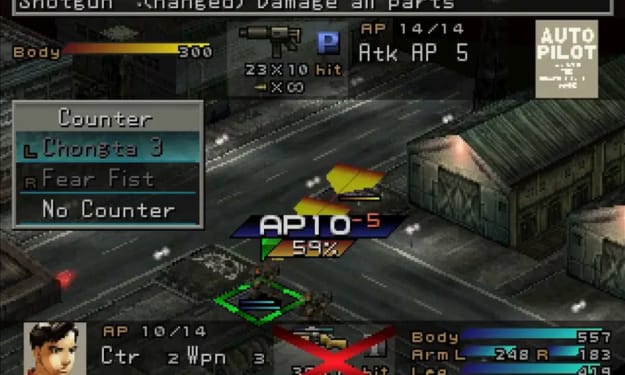
A few years ago, when the first fire emblem games started coming out in the US a lot of people were telling me to try them out. They said things like, if you love RPG’s, you will love turn based strategy RPG’s. So, I rented the Gameboy Advanced version and, it did not click with me. It was not the perma-death I just would get bored. The fights take a long, long time and being thrown into the deep end with large units, you spend half an hour fighting a battle and then loose and have to start all the way at the beginning of the battle. I tried other games in the genre thinking I was just missing something. Like Phantom Brave or early Sega Shinning Force games for the Genesis, but it just never clicked with me. That was until I played Front Mission III. What made the difference for me? Why did it click when all the other games simply did not?
By Gray Beard Nerd5 years ago in Gamers
The Spirit of Giving: A Warlock for the Far North
Ivan smirked. The barbarian punched him and he barely felt it. He punched him back, sending him back a good five feet. The barbarian charged, but Ivan twinkled his nose, disappearing in a puff of smoke and appearing behind him, looking a little more refreshed. He then hit the barbarian with a club he had himself made, with a lovely grip and a large clobbering end. The barbarian fell to the ground and didn’t get up. Ivan walked outside to a waiting sled, pulled by four glowing reindeer. “Tell him this is my region, but I’d love to drink with him!” Getting into the sleigh, he jerked the reins and flew off into the night.
By Jamais Jochim3 days ago in Gamers
Top 15 Easter Games 2026 🐰🥚 - Fun Apps & Digital Hunts for Everyone
Easter in 2026 isn't just about chocolate eggs and pastel decorations anymore. While traditional egg hunts and family brunches still hold their charm, digital Easter games are quickly becoming a favorite way to celebrate the holiday. From interactive mobile apps to creative virtual scavenger hunts, there are now countless ways to bring families and friends together - both online and offline.
By Micheal Turner3 days ago in Gamers



Comments
There are no comments for this story
Be the first to respond and start the conversation.