
PREDICTION FOR THE IMPACT OF ARTIFICIAL INTELLIGENCE ON THE OLYMPICS
Exploring the Transformative Role of AI in Shaping the Future of the Olympics.

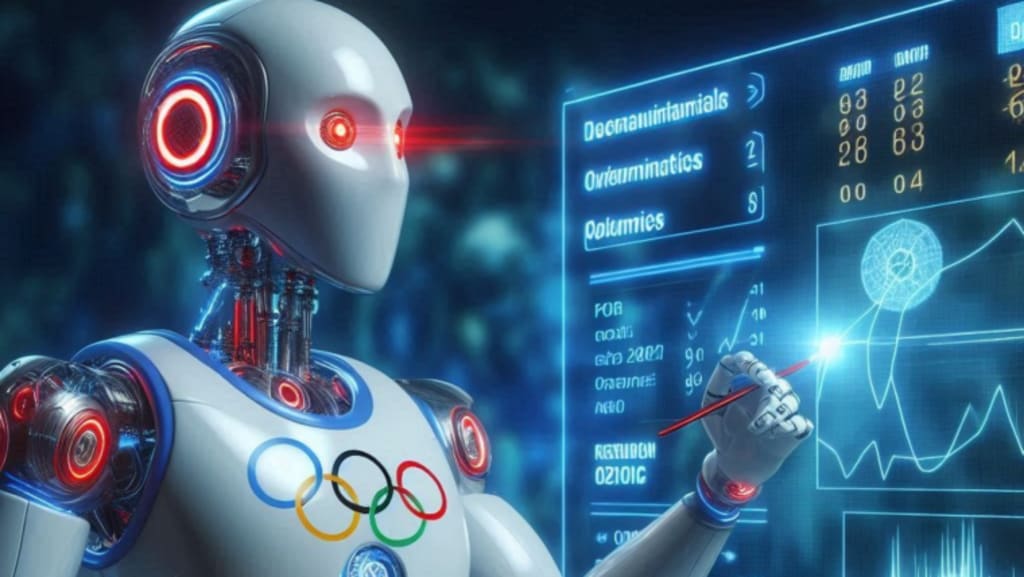
The Olympics, the world’s foremost multi-sport event, has long been a spectacle of athletic achievement, cultural unity, and international competition. With each new edition of the Games, technological advancements have played a role in enhancing the experience for athletes, officials, and spectators alike. Among the most transformative of these advancements in recent years is the rise of Artificial Intelligence (AI), which promises to revolutionize various aspects of the Olympics. As we look to the future, it is clear that AI will have a profound impact on the Games, influencing everything from training and performance analysis to fan engagement and the way the Olympics are organized.
Enhanced Athlete Training and Performance Monitoring
One of the most significant ways AI will influence the Olympics is through its integration into athlete training. AI-driven tools are already being used to analyze athletes’ movements, biomechanics, and performance metrics in real-time. Machine learning algorithms can process vast amounts of data from wearable devices, cameras, and sensors, providing coaches with detailed insights into an athlete’s strengths, weaknesses, and areas for improvement.
For example, AI-powered video analysis can track an athlete's posture, stride, and technique during training, helping to identify small adjustments that can lead to better performance. In disciplines such as swimming, sprinting, or gymnastics, where precision is critical, this real-time feedback will enable athletes to refine their movements and optimize their performance.
Moreover, AI models can predict an athlete's potential performance based on historical data and current trends, offering personalized training regimens that focus on the individual’s unique physiological and psychological needs. This will not only improve individual performances but could also contribute to pushing the boundaries of what is possible in terms of Olympic records.
Injury Prevention and Recovery
Another area where AI will have a transformative impact is in injury prevention and rehabilitation. AI technologies, combined with biomechanics and medical data, can identify early warning signs of injury by analyzing movement patterns that indicate stress on certain joints or muscles. For example, AI can predict whether an athlete is at risk of developing tendinitis, stress fractures, or other overuse injuries, allowing for early interventions and personalized rehabilitation strategies.
Furthermore, AI can assist in designing custom rehabilitation programs, by continuously monitoring an athlete's progress and adjusting the recovery process in real-time. This data-driven approach will enable faster recovery times, allowing athletes to return to peak performance more quickly and reducing the likelihood of re-injury.
Judging and Scoring Precision
Artificial intelligence will also play a pivotal role in ensuring fairer, more accurate judging during Olympic events. In sports that involve subjective judging, such as gymnastics, diving, or figure skating, AI systems can provide precise, data-driven assessments of each performance, reducing the risk of human error or bias in scoring. Advanced machine learning algorithms can analyze every movement, rotation, or flip with high accuracy, offering a secondary layer of judgment that can assist human officials in making final decisions.
For instance, AI can evaluate an athlete’s posture during a dive or their body position in mid-air during a gymnastics routine, providing an objective measurement of their performance. While human judges will remain involved, AI will act as a valuable tool to ensure that scores are based on the most accurate data possible.
Fan Engagement and Personalized Experiences
AI is also set to revolutionize the way fans engage with the Olympics. Personalized experiences, powered by AI, will allow viewers to tailor their Olympic experience in ways previously unimaginable. AI algorithms can analyze a fan’s viewing history, preferences, and social media activity to provide custom content recommendations, whether it's videos of specific athletes, event highlights, or behind-the-scenes footage.
Virtual assistants powered by AI could help fans navigate the Games, offering real-time updates on events, athlete performance, and medal counts. Fans will also be able to access AI-generated predictions about upcoming events, enhancing the excitement and engagement around Olympic competitions. In addition, AI could enable the creation of interactive, immersive experiences using augmented and virtual reality (AR/VR), allowing fans to experience Olympic events as if they were there in person, even from the comfort of their homes.
Logistics and Event Management
AI will also enhance the efficiency of organizing the Olympics, particularly in areas such as logistics and crowd management. With the complexity of hosting the Games, AI-powered systems can predict and optimize crowd movements, ensuring smooth transitions between events, minimizing wait times for spectators, and improving security. AI systems can analyze data from surveillance cameras, ticket sales, and crowd sensors to forecast attendance levels, directing people to less crowded areas or adjusting schedules to Reduce congestion.
Additionally, AI can assist in the coordination of transportation systems, managing the flow of athletes, officials, and spectators across various venues. It can also help in the management of resources, from food and water distribution to venue maintenance, ensuring that the Games run smoothly and efficiently.
Sustainability Efforts
Sustainability is becoming an increasingly important consideration for the Olympics, and AI can play a key role in reducing the environmental impact of the Games. AI technologies can help with energy management in venues, optimizing lighting, temperature control, and water usage to minimize waste. AI can also be used in waste management systems, predicting and optimizing recycling processes to reduce the environmental footprint of the event.
Furthermore, AI-driven simulations can be used in the planning stages to determine the most sustainable venue designs, transportation networks, and event layouts, ensuring that the Games leave a minimal ecological footprint.
In The End
As the Olympics continue to evolve, the integration of Artificial Intelligence will significantly reshape the way the Games are conducted, experienced, and enjoyed. From enhancing athlete training and performance to ensuring fairer judging, more personalized fan experiences, and optimized logistics, AI will help make the Olympics smarter, more efficient, and more engaging for everyone involved. As we look ahead, the future of the Olympics will undoubtedly be shaped by the vast potential of AI, bringing new opportunities for innovation and pushing the limits of human performance in unprecedented ways.
About the Creator
Badhan Sen
Myself Badhan, I am a professional writer.I like to share some stories with my friends.
Keep reading
More stories from Badhan Sen and writers in Gamers and other communities.
HOW AI AND MACHINE LEARNING WILL TRANSFORM THE OLYMPIC GAMES
The Olympic Games have long been a symbol of human achievement, bringing together the world’s best athletes to compete in a celebration of physical prowess, unity, and sportsmanship. However, in the coming years, the games will undergo a profound transformation driven by advancements in technology. Artificial Intelligence (AI) and Machine Learning (ML) are set to revolutionize the Olympic Games, offering new possibilities in performance analysis, fan engagement, security, and even the development of future athletes.
By Badhan Senabout a year ago in Gamers
The Honed Ashlar, Part 2 of 5
Part 2: The Level and the Gavel The Chamber of Silence Silas awoke to silence, heavy, absolute. The air scrubbed of exhaust; smelling of cold stone, raw beeswax, and the metallic tang of a whetstone. He lay on a cot. Not a mission mat. Taut canvas stretched over a steel frame. Plumb. Level. The bolts tightened to a specific, unyielding torque. No sagging allowed.
By Nathan McAllister6 days ago in Gamers


Comments
There are no comments for this story
Be the first to respond and start the conversation.