
HOW AI AND MACHINE LEARNING WILL TRANSFORM THE OLYMPIC GAMES
Revolutionizing Performance,Strategy,and Fan Engagement Through AI and Machine Learning.

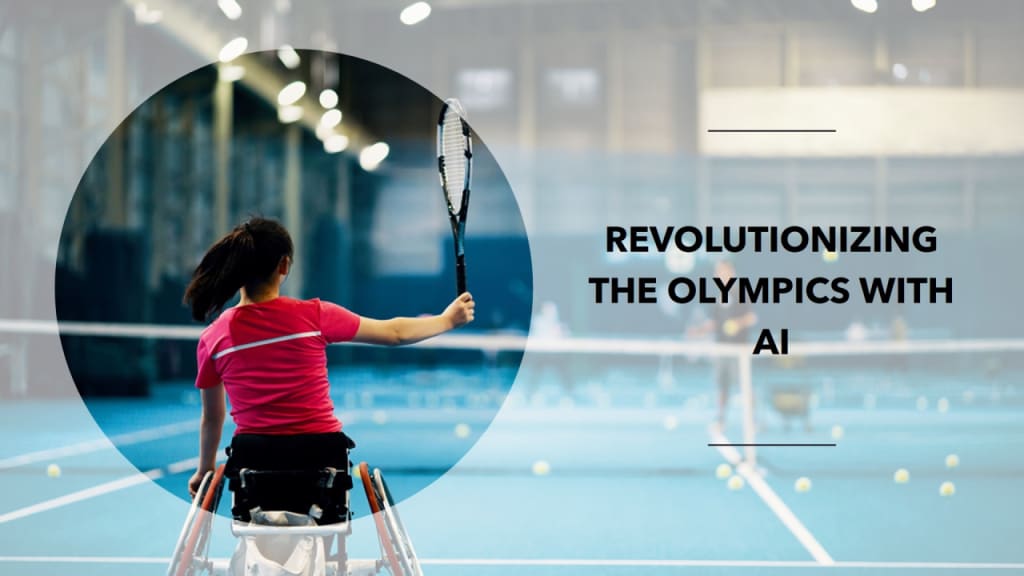
The Olympic Games have long been a symbol of human achievement, bringing together the world’s best athletes to compete in a celebration of physical prowess, unity, and sportsmanship. However, in the coming years, the games will undergo a profound transformation driven by advancements in technology. Artificial Intelligence (AI) and Machine Learning (ML) are set to revolutionize the Olympic Games, offering new possibilities in performance analysis, fan engagement, security, and even the development of future athletes.
(I)Performance Analysis and Athlete Development
AI and ML will play a critical role in enhancing athlete performance. One of the most significant impacts will be in the area of data analytics. Through the use of sensors and wearables, athletes can collect vast amounts of data on their movements, physiological responses, and even mental states during training and competition. Machine learning algorithms can then analyze this data to uncover patterns, offer performance insights, and suggest improvements.
For example, coaches will be able to use AI-powered tools to assess an athlete’s biomechanics with extreme precision, identifying small adjustments that could improve performance, prevent injury, or enhance endurance. In high-stakes competitions like the Olympics, these marginal gains can make the difference between winning and losing. By continuously collecting data over time, AI can also help in the long-term development of athletes, optimizing training regimens based on their unique needs and progress.
(II)Enhanced Fan Experience
AI is poised to revolutionize the way fans experience the Olympic Games. With the use of predictive analytics and personalized content delivery, fans will have access to a more immersive and customized viewing experience. Machine learning algorithms can analyze individual viewing habits and preferences to recommend events, matches, and athletes that a fan is likely to be most interested in.
Additionally, AI-powered Virtual assistants and chatbots will enhance fan interaction, providing instant information about events, scores, and schedules. These bots can answer questions, provide real-time updates, and even offer personalized event recommendations based on the fan's interests. For those unable to attend the Games in person, AI-driven augmented reality (AR) and virtual reality (VR) experiences can offer immersive experiences, allowing them to "attend" events remotely.
Furthermore, AI can assist in the creation of dynamic, data-driven graphics and highlights that can be tailored to individual users, ensuring that fans are always engaged with the most relevant content. This level of personalization will bring fans closer to the action, making the Olympics even more accessible and engaging.
(III)Security and Safety
The security of athletes, officials, and spectators is always a top priority at large-scale events like the Olympics. AI and ML will significantly improve security measures by enabling more efficient surveillance, threat detection, and crowd management.
Machine learning algorithms can be used to analyze data from surveillance cameras and sensors in real-time to detect unusual behaviors, such as large crowds gathering or individuals acting suspiciously. This capability could dramatically improve the speed at which potential threats are identified, allowing authorities to act quickly and prevent incidents before they escalate.
Moreover, AI-driven facial recognition systems could be used to enhance security checks, ensuring that only authorized personnel or ticket holders are allowed access to certain areas. While this raises privacy concerns, when implemented responsibly, these systems can help streamline security without compromising safety.
In addition, AI-powered predictive analytics can be used to forecast crowd movements and behavior patterns during the Games, allowing organizers to plan and adjust security strategies proactively. This can help in managing large crowds efficiently and maintaining order during high-traffic events.
(IV)Officiating and Fairness
One of the most critical aspects of the Olympics is the integrity of the competition. AI and ML can assist in ensuring fairness by improving officiating accuracy. Through machine learning, referees and judges can access tools that analyze game footage in real-time to provide objective, data-driven insights into close calls, such as whether a ball was in or out of bounds, or if an athlete committed a foul.
For instance, AI-driven video analysis can help determine if an athlete's performance in gymnastics, diving, or other subjective sports meets the criteria for scoring. In events like swimming, AI can track the precise timing of athletes' movements, ensuring that results are accurate and fair.
Additionally, AI can assist in reducing human bias by providing more objective assessments, making officiating more transparent and ensuring the integrity of the competition. This technology can also be used to monitor for any potential rule violations or doping offenses, providing an additional layer of fairness.
(V)Future Sports Innovation
Beyond improving existing events, AI and ML could give rise to entirely new forms of Olympic competitions. As AI continues to advance, the possibility of integrating autonomous systems, robots, or even AI-powered sports could emerge as new Olympic events. For example, AI-powered drones could participate in aerial sports, or robotic athletes could compete in events designed specifically for them.
This fusion of AI with traditional sports could inspire new disciplines and increase the Global appeal of the Games, attracting younger and tech-savvy audiences who are drawn to innovative and futuristic concepts.
In The End
The impact of AI and ML on the Olympic Games is poised to be profound and far-reaching. From performance analysis and athlete development to enhancing fan experiences and improving security, AI will transform every aspect of the Games. As technology continues to evolve, the potential for AI and ML to shape the future of the Olympics is limitless. As we look to the future, one thing is clear: AI will be at the heart of the next generation of Olympic Games, pushing the boundaries of what’s possible and enhancing the experience for athletes.
About the Creator
Badhan Sen
Myself Badhan, I am a professional writer.I like to share some stories with my friends.
Keep reading
More stories from Badhan Sen and writers in Gamers and other communities.
THE ROLE OF THE OLYMPIC IN FUTURE GLOBAL CULTURAL DIPLOMACY
The Olympic Games, established in 1896, have evolved into one of the world’s most significant sporting events, transcending the realms of athletic competition to become a powerful tool for global cultural diplomacy. Cultural diplomacy, which seeks to foster mutual understanding and positive relations between nations through cultural exchange, finds a natural platform in the Olympics. As we look toward the future, the Games will continue to play a crucial role in shaping international relations, promoting peace, and facilitating global cultural dialogue. The future of the Olympics in cultural diplomacy will likely see a blend of tradition and innovation, with new challenges and opportunities arising from geopolitical shifts, technological advancements, and societal changes.
By Badhan Senabout a year ago in Gamers
10 Things Cloud Computing Solutions Simplify Server Control
Managing physical servers often feels like a never-ending battle against tangled wires and heat. You spend hours monitoring blinking lights in a cold room. Traditional setups demand constant attention and manual updates. Cloud computing solutions change this entire dynamic for modern businesses. It moves your digital assets to a flexible virtual space. This shift grants you total authority without the physical burden. The cloud transforms complex technical chores into simple clicks. It allows you to focus on growth rather than hardware maintenance.
By Arthur Leo4 days ago in Gamers



Comments
There are no comments for this story
Be the first to respond and start the conversation.