
Power Up Your Morning: The Game Positive Way
How Morning Gaming Boosts Focus, Mood, and Motivation for the Day Ahead
Power Up Your Morning: The Game Positive Way
How Morning Gaming Boosts Focus, Mood, and Motivation for the Day Ahead
Most people start their mornings with a routine: coffee, a quick scroll through social media, maybe some stretching or a rushed breakfast. But for 28-year-old Maya Lopez, her day begins with something different — gaming.
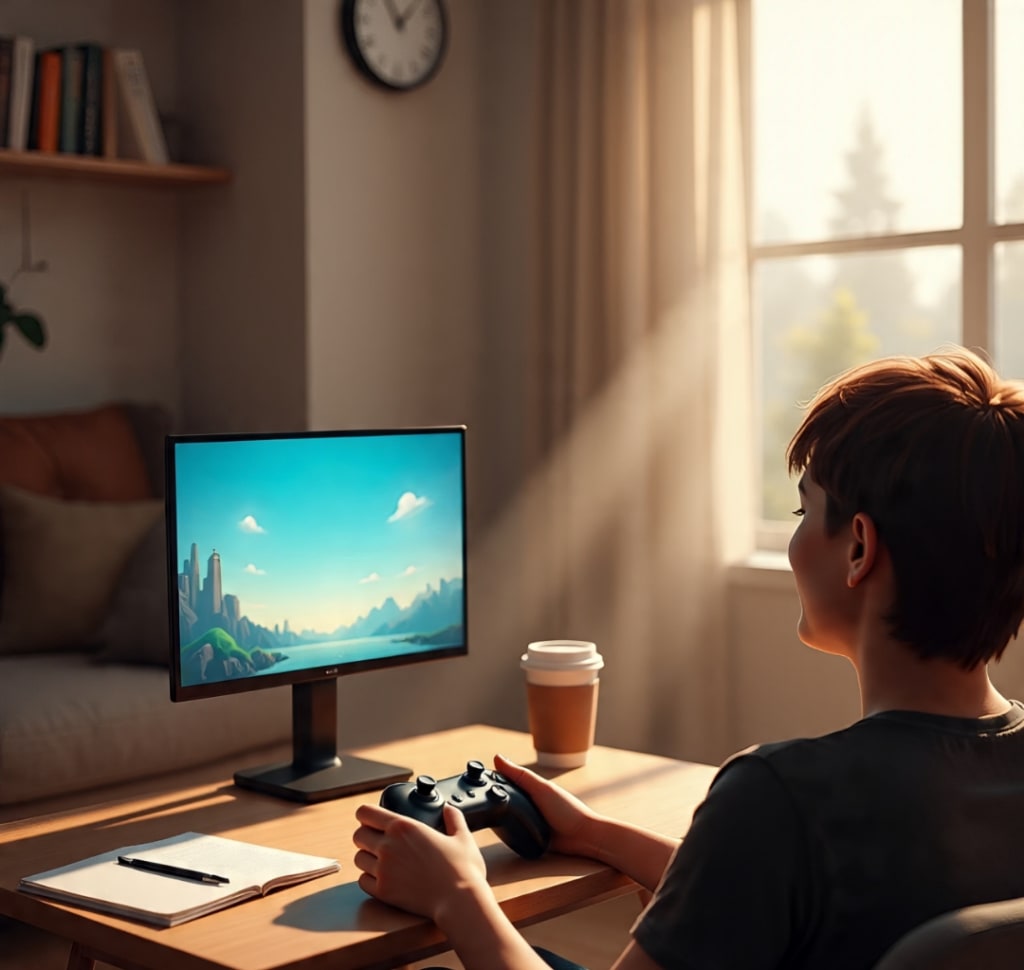
At 6:45 AM, long before most of her neighbors are even out of bed, Maya is curled up in her favorite chair with a steaming mug of green tea and her Nintendo Switch in hand. The calming music of Stardew Valley floats through the room as she tends to her digital farm, checks in with virtual townsfolk, and watches her in-game crops grow. For Maya, this isn’t a guilty pleasure or procrastination. It’s intentional.
“I used to dread mornings,” she says. “I’d wake up already anxious about the day ahead. But starting the day with 30 minutes of a game I love has totally changed that. It sets the tone — I feel grounded, focused, and happier.”
This isn’t just Maya’s personal experience. A growing number of people are turning to what’s now being called “game positive” mornings — using video games intentionally as a tool for mental clarity, motivation, and mood regulation at the start of the day.
The Science Behind It
While video games have often been criticized for promoting inactivity or distraction, recent studies paint a more balanced picture. According to research published in the journal Nature Human Behaviour, moderate gaming can boost cognitive flexibility, problem-solving skills, and even emotional regulation.
Morning gaming, in particular, may have unique benefits. Playing games that are goal-oriented or narrative-driven — like The Legend of Zelda, Animal Crossing, or puzzle games — activates the brain’s reward system. That dopamine release, especially first thing in the morning, can act like a mental “warm-up,” much like stretching before a run.
“Gaming can engage both the emotional and logical parts of the brain,” explains Dr. Lena Patel, a clinical psychologist specializing in behavioral health. “Starting the day with a positive gaming experience can help regulate mood and reduce stress levels, especially for people prone to anxiety or ADHD.”
Dr. Patel notes that the key is intention and balance. “It’s not about bingeing for hours. It’s about using a short, controlled gaming session to set a positive tone.”
Building a Game Positive Morning
Maya’s morning routine is simple but purposeful. After waking up, she avoids email and social media. Instead, she brews her tea and picks up her Switch or plays a PC game for 20–30 minutes — always something low-pressure and calming.
“I don’t play competitive games in the morning,” she says. “No shooters or fast-paced multiplayer matches. It’s more about creativity and flow.”
Other early gamers agree. Ethan, a 35-year-old freelance designer, uses puzzle games like Tetris Effect or Mini Metro to sharpen his focus. “It’s like a mental cup of coffee,” he laughs. “I feel more alert and clear-headed after solving a few puzzles.”
Some even blend gaming with mindfulness. Apps like Kind Words or Alba: A Wildlife Adventure offer relaxing environments, gentle soundtracks, and positive interactions that help players ease into the day without the chaos of the outside world.
Not Just for Gamers
One surprising thing about the game positive movement is that it’s drawing in people who never considered themselves “gamers.”
“I hadn’t touched a game console in years,” says Trisha, a 41-year-old teacher and mother of two. “But during the pandemic, I started playing Journey in the mornings — just for 15 minutes before the kids woke up. It was beautiful, emotional, and it gave me something quiet that was just for me.”
Trisha now rotates through a small library of indie games she describes as “soulful” and “uplifting.” She even encourages her students to think of gaming in new ways — as a tool for creativity, emotional exploration, and connection.
A Cultural Shift
This shift in perspective reflects a broader cultural rethinking of gaming. As games continue to evolve beyond competition and violence, they’re increasingly seen as spaces for storytelling, meditation, even healing. Morning gaming fits into a larger trend of using interactive media as part of wellness and daily rituals.
Of course, boundaries are important. Experts recommend keeping gaming sessions short (15–45 minutes), avoiding overly stimulating or addictive titles, and ensuring that it complements, rather than replaces, other healthy habits like movement, nutrition, and rest.
But when done right, morning gaming can be a surprisingly powerful way to reclaim the start of your day.
As Maya puts it: “Instead of waking up to stress and noise, I wake up to something that brings me joy. And that changes everything.”
About the Creator
Keep reading
More stories from Muhammad Saad and writers in Gamers and other communities.
Level Up: The Power of Games to Inspire and Connect
When most people think of video games, their minds jump to controllers, screens, or characters jumping over obstacles. But behind those pixels and polygons lies something much deeper: a growing global movement that is changing how we learn, create, and connect. Video games have come a long way since the days of Pong and Pac-Man. What began as simple forms of digital entertainment has evolved into immersive experiences that blend art, storytelling, music, and technology. Today, games are more than just a pastime—they're tools for education, platforms for social connection, and sources of inspiration for millions around the world. A Creative Playground One of the most powerful aspects of gaming is how it encourages creativity. Games like Minecraft, Roblox, and Dreams allow players to build entire worlds from scratch. Children and adults alike use these platforms to design intricate landscapes, construct buildings, and even program interactive features. For many, these games become the first step into design, coding, or storytelling. Emma, a 14-year-old from Toronto, started building fantasy castles in Minecraft when she was just 9. Now, she’s learning 3D modeling and wants to become a game designer. “It’s not just a game to me,” she says. “It’s like my sketchbook. I build whatever I imagine.” Educators have taken notice, too. Schools around the world are integrating game-based learning into classrooms. Whether it’s teaching math through puzzles in Portal or history through Assassin’s Creed: Discovery Tour, games are helping students engage with subjects in new and exciting ways. Building Bridges, Not Walls Gaming is also breaking down barriers between people. In a time when physical distance can keep us apart, online games offer a place to meet, play, and build friendships. Multiplayer games like Fortnite, Among Us, and Animal Crossing: New Horizons became virtual hangouts during the COVID-19 pandemic. Birthdays were celebrated, concerts were hosted, and communities thrived—all within digital spaces. It’s not just kids who are connecting through games. Adults, grandparents, and even entire families are bonding over shared experiences. For some, gaming is a lifeline against loneliness. Take Marco, a 67-year-old retiree who started playing Final Fantasy XIV to stay in touch with his grandchildren. “At first, I didn’t understand it,” he laughs. “But now, we play every weekend. It’s our thing.” The sense of community in gaming goes far beyond just playing together. Gamers support each other in online forums, stream their gameplay to teach others, and raise millions for charity through gaming marathons. Events like Games Done Quick show how powerful the gaming community can be when united for a cause. Real Skills, Real Opportunities Contrary to outdated stereotypes, gaming doesn’t isolate people or waste time—it often builds real-world skills. Strategy, communication, critical thinking, and teamwork are just a few of the abilities honed through games. Esports, the competitive side of gaming, has turned this into a career path for many young players. Professional gaming tournaments now fill stadiums, and scholarships are available for student gamers. Colleges offer programs in game development, and jobs in the gaming industry—from artists to engineers—are in high demand. According to a 2024 report, the global gaming industry is now worth over $200 billion and continues to grow. Beyond the business side, games are even being used in therapy and mental health. Titles like Celeste and Journey have been praised for addressing anxiety, depression, and grief through storytelling and gameplay. Organizations use games to help people open up, process emotions, and find support in safe, interactive environments. A Bright Future for Play The future of gaming is more exciting than ever. Technologies like virtual reality (VR), augmented reality (AR), and AI are pushing the boundaries of what games can do. From training doctors in simulations to preserving cultural heritage through interactive stories, the applications are endless. But perhaps the greatest promise of gaming lies in its heart: the players. Every day, people from different backgrounds log in not just to escape, but to connect, learn, and grow. Whether it’s building a virtual city, competing on a global stage, or simply sharing a laugh with a friend, gaming is creating something truly powerful. Games are no longer just something we play. They’re something we create, share, and live. So the next time someone tells you “It’s just a game,” you can smile and say, “It’s more than that—it’s the future.”
By Muhammad Saad 8 months ago in Gamers
U4gm Luck Hits Los Santos: St. Patrick’s Day Update in GTA Online
Los Santos is getting a festive makeover! Rockstar Games has launched the St. Patrick’s Day seasonal update for GTA Online, running from March 12 to March 19, 2026. This limited-time event brings a mix of cash rewards, exclusive items, community challenges, and bonus multipliers, making this week one of the most exciting times to log in and play.
By Billo Naliabout 2 hours ago in Gamers



Comments
There are no comments for this story
Be the first to respond and start the conversation.