

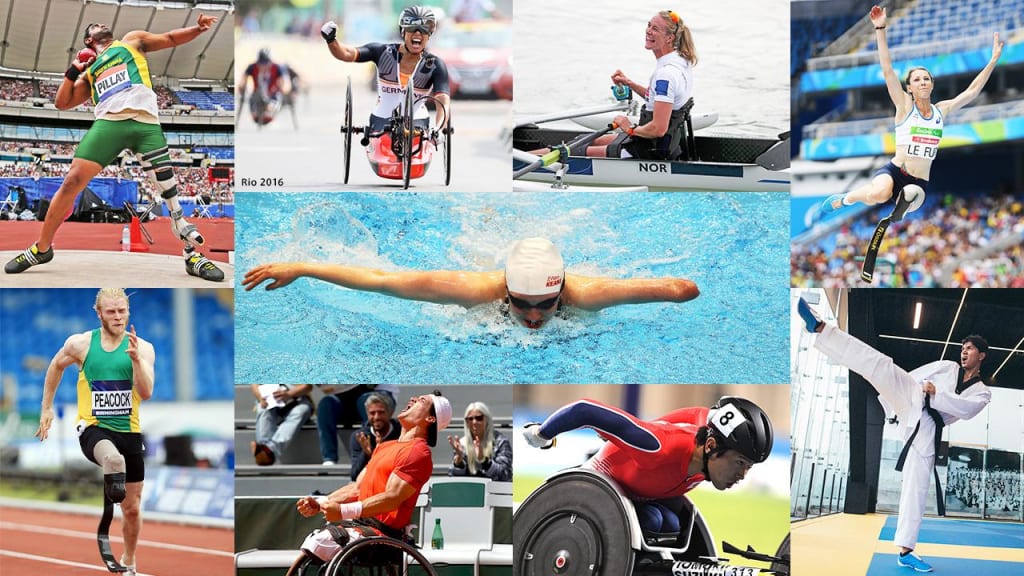
- The Paralympic Games: A Celebration of Ability
The Paralympic Games, often referred to as the Games of the Paralympiad, are a series of international sports events for athletes with disabilities. These games occur every four years, alongside the Olympic Games, and feature both summer and winter events. The International Paralympic Committee (IPC) oversees the Games, ensuring they run smoothly and uphold the spirit of competition and inclusion.
- A Brief History
The Paralympics began in 1948 when Dr. Ludwig Guttmann, a German-Jewish doctor, organized a sports competition for British World War II veterans with spinal cord injuries. This event, known as the 1948 International Wheelchair Games, was a pioneering step towards the modern Paralympic Games. The first official Paralympic Games took place in Rome in 1960, coinciding with the Summer Olympics. This inaugural event featured 400 athletes from 23 countries and marked the beginning of the Paralympic movement's growth.
- The Growth of the Games
Over the decades, the Paralympic Games have expanded significantly. The 1976 Summer Games in Toronto were the first to include athletes with various disabilities beyond just those using wheelchairs. This expansion led to a dramatic increase in participation, with 1,600 athletes from 40 countries competing.
The 1988 Summer Paralympics in Seoul were a turning point. For the first time, the Paralympics were held in the same city and venues as the Olympics, a practice that continues today. This integration not only increased the visibility of the Paralympics but also set a precedent for future Games.
Winter Paralympics
The Winter Paralympics began in 1976 in Örnsköldsvik, Sweden. Similar to the Summer Games, the Winter Paralympics have grown over time. Initially, the Winter Games were held in the same year as the Summer Games. However, since 1994, they have been held in alternate years, ensuring that winter sports have their own dedicated spotlight.
- The Role of the IPC
The International Paralympic Committee, established in 1989, is the governing body responsible for organizing the Games. The IPC works closely with 178 National Paralympic Committees (NPCs) and four disability-specific international sports federations. These federations help manage and oversee various sports, from athletics to wheelchair dance.
The IPC’s mission is to promote the Paralympic movement and ensure that athletes with disabilities have equal opportunities to compete at the highest level. This includes supervising competitions, certifying officials, and enforcing the rules set out in the Paralympic Charter.
- Symbols and Ceremonies
The Paralympic Games are known for their vibrant and symbolic ceremonies. The Opening Ceremony features a grand parade where athletes enter the stadium in alphabetical order according to the host country’s language. The ceremony also includes the raising of the Paralympic flag, the singing of the Paralympic Anthem, and the lighting of the Paralympic flame by a prominent athlete.
The Closing Ceremony celebrates the end of the Games with a similar parade of athletes. The Paralympic flag is lowered, and the next host country is introduced with a display of its culture.
- The Spirit of the Games
The Paralympic Games emphasize the athletes' abilities rather than their disabilities. The motto "Spirit in Motion" reflects this focus on athletic excellence and the inspirational nature of the competition. The Paralympic symbol, three interlocking Agitos, represents the athletes coming together from around the world.
Unlike the Olympics, the Paralympics have been more inclusive in terms of sponsorship. Sponsors are allowed to display their logos in arenas and on uniforms, helping to fund the Games and raise their profile.
- Equality and Integration
The relationship between the IPC and the International Olympic Committee (IOC) has strengthened over the years. Since 2001, an agreement ensures that the Paralympic Games are included in the bid for the Olympic Games, promoting greater integration and visibility. This partnership has led to significant improvements in the staging and recognition of the Paralympic Games.
The Games also highlight the ongoing struggle for equality in sports. Paralympians often face a funding gap compared to their Olympic counterparts. Despite this, the Paralympics continue to inspire and challenge perceptions of disability through the extraordinary achievements of its athletes.
- Athletes and Achievements
Many Paralympic athletes have also competed in the Olympics, breaking barriers and demonstrating their incredible talents. For example, Oscar Pistorius, a South African sprinter with prosthetic legs, competed in both the Paralympics and the Olympics. His participation highlighted the potential for athletes with disabilities to compete at the highest levels.
- Looking Ahead
The Paralympic Games continue to grow and evolve, with future events planned to further integrate with the Olympics and showcase the abilities of athletes from all over the world. As the Games move forward, they will continue to push boundaries, challenge stereotypes, and celebrate the incredible achievements of Paralympic athletes.
In summary, the Paralympic Games are a testament to the strength, skill, and spirit of athletes with disabilities. They not only provide a platform for competitive sports but also play a crucial role in changing perceptions and promoting inclusivity on a global scale.
The Evolving Media Coverage and Classification in Paralympic Sports
The Paralympic Games, a major international multi-sport event for athletes with disabilities, have come a long way in terms of media coverage and classification. Despite this progress, challenges remain, particularly in terms of consistent media exposure and classification fairness.
- Media Coverage Over the Years
The journey of media coverage for the Paralympics has been one of gradual improvement. Back in 1976, the Paralympic Games were only shown on television with delayed broadcasts, and these were limited to specific nations or regions. It wasn't until the 1992 Summer Paralympics that live coverage was expanded, but it was still restricted mainly to Europe. Other countries typically only offered highlight packages.
A significant milestone came with the 2000 Summer Paralympics in Sydney. For the first time, the Games were broadcast internationally through a deal between the Sydney Paralympic Organizing Committee and All Media Sports. This deal, along with coverage by Asian, South American, and European broadcasters, helped the Sydney Paralympics reach an impressive global audience of about 300 million people. The Games were also webcast for the first time, marking a new era of accessibility for viewers around the world.
Despite these advances, consistent media attention has been a challenge. For instance, the BBC faced criticism for its minimal coverage of the 2010 Winter Paralympics in Great Britain, compared to the extensive coverage of the Winter Olympics. While the BBC did stream some content online and aired a one-hour highlight show, the limited coverage drew complaints, especially since the 2008 Summer Paralympics had seen high viewership in Britain.
In contrast, Norway's broadcasting was more robust. The Norwegian Broadcasting Corporation broadcast 30 hours of the 2010 Winter Paralympics live and received positive feedback on the production quality of certain events.
The coverage has continued to improve in recent years. Channel 4, which took over the UK TV rights from the 2012 Summer Paralympics, has significantly increased coverage on both television and digital platforms. Their marketing campaigns have been widely praised, and their 2024 Summer Paralympics coverage attracted 20 million viewers, achieving the highest viewer share for the channel since 2012.
- The Role of Digital Media
One of the notable differences between the Olympics and the Paralympics is the control over digital rights. The International Paralympic Committee (IPC) holds the digital rights to the Paralympics in some markets. This allows the IPC to promote live coverage and highlights through its own social media channels, engaging a global audience online. This digital presence has been crucial in increasing the visibility of the Paralympics and reaching viewers who might not access traditional TV broadcasts.
- Classification Challenges
Classification in Paralympic sports is designed to ensure fair competition among athletes with different types of impairments. The IPC has established ten disability categories, including physical, visual, and intellectual impairments. Within each category, athletes are further divided into Sport Classes based on their level of impairment. This system aims to level the playing field by minimizing the impact of an athlete’s impairment on their sporting performance.
However, the classification system has its complexities. For example, athletes with Down syndrome face particular challenges. While they can compete in the intellectual impairment category (S14) in swimming, their physical impairments are not specifically accounted for in this classification. This can place swimmers with Down syndrome at a disadvantage against competitors with less severe physical impairments. Advocacy groups have been calling for a separate classification category to address these issues and ensure fair competition.
Historically, the classification system was based on medical diagnoses alone, which meant that athletes with similar impairments but different types of disabilities might not compete in the same category. Since the 1980s, the focus has shifted from medical diagnoses to the functional abilities of athletes. This change aimed to create a more equitable system where athletes are classified based on how their impairments affect their performance, rather than their medical conditions.
- The Future of the Paralympics
The Paralympics continue to evolve, with significant improvements in media coverage and classification systems. The increase in global media exposure and the ability to promote the Games through digital platforms have enhanced the visibility and accessibility of the Paralympics. At the same time, ongoing efforts to refine classification systems and advocate for more inclusive categories highlight the commitment to ensuring fair competition for all athletes.
As the Paralympics move forward, addressing these challenges and continuing to enhance media coverage will be crucial in showcasing the incredible talents of athletes with disabilities and promoting greater inclusivity in the world of sports.
About the Creator
SK
Sajawal is an 18-year-old student in Class 13, known for his curiosity and determination. With his fair complexion and thoughtful demeanor, Sajawal stands out among his peers. He is dedicated to his studies and has a passion for storytellin
Stardew Valley Moss Guide: Why This 1.6 Resource is More Valuable Than You Think
For years, the appearance of green fuzz on the oak and maple trees of Pelican Town was nothing more than a visual indicator of rain or a sign that you had neglected your farm’s landscaping. When the 1.6 update arrived, everything changed.
By Richard Bailey3 days ago in Gamers
R6 Predictions for 2026: The Next Chapter of Rainbow Six Siege
In 2026, Rainbow Six Siege won’t feel like a brand-new game and that may be its greatest strength. Instead of chasing trends, Siege is likely to double down on what it already does best: tactical depth, operator-driven gameplay, and a competitive ecosystem that rewards patience and planning. Looking back from this point in time, 2026 could be remembered as the year Siege finally perfected its long-term evolution.
By Deborah Larson2 days ago in Gamers


Comments
There are no comments for this story
Be the first to respond and start the conversation.