
ORIGIN OF THE MODERN OLYMPICS
The Ancient Roots of the Olympic Games

Origin of the Modern Olympics
The modern Olympic Games, a grand spectacle that unites nations and showcases the finest athletic talent from around the world, have a unique origin rooted in both history and revival. While the Olympic Games are famously linked to Ancient Greece, the version we know today was born in the late 19th century. The story of the modern Olympics is deeply connected with the vision of a few key individuals, particularly Pierre de Coubertin, and the desire to create a global event that emphasized physical excellence, international unity, and peaceful competition.
(I)The Ancient Roots
The origins of the Olympic Games can be traced back to 776 BCE in ancient Greece. The ancient Olympics were held in Olympia, a sacred site dedicated to the Greek god Zeus. These games were part of a religious festival in honor of Zeus and were held every four years, attracting athletes from various Greek city-states. The original Olympics featured a simple footrace, but over time, more events were added, including wrestling, chariot racing, and the pentathlon. The games became a symbol of Greek cultural identity, and their significance grew throughout the ancient world.
However, after the Roman conquest of Greece, the Olympic Games gradually declined, and in 393 AD, the Roman Emperor Theodosius I officially abolished the ancient games, viewing them as pagan rituals. For centuries, the Olympics were forgotten, with only myths and stories remaining.
(II)The Revival of the Olympic Games
Fast forward to the 19th century, when the idea of reviving the Olympic Games was born. It was during this period that the industrial revolution, the rise of nationalism, and growing international relations provided the perfect backdrop for a new vision of the Olympics. Pierre de Coubertin, a French educator and sports enthusiast, is often credited with spearheading the movement to revive the ancient games.
Coubertin, who believed in the power of physical education and international friendship, was inspired by the concept of Greek ideals of beauty, strength, and athleticism. He was also influenced by the educational reforms in Britain, where school sports competitions were becoming increasingly popular. Coubertin’s dream was to bring together nations through sport, believing that the Olympic Games could promote peace and mutual understanding.
In 1892, Coubertin presented his idea to a group of French educators, and by 1894, the International Olympic Committee (IOC) was founded in Paris. The first International Olympic Congress was a key event in solidifying the structure and vision of the modern Games. The decision to revive the Olympics was not a simple one, as it required building both interest and infrastructure, but Coubertin’s passionate campaign gradually convinced many that this dream could become a reality.
(III)The First Modern Olympics
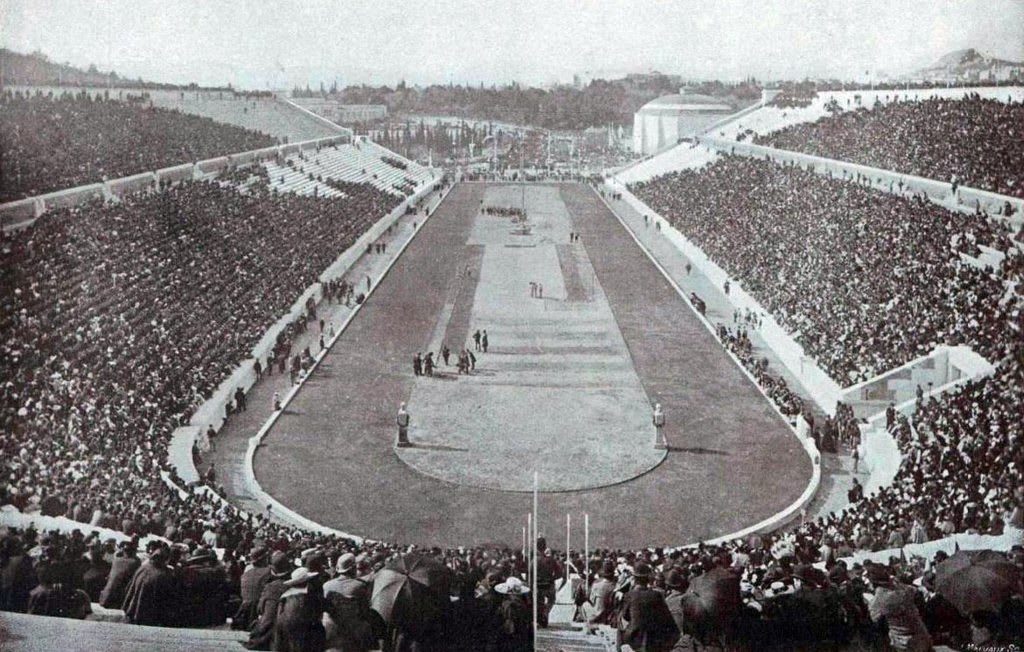
The first modern Olympic Games were held in 1896 in Athens, Greece, a fitting location given the Games' ancient origins. The 1896 Games were much smaller in scale than those we see today, with only 13 countries participating and 43 events. There were 280 athletes, all male, who competed in nine sports: athletics, cycling, fencing, gymnastics, swimming, tennis, shooting, wrestling, and weightlifting.
Despite its modest beginnings, the 1896 Games were considered a success. The public enthusiasm for the event marked a new era in the history of sport. The Games featured key moments, such as the triumph of American athlete James Connolly, the first-ever Olympic champion in the modern era, and the Greek gymnast Ioannis Xenakis, who became a national hero for winning the first Greek Olympic medal in over a thousand years.
(IV)The Growth of the Olympics
The early success of the Olympics led to the expansion of the event. The Games grew both in terms of the number of participating countries and the variety of events. The IOC organized the first Winter Olympics in 1924 in Chamonix, France, extending the reach of the Games to winter sports. The 1900 Paris Olympics saw women competing for the first time, opening doors for female athletes. The inclusion of new sports and the growing participation of nations from all continents signified the broadening of the Olympics into the global event we know today.
The Games faced some challenges, particularly during the 20th century. The Olympic movement was temporarily suspended during the World Wars, but following each conflict, the Games resumed with greater resolve and significance. The 1948 London Olympics, for example, were seen as a symbol of post-war recovery, where athletes from war-torn countries came together to celebrate the power of sport and international unity.
(V)The Modern Olympic Ideals
Today, the modern Olympics are far more than just an athletic competition; they embody ideals of excellence, respect, and friendship. The Olympic motto, Citius, Altius, Fortius ("Faster, Higher, Stronger"), reflects the continuous pursuit of athletic excellence. The Olympic Games now bring together over 200 nations, showcasing more than 300 events across a wide range of sports.
The Olympics have also become a platform for social and political issues. The Games have provided moments of political protest, such as the 1968 Mexico City Olympics when athletes Tommie Smith and John Carlos raised their fists in a Black Power salute. More recently, the Games have been a stage for raising awareness on climate change, gender equality, and refugee rights, with the inclusion of the Refugee Olympic Team in 2016 and 2020.
Conclusion
The origin of the modern Olympic Games is a tale of revival and transformation, from the ancient traditions of Greece to a global celebration of human potential. Pierre de Coubertin’s dream of an international sporting event has evolved into a powerful symbol of unity and excellence, inspiring millions around the world. Today, the Olympic Games remain a pinnacle of athletic achievement and a reminder of the power of sport to bring the world together.
About the Creator
Badhan Sen
Myself Badhan, I am a professional writer.I like to share some stories with my friends.
Keep reading
More stories from Badhan Sen and writers in Gamers and other communities.
HISTORY OF THE OLYMPIC GAMES
History of the Olympic Games The Olympic Games, one of the most celebrated sporting events in the world, have a rich history that spans over 3,000 years. They are a symbol of athletic excellence, cultural exchange, and global unity. The Olympic Games have evolved from their ancient origins in Greece to become a modern global phenomenon that captures the attention of millions of people worldwide.
By Badhan Senabout a year ago in Gamers
Upcoming Xbox & Game Pass Releases: What’s Worth Playing This Week?
It’s time once again to take a look at what’s landing on Xbox and Xbox Game Pass this week—and whether any of it is worth your valuable time or money. It has been a minute since the last week-in-preview roundup (holiday chaos and all that), but we’re officially back on track with a fresh lineup of releases.
By Bella Anderson4 days ago in Gamers


Comments (1)
Another great historical article on the Olympics.