
Monetization in Games – A Major Issue in Modern Game Development
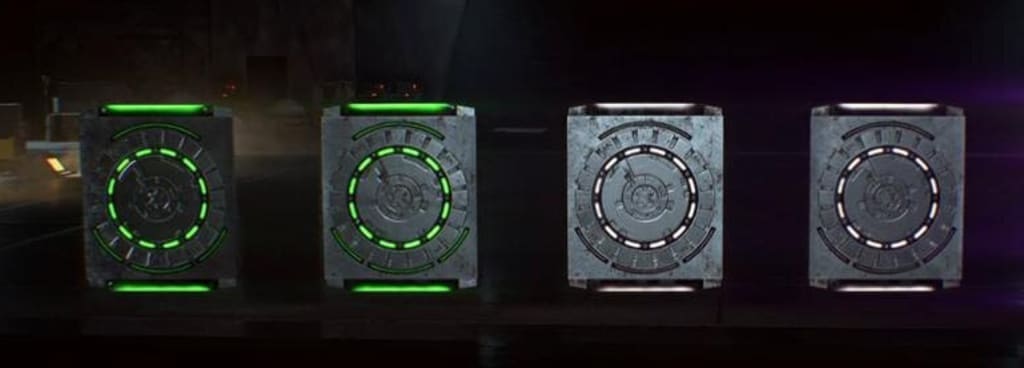
Monetization in games is one of the biggest issues in game development today. While some companies strive to create high-quality, well-crafted games, others focus on turning their games into services purely to generate revenue. The main problem isn’t that companies want to make money—this is completely normal. The real issue lies in how they try to extract that money.
Let’s take a look at games before 2017 (I’ll explain why this specific year later). In 2015, we saw the release of The Witcher 3, which won The Game Awards, alongside titles like Bloodborne, Fallout 4, MGS V: The Phantom Pain, Until Dawn, Rise of the Tomb Raider, Batman: Arkham Knight, and Ori and the Blind Forest. With the exception of Fallout 4, which had a lot of DLC released a year later, these games made money through game sales rather than in-game content purchases, as is common today. The peak of developer and publisher greed came in 2017, when loot boxes with abysmally low drop rates became a significant issue, especially in Overwatch and Battlefront 2.
Most people either know or have at least heard about what happened back then, but let’s go over it again. Loot boxes were present in Overwatch even in beta. When the game was officially released, players reacted differently—some were furious at Blizzard for introducing them. After all, this was a full-priced game, and instead of simply unlocking cosmetics through gameplay progression, players had to deal with random loot mechanics. This meant that getting a desired skin was not just a matter of unlocking it but rolling the dice on loot boxes with a certain probability. In reality, this turned into nine circles of hell, as the god of RNG rarely granted players what they actually wanted—he thrived on suffering instead.
So, where do we stand now? Overwatch 2 no longer has loot boxes. Does that mean players won? Well, it’s debatable. Loot boxes and RNG are gone, but the battle pass system replaced them. Some like it, some don’t—it’s all subjective. Personally, I think a battle pass is better than loot boxes since it at least offers a way to earn in-game currency and buy skins without spending real money, which is a definite plus.
But pay attention—Overwatch is a bad example of monetization in paid games, but it pales in comparison to Battlefront 2. In Overwatch, you only paid for cosmetics that didn’t affect gameplay—they were purely visual. But in Battlefront 2, pay-to-win mechanics directly affected gameplay.
Some might say, “But you could grind for upgrades instead of paying!” That’s true—but the real issue was the grind itself. To unlock and upgrade a popular character, you had to grind for 40 hours—which is literally a full-time workweek in Europe. Imagine this: You come home from work exhausted, finally sit down at your PC or console to relax, and then EA tells you that unlocking your favorite character requires 40 hours of grinding. This wasn’t a joke—it was reality. Popular heroes were absurdly expensive, and the grind was excruciatingly slow.
Eventually, EA lowered hero costs, but that didn’t save the company. A massive boycott began. Players and journalists slammed EA, and even Disney had to step in as the franchise rights holder. Only after this massive backlash, in 2018, did things start to change—loot boxes were stripped of everything except cosmetics, progression became linear, and most content stopped being locked behind paywalls. But by then, it was too late. EA's reputation was severely damaged. Today, EA survives mostly thanks to its sports simulators and a few successful games under Josef Fares' leadership.
This article barely scratches the surface of microtransactions and in-game monetization. I'm still new to writing articles, so I’d really appreciate any feedback you can give me. Let me know your thoughts on the topic!
About the Creator
Keep reading
More stories from writers in Gamers and other communities.
Rsvsr GTA Online Mansion Mode: Big Rewards & Strategy
I just jumped back into GTA Online, and Rockstar is kicking off 2026 with style. From January 15th to January 21st, Mansion Mode Event Week transforms Los Santos into a playground of opulent estates and high-stakes battles. Whether you’re a veteran or a newcomer, this week offers action, strategy, and some seriously sweet rewards.
By Billo Nali6 days ago in Gamers


Comments
There are no comments for this story
Be the first to respond and start the conversation.