
Mastering Rush Royale PvP: Proven Tactics to Climb the Ladder Faster
Learn the best Rush Royale PvP strategies, deck-building tips, and in-game tactics to climb the ladder faster and win more matches

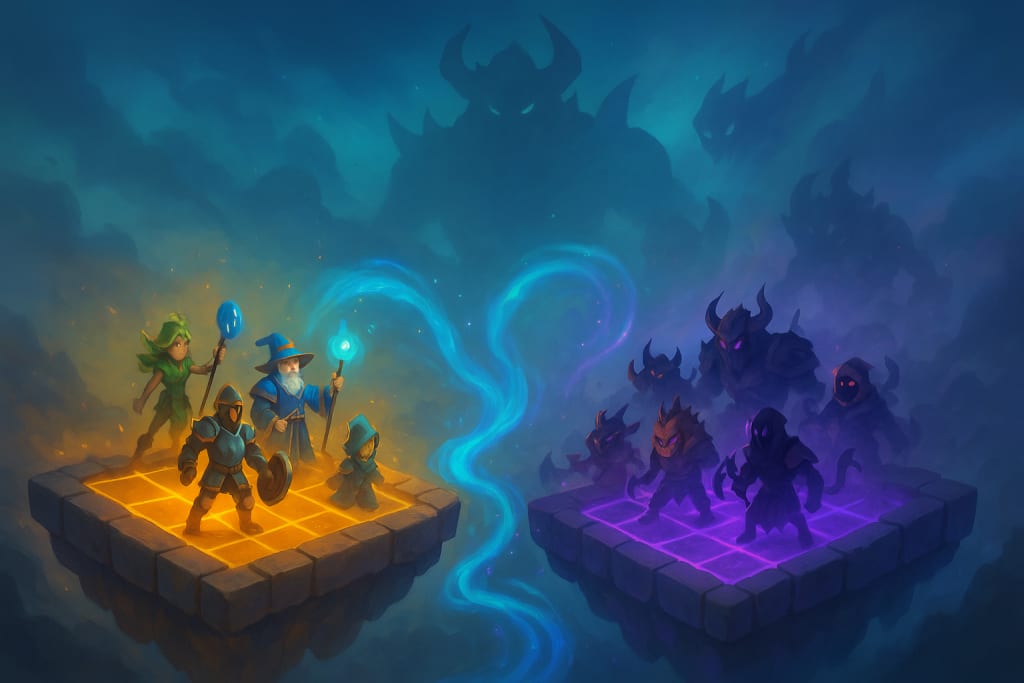
Climbing the PvP ladder in Rush Royale can be both exciting and punishing. Every match is a test of not only your deck’s raw power but also your ability to adapt, manage resources, and make split-second decisions under pressure.
Many players stall at mid-ranks because they rely on luck or stick to outdated strategies. The truth is, progression in PvP comes down to a mix of strategic deck building, careful mana use, and strong tactical awareness.
This article will break down PvP tactics in detail—covering everything from deck construction to late-game survival—so you can climb faster, avoid common mistakes, and compete confidently against stronger opponents.
The Unique Nature of PvP in Rush Royale
Unlike co-op, where the objective is simple survival, PvP is a race against your opponent. Both players face identical waves of enemies, but the winner is the one who manages resources better and survives longer. That means:
- Efficiency matters. Wasteful merges or unnecessary upgrades can sink your board.
- Adaptability matters. PvP is fluid; the “correct” decision often changes depending on what your opponent is running.
- Timing matters. A poorly timed merge or mismanaged mana pool can flip a winning board into collapse.
When you treat PvP as more than just summoning and merging, you begin to see the subtle layers of strategy that separate casual players from consistent climbers.
Deck Building: The Core of PvP Success
Your deck determines 70% of your success. Poor synergy will doom you before the first boss spawns, while a well-structured lineup provides stability throughout the match.
The Three Pillars of a PvP Deck
Damage Dealers
These are the units that carry your offense. Examples: Inquisitor for scaling power, Engineer for synergy-based strength, Blade Dancer for consistency.
Choose one primary damage dealer to focus your strategy around. Building decks with multiple primary damage units often dilutes efficiency.
Support Units
- Supports amplify your core damage or help you optimize merges.
- Units like Harlequin allow for cloning key cards, Dryad boosts tiers efficiently, and Shaman disrupts opponents.
- A good PvP deck usually includes at least two supportive cards to create consistent pressure.
Control Units
These slow or weaken enemies, buying you crucial time. Frost is a classic choice, while Hex can turn your damage units into boss-melting powerhouses.
Control is less about offense and more about shaping the pace of each wave.
Golden Rules for PvP Deck Building
- Balance first, gimmicks later. High-rank players sometimes experiment with niche combos, but until you’re consistently winning, stick to stable setups.
- Respect the meta. If the majority of players are running Shamans, adjust your deck to withstand disruption.
- Don’t neglect scaling. Early-game power means nothing if your deck can’t handle late bosses. Always plan for waves 20 and beyond.
Mana Management: Turning a Weak Start Into a Strong Finish
Mana is your most important resource. In PvP, it functions as both your economy and your tempo control. How you spend mana determines whether you snowball into advantage or slowly get strangled by pressure.
Early Game: Building a Foundation
- Prioritize summoning over upgrades at the start. You need enough bodies on the field to stabilize against the first waves.
- Don’t scatter upgrades across too many units. Pick your main damage dealer and funnel resources into it.
- Save a buffer of mana. Spending everything leaves you vulnerable if a tough wave spawns.
Mid Game: Balancing Growth and Safety
- Begin upgrading supports and secondary units, but only after your main damage dealer is strong enough to handle pressure.
- Avoid the trap of over-summoning. A full board looks strong but reduces flexibility when merges are needed.
- Identify your “stabilization point.” For example, if your Blade Dancer setup is stable at wave 10, shift focus toward upgrades rather than spamming summons.
Late Game: Precision and Efficiency
- Mana is scarce compared to unit costs. Spend it with surgical precision.
- Late bosses often require tier 4+ units. Make sure you save enough for merges and upgrades before big fights.
- Never panic-spend. Keeping even 200–300 mana in reserve can be the difference between stabilizing and collapsing.
The Subtle Art of Merging and Positioning
Merging is one of the most deceptively difficult mechanics in Rush Royale. While it seems like a way to “clean your board,” it’s actually a high-stakes decision-making process.
Merging Strategy
- Early Game: Merge weak duplicates to clear space. For example, two tier 1 support units can be combined with little risk.
- Mid Game: Avoid merging your only damage dealer. Losing one strong unit for a random result can cripple you.
- Late Game: Merge with purpose—either to push for higher-tier units or to maintain synergy when your board clogs.
Positioning Tactics
Some units, like Engineer and Blade Dancer, require positional synergy. Always think ahead:
- Leave space for potential merges that won’t break patterns.
- Avoid scattering key units across the board; cluster them intentionally.
- With adjacency-reliant units, sometimes not merging is the smarter choice.
Mastering merges and positions is about patience as much as execution.
Playing the Opponent: Adaptability Is Everything
One of the biggest mistakes players make is ignoring their opponent. PvP isn’t played in a vacuum—your strategy should adjust based on what’s happening across the board.
- Facing Shaman Decks: Keep a flexible board and avoid clustering high-tier units until necessary. Protect your win condition by spreading risk.
- Against Inquisitor Players: Push early pressure. Inquisitors scale, but they can be vulnerable in the first 10 waves.
- Versus Aggressive Decks: Focus on stabilization. If you outlast their initial burst, they often collapse mid-game.
- The rule is simple: observe, adapt, and respond. Don’t play blindly into your own board state.
Advanced Tactics for Consistent Climbing
Once you’re comfortable with fundamentals, layer in advanced techniques:
- Controlled Board Pressure: Keep 1–2 open slots at all times for emergency merges. A full board removes flexibility.
- Wave Reading: Anticipate tough enemy types like mini-bosses or shielded mobs. Prepare your board before they spawn.
- Upgrade Timing: Don’t blindly level up at the start of every wave. Time upgrades right before enemies spawn to maximize efficiency.
- Meta Awareness: Stay updated on balance changes. A unit’s strength can shift overnight, and climbing is easier when you exploit current meta powerhouses.
Common Pitfalls That Kill Climb Progress
Many players plateau not because of poor decks, but due to repeated mistakes:
- Overvaluing support upgrades instead of prioritizing main damage.
- Merging out of panic and losing critical units.
- Overfilling the board and choking flexibility.
- Ignoring boss mechanics, leading to late-game collapses.
By eliminating these habits, your win rate can improve drastically without changing a single card in your deck.
Climbing faster in Rush Royale PvP is a matter of discipline and refinement. The game rewards players who understand tempo, resource management, and adaptability far more than those who rely on lucky rolls.
Build balanced decks with a clear damage core. Manage mana as if every point is gold. Merge only with intent. And above all, watch your opponent as closely as your own board.
If you commit to these principles, your climb won’t just accelerate—you’ll also develop a consistent style of play that thrives in any meta. Victory in Rush Royale isn’t about perfection. It’s about consistency under pressure. Master that, and the higher leagues are yours to conquer.
About the Creator
Richard Bailey
I am currently working on expanding my writing topics and exploring different areas and topics of writing. I have a personal history with a very severe form of treatment-resistant major depressive disorder.
Keep reading
More stories from Richard Bailey and writers in Gamers and other communities.
How to Create Villains in D&D That Your Players Will Truly Fear
Every Dungeon Master dreams of creating a villain who doesn’t just fill a role in the story but dominates it. A villain who leaves the table uneasy, makes players second-guess their choices, and earns a reputation as more than “the boss at the end of the dungeon.”
By Richard Bailey6 months ago in Gamers
Casino Game Trends and Player Favorites in 2026
The casino gaming landscape has continued to evolve in recent years, influenced by technology, player preferences, and shifting entertainment habits. In 2026, casino-style games remain a popular form of entertainment across both digital platforms and traditional venues. Rather than focusing solely on wagering, many discussions about these games now center on gameplay experience, design innovation, and the social elements that attract players worldwide.
By Shabbir Ahmad5 days ago in Gamers
Rsvsr Robo Royale: Governor of Poker 3’s Latest Event You Can’t Miss
Mobile games often rely on limited-time events to keep players engaged, and collectible challenges have become one of the most popular formats. A recent example can be found in Governor of Poker 3, where the Robo Royale event introduces a themed collection system that adds a different layer of progression to the traditional poker experience.
By Dangyc Ding6 days ago in Gamers
Why Didn't Anyone Tell Us
Men, move along. This is not for you. This is for the women. I was forty-five when I began menopause. It is pretty young for that to be going on in a woman’s life, but I had undiagnosed PCOS, my entire life. Thank you to all the gynecologists I had seen my entire life. That in itself should encourage women to keep seeking second opinions, especially when you are not getting correct answers or any at all.
By Alexandra Grant6 days ago in Humans




Comments
There are no comments for this story
Be the first to respond and start the conversation.