
Inside Saber Interactive’s VR Tech: How They Render 200 Zombies at Once
Discover the rendering tricks, AI systems, and performance optimizations that let Saber Interactive bring 200 zombies to life in VR without breaking immersion

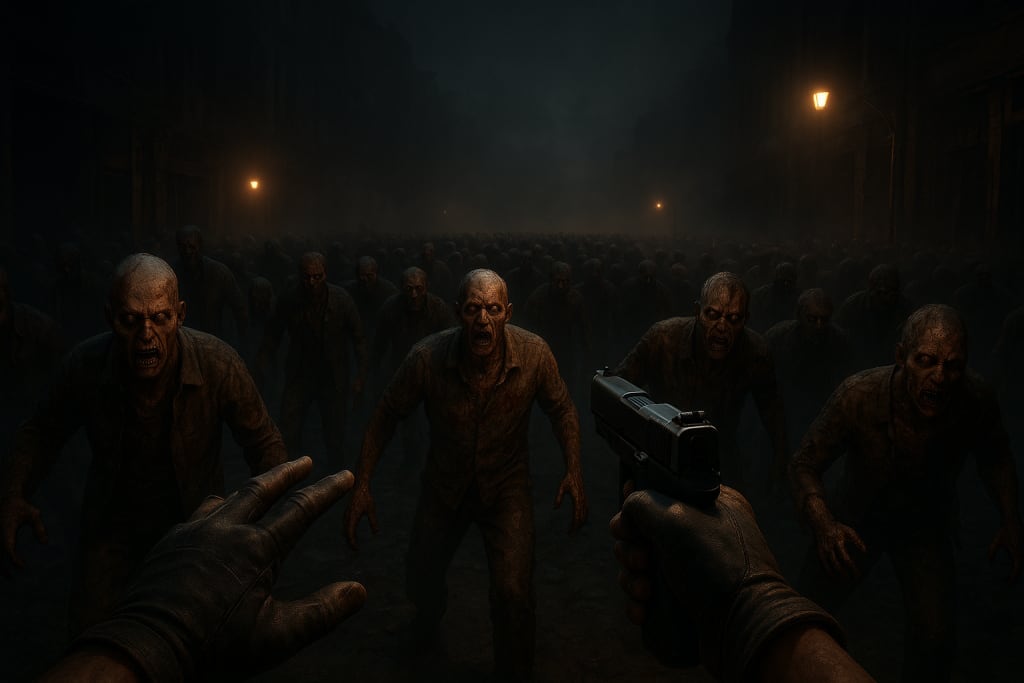
Virtual reality has always faced one stubborn limitation: performance. Unlike traditional gaming, VR demands that developers maintain fluid frame rates while rendering two viewpoints—one for each eye.
This doubles the workload on the GPU and CPU, leaving far less room for massive crowds or detailed environments. Yet Saber Interactive, the studio behind World War Z and its VR adaptation, has managed to pull off something that seems impossible: rendering and animating up to 200 zombies on-screen at once without breaking immersion.
This achievement isn’t just a feat of brute force; it’s the result of years of refinement in optimization techniques, engine-level tricks, and clever design decisions. Let’s break down how Saber Interactive makes the undead swarm in VR without bringing high-end headsets—or standalone devices—to their knees.
The Challenge of Scale in VR
Before diving into solutions, it’s important to understand why this problem is so complex.
Frame rate requirements: Most VR headsets demand at least 72–90 FPS, and some target 120 FPS. Falling below this threshold can cause motion sickness.
Dual rendering: Every frame is drawn twice, once for each eye, which doubles the rendering cost.
Memory bottlenecks: Hundreds of unique models, animations, and physics interactions push RAM and VRAM to the edge.
Player perspective: Unlike flat-screen games, VR lets players look anywhere at any time. Tricks like fixed camera angles or heavily scripted encounters don’t work here.
For Saber Interactive, creating VR hordes wasn’t just about throwing more polygons at the GPU. It required balancing visual fidelity, system resources, and human perception.
Clever Rendering Solutions
1. Level of Detail (LOD) Systems
One of the most effective strategies Saber employs is dynamic level of detail. Zombies closest to the player use full-resolution models, complete with detailed textures, complex shaders, and full animation rigs. As enemies move farther away, their polygon count drops drastically.
In some cases, distant zombies may be little more than simplified meshes with pre-baked animations. The trick lies in blending these transitions so players never notice.
2. GPU Instancing
Rendering 200 unique zombies individually would be impossible in VR. Instead, Saber relies on instancing, a technique where the GPU draws multiple copies of the same base model but applies slight variations—different textures, colors, animations, or damage states.
This allows the game to present what looks like a horde of unique undead while the hardware only processes a handful of actual assets.
3. Occlusion Culling
VR gives players freedom to look around, but Saber doesn’t waste resources on what you can’t see. Occlusion culling ensures that zombies hidden behind walls, vehicles, or debris aren’t rendered at all. Even partial bodies may be culled if they fall outside the player’s field of view.
4. Aggressive Animation Optimization
Animating 200 entities simultaneously would overwhelm the CPU. Saber’s solution is animation sampling, where groups of zombies share core animation cycles with slight variations in timing. From a distance, your brain fills in the gaps, perceiving variety where little actually exists.
AI That Feels Real Without Overloading the CPU
Crowds of enemies aren’t just about graphics—they need to behave believably. But giving each zombie advanced pathfinding or decision-making would consume enormous CPU power. Saber’s solution lies in group-based AI logic.
- Cluster pathfinding: Instead of calculating routes for each zombie, groups of 10–15 share navigation data.
- Behavioral templates: Each cluster has a “leader” zombie that dictates movement patterns, while others follow with slight offsets.
- Simplified logic at distance: Zombies far from the player only run basic routines, such as moving forward or idling. Complex behaviors only activate once they enter engagement range.
This hierarchy of intelligence ensures that enemies look alive without overloading the system.
Smart Use of Physics and Collisions
Another hurdle is physics. Hundreds of bodies colliding in real-time would cripple performance. Saber’s approach is selective:
- Proximity-based physics: Only zombies near the player or interactive objects use detailed collision systems.
- Ragdoll pooling: When zombies die, their ragdolls are recycled. Instead of generating a brand-new physics body, the game reuses existing ones.
- Simplified mass interactions: In large crowds, zombies don’t collide with each other in detail; instead, simplified push-back systems maintain the illusion of physical contact.
The result is chaos that feels organic but remains computationally manageable.
Lighting and Atmosphere Tricks
Lighting is one of the most expensive processes in VR rendering. To keep hordes believable without draining performance, Saber uses a hybrid of techniques:
- Baked lighting: Many environments use precomputed lighting data stored in lightmaps.
- Deferred shading for characters: Zombies share simplified shader passes, reducing draw calls.
- Selective shadow casting: Only zombies close to the player cast dynamic shadows, while distant enemies rely on baked or fake shadow blobs.
This maintains a dark, oppressive atmosphere without compromising performance.
Why It Works in
What makes Saber Interactive’s approach so effective is that it leverages human perception. VR players don’t have time to analyze every detail when 200 zombies are sprinting at them. Instead, their brains process the motion, scale, and chaos of the scene.
By focusing on what matters—close-range fidelity, believable movement, and overwhelming numbers—Saber creates an illusion of infinite undead without needing infinite computing power.
Lessons for the Future of VR Development
Saber’s work highlights several key takeaways for VR developers:
- Optimize for perception, not perfection. Players won’t notice missing details in a horde, but they will notice frame drops.
- Reuse assets intelligently. Instancing and animation recycling can simulate diversity.
- Think hierarchically. Group-based AI and selective physics balance realism with performance.
- Blend baked and dynamic systems. Lighting, shadows, and occlusion must be carefully layered to create depth without wasting resources.
The idea of facing 200 zombies in VR sounds like a hardware nightmare, yet Saber Interactive has proven it can be done with elegance. Their success lies not in raw power, but in a deep understanding of how players perceive virtual worlds and how to manipulate those perceptions with technical mastery.
For the future of VR, this is more than just an impressive trick—it’s a roadmap. If developers can learn to harness similar optimizations, large-scale battles, massive crowds, and expansive environments could become the standard rather than the exception.
About the Creator
Richard Bailey
I am currently working on expanding my writing topics and exploring different areas and topics of writing. I have a personal history with a very severe form of treatment-resistant major depressive disorder.
Keep reading
More stories from Richard Bailey and writers in Gamers and other communities.
10 Brilliant Plot Twists for Your D&D Campaign (That Won’t Break the Story)
Every Dungeon Master dreams of that moment—the table goes silent, dice forgotten, as players realize the world isn’t what it seems. A well-timed plot twist can elevate a Dungeons & Dragons campaign from “fun night” to “legendary story.”
By Richard Bailey6 months ago in Gamers
Becca
"Everything is so... flat." Denille said stupidly as she looked around her new neighborhood. She looked around at the muted desert where even the smallest sign of life seemed to have given up. The plant life was shrubs that were half cooked by the heat and where there should have been a lawn, a mess of white rocks laid glistening in the sun. Even the sky looked stretched thin, like the sun had ironed it smooth. She’d moved from Riverside, where at least there were hills, but here in Barstow, everything felt baked and brittle.
By Sara Wilson8 days ago in Fiction


Comments
There are no comments for this story
Be the first to respond and start the conversation.