
How to Start Playing D&D (Even If You’ve Never Played Before)
The Ultimate Beginner's Guide to Joining the World's Most Popular Tabletop RPG

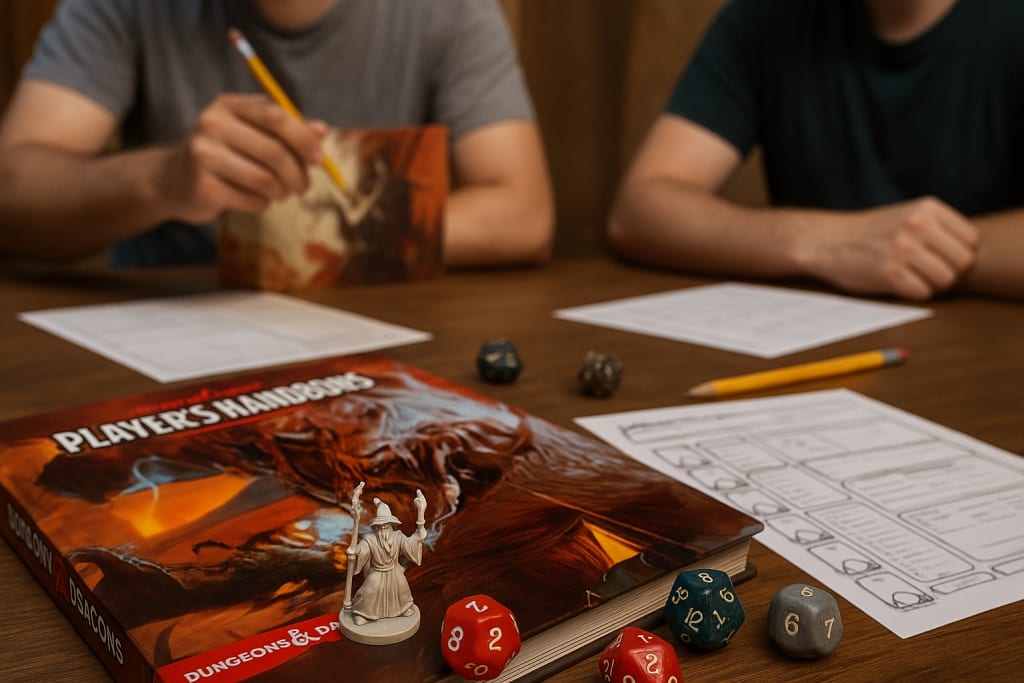
So You Want to Play Dungeons & Dragons?
You’ve heard the stories—epic battles, clever rogues, ancient dragons, and endless laughs around a table of friends. Maybe a podcast caught your attention, or a YouTube stream pulled you in. Perhaps your friends are playing and you’re not sure how to join in. One thing’s clear: Dungeons & Dragons (D&D) has become more than a game—it’s a cultural phenomenon.
And the best part? You don’t need to know anything to get started.
Whether you're a complete beginner, a lapsed player returning from the ‘80s, or someone who’s just D&D-curious, this guide will walk you through every step of how to start playing. No jargon. No gatekeeping. Just clear, simple instructions with the right amount of detail to get you from "interested" to "rolling initiative."
Step 1: Understand What D&D Actually Is
At its core, Dungeons & Dragons is a collaborative storytelling game. One player, called the Dungeon Master (DM), sets the scene and plays the world. The other players take on the roles of characters in that world, each with their own goals, skills, and backstories. Together, you create a narrative through conversation, imagination, and dice rolls.
There’s no winning or losing in the traditional sense. Instead, D&D thrives on problem-solving, character growth, moral decisions, and teamwork. It’s like improvisational theater meets a fantasy novel—with a dash of math and chance.
Step 2: Gather Your Party
D&D is usually played with 3 to 6 players, including the DM. If you're lucky, your friends are already playing and can invite you in. But if not, here’s how to find a group:
Ask around: Friends, coworkers, and even family members may secretly be players.
Search online: Sites like StartPlaying, Reddit’s r/lfg, and Roll20 let you find local or virtual groups.
Visit your local game store: Many hobby shops host D&D nights for beginners.
Join D&D Discord servers: There are hundreds of welcoming communities looking for new players.
Don’t be afraid to start with strangers—many lifelong D&D friendships begin with a cold introduction and a shared fantasy quest.
Step 3: Choose How You’ll Play (In-Person or Online)
Thanks to modern tools, D&D is more flexible than ever. You can play in person, online, or even asynchronously via text.
In-Person: Ideal for social energy and immersion.
You’ll need:
- A space to gather
- Dice, pencils, and printed character sheets
- A battle map and minis (optional, but fun)
Online: Perfect for long-distance groups or busy schedules.
- Use tools like Zoom, Discord, or Skype for voice/video
- Try Roll20, Foundry VTT, or D&D Beyond for digital maps and dice
- Most platforms offer free versions
Each option has its pros. The key is choosing what works best for your lifestyle and comfort level.
Step 4: Learn the Basics of Gameplay
You don’t need to memorize the entire rulebook to start playing. Just understand these three core ideas:
1. The Dice Tell the Story
D&D uses a set of polyhedral dice—most importantly, the 20-sided die (d20). When you try to do something uncertain, like climbing a cliff or persuading a guard, you roll the d20 and add a number from your character sheet. If your total meets or beats the difficulty, you succeed.
2. You Can Try Anything
Want to leap across a chasm, distract a dragon, or brew a healing potion from herbs? You don’t need a specific rule. Just tell the DM what you want to do, and they’ll guide the mechanics.
3. The DM Is Your Guide
The Dungeon Master isn’t your opponent. They control the world, play the non-player characters (NPCs), and keep the game running. Think of them as the narrator of your shared story.
Step 5: Create Your First Character
This might seem intimidating, but it’s easier than it looks. You’ll need to pick a few things:
- Race (e.g., Elf, Dwarf, Human): Affects your character’s traits and appearance
- Class (e.g., Fighter, Wizard, Rogue): Determines your abilities and role
- Background: Adds flavor and a few extra skills
- Stats: Six ability scores—Strength, Dexterity, Constitution, Intelligence, Wisdom, Charisma—define your character’s capabilities
To simplify things, use the D&D Beyond Character Builder. It walks you through the process step by step. You can also download a pre-generated character to start instantly.
Tip: Don’t worry about making “the best” character. Focus on what sounds fun. You can always tweak or rebuild later.
Step 6: Get the Right Tools (Free or Paid)
Here’s what you actually need to begin:
Bare Minimum:
- A character sheet (paper or digital)
- A set of dice (physical or virtual)
- A pencil
- A group to play with
Nice to Have:
- A copy of the Player’s Handbook (buy or borrow)
- D&D Beyond account (free with tons of content)
- A dice roller app or website
Don’t Buy Yet:
Miniatures, battle maps, spell cards, or terrain pieces—these are great later, but optional for beginners.
Step 7: Join Your First Session
Your first game might feel chaotic, and that’s completely normal. Expect to ask questions. Expect to forget rules. Expect to laugh a lot and make mistakes.
Here’s how to get the most out of it:
- Pay attention and take notes, especially about other characters and story points
- Speak up when you’re confused—D&D is collaborative, not competitive
- Be generous—share the spotlight, support other players, and contribute to the fun
- Don’t worry about accents or acting—roleplaying comes naturally over time
Remember, even veteran players mess up. The goal isn’t perfection—it’s enjoyment.
Step 8: Keep Going, Keep Growing
Once you’ve played a session or two, you’ll probably want more. Now’s the time to explore deeper:
- Try different classes and races
- Experiment with homebrew rules or settings
- Learn more about combat, spellcasting, and roleplaying nuance
- Maybe even try your hand at being a Dungeon Master
There’s no “right” way to play. Some groups focus on rich stories and drama. Others love tactical combat and puzzles. Some mix both. Find your style—and your tribe.
You Belong at the Table
Starting D&D can feel like staring up at a mountain. So many books. So many dice. So many rules. But the heart of the game is simple: you and your friends, telling a story together.
If you’ve ever imagined being the hero in a fantasy tale—or the villain, or the clever trickster, or the haunted wanderer—D&D is waiting for you.
And it doesn’t care if you’ve never played before.
About the Creator
Richard Bailey
I am currently working on expanding my writing topics and exploring different areas and topics of writing. I have a personal history with a very severe form of treatment-resistant major depressive disorder.
Keep reading
More stories from Richard Bailey and writers in Gamers and other communities.
Diablo Immortal Tier List: Which Classes Are Meta in PvE and PvP
In Diablo Immortal, the class you choose can significantly shape your gameplay experience. Each class excels in different aspects—some are ideal for farming and PvE progression, while others dominate PvP Battlegrounds. With the recent additions of Blood Knight and Tempest, the meta has shifted once again. This in-depth tier list evaluates all eight classes to help you decide which ones stand at the top for both PvE and PvP content.
By Richard Bailey7 months ago in Gamers
U4gm Black Ops 7 Season 2: Black Ops Royale, New Maps, and Major Updates
Season 2 of Call of Duty: Black Ops 7 is finally here, and it’s packed with content that’s set to reshape the way players experience the game. From a brand-new battle royale mode to fresh multiplayer maps, Zombies updates, weapon balancing, and seasonal events, there’s plenty for both veterans and newcomers to explore.
By Dangyc Ding7 days ago in Gamers
Casino Game Trends and Player Favorites in 2026
The casino gaming landscape has continued to evolve in recent years, influenced by technology, player preferences, and shifting entertainment habits. In 2026, casino-style games remain a popular form of entertainment across both digital platforms and traditional venues. Rather than focusing solely on wagering, many discussions about these games now center on gameplay experience, design innovation, and the social elements that attract players worldwide.
By Shabbir Ahmadabout 14 hours ago in Gamers


Comments
There are no comments for this story
Be the first to respond and start the conversation.