
How to Design a Fantasy City for Dungeons & Dragons
A Step-by-Step Guide to Building Immersive, Story-Rich Cities for Your D&D Campaigns

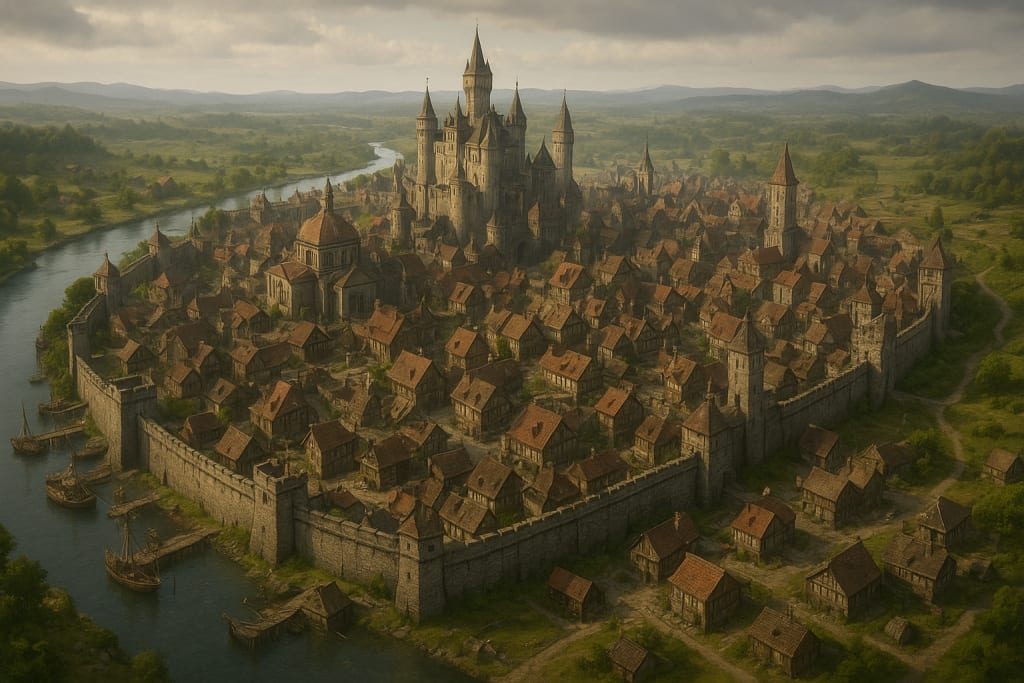
Designing a fantasy city for Dungeons & Dragons is more than placing buildings on a map. It’s about creating a living, breathing location with history, politics, danger, and wonder. Your city must feel real enough for players to imagine walking its streets—while also being flexible enough to host adventures. A well-crafted city becomes a character in your campaign, shaping the story and influencing how players interact with the world.
This article will walk you through designing a fantasy city step by step, blending worldbuilding, narrative hooks, and practical game design to make a location your players will remember.
Step 1: Define the City’s Purpose
Every fantasy city needs a reason to exist. Think about why it was founded and what keeps it alive today. Is it a bustling trade hub sitting at the crossroads of major caravan routes? A religious center built around a divine artifact? A fortress guarding the kingdom’s border against invading armies?
The city’s purpose should inform everything else—architecture, culture, economy, and even its problems. A mining town will look and feel completely different from a coastal capital built for naval dominance. This core identity gives you a foundation for every detail that follows.
Ask yourself:
- What resources or opportunities drew people here?
- Who benefits from the city’s prosperity?
- Who is left struggling in the shadows?
Step 2: Choose the City’s Geography and Layout
Geography shapes both history and daily life. A city on a river might have bustling docks, waterwheels, and canals dividing neighborhoods. A mountaintop city may have tiered districts connected by winding staircases, with architecture adapted to the cold.
Once you’ve chosen the location, decide on the general layout:
Organic growth: Streets twist and turn, forming chaotic patterns over centuries of unplanned expansion.
Planned design: Roads follow a grid, districts have clear boundaries, and public spaces are deliberate.
Geography also determines the city’s defenses. Are there high walls? Watchtowers on cliffs? Underground escape tunnels? Players love when the terrain affects the story, so give the environment a role in the city’s drama.
Step 3: Establish Districts and Neighborhoods
Breaking the city into districts makes it easier to manage and gives each area its own flavor. Common examples include:
- Market District: Crowded stalls, shouting vendors, and thieves ready to cut a purse.
- Noble Quarter: Wide, clean streets, manicured gardens, and guarded estates.
- Docks: Salty air, creaking ships, and taverns filled with sailors’ tales.
- Slums: Narrow alleys, crumbling buildings, and desperate residents.
Districts help you control pacing and tone. A tense meeting with the city’s ruler feels different when players travel through busy merchant streets versus dark, empty alleys.
Keep each district distinct in sights, smells, and sounds so players can recognize where they are without needing you to constantly remind them.
Step 4: Create the City’s Power Structure
Power in a fantasy city doesn’t just come from kings and queens. Guild leaders, crime lords, religious figures, and even wealthy merchants may wield more influence than official rulers.
Consider creating factions with competing goals. This adds depth and opens opportunities for political intrigue. For example:
- The ruling council wants peace with a rival kingdom.
- The merchants’ guild profits from war and seeks to undermine diplomacy.
- The thieves’ guild runs smuggling operations through secret tunnels beneath the city.
Players can become entangled in these rivalries, choosing allies or enemies that shape the city’s future.
Step 5: Populate the City with Memorable NPCs
Your city is only as alive as the people in it. Fill it with non-player characters (NPCs) who each have a role and personality. The key is variety—mix friendly shopkeepers with suspicious informants, noble patrons with common street toughs.
Give each important NPC:
- A goal they are actively pursuing.
- A personal quirk or habit that makes them stand out.
- A way they might intersect with the players’ journey.
For example, the captain of the city guard might be fiercely loyal but secretly in debt to the thieves’ guild. A struggling poet in the market could become the players’ unexpected informant, trading gossip for coin. These small details make your city feel authentic and dynamic.
Step 6: Add Conflict and Secrets
Conflict is the lifeblood of storytelling. Without it, your city becomes a static backdrop. Layer in tensions that can spark adventures.
Possible sources of conflict include:
- A brewing rebellion among the lower districts.
- A deadly disease spreading through the docks.
- A religious order trying to seize political control.
- Monsters lurking in the sewers beneath the city.
Secrets make exploration rewarding. Maybe there’s a hidden temple under the marketplace, a forgotten royal heir living in disguise, or an abandoned district sealed off after a magical disaster. Players should feel like they’ve only scratched the surface of what’s going on.
Step 7: Design Key Landmarks
Landmarks give your city identity and help players remember it. A massive bronze statue, a bridge lined with gargoyle carvings, a cathedral with stained glass depicting strange omens—these create vivid mental images.
Think beyond the obvious. Instead of “castle on a hill,” maybe the city’s seat of power is a sprawling palace built around a petrified dragon. Or the main marketplace could be set in the skeleton of a colossal, ancient beast. These unique touches make your city stand out among the many fantasy locations players encounter.
Step 8: Plan for Adventure Hooks
Your city should never just be a safe resting place. Every visit should offer potential for trouble or opportunity. Build in adventure hooks tied to different districts and factions:
- A noble offers gold for retrieving a stolen family heirloom.
- A cult is kidnapping citizens from the slums.
- A rival adventuring party claims the players owe them a debt.
Not all hooks need to be urgent. Some can be ongoing mysteries that develop over multiple sessions. The more integrated these hooks are into the city’s fabric, the more players will invest in its fate.
Step 9: Keep It Dynamic
A static city quickly loses its magic. Let events reshape it over time. A fire might destroy a district, forcing merchants to relocate. A successful coup could put a new ruler in power, changing laws overnight.
When players return after several sessions, they should see evidence of the world moving forward. This makes the city feel alive—and reinforces that their actions matter.
A great fantasy city in Dungeons & Dragons is more than scenery. It’s a living location full of history, politics, danger, and mystery. By defining its purpose, shaping its geography, creating vibrant districts, and filling it with memorable characters and conflicts, you can build a city your players will talk about long after the campaign ends.
Think of it as a stage where countless stories can unfold. Give it heart, give it secrets, and above all, make sure it feels like a place worth fighting for—or against.
About the Creator
Richard Bailey
I am currently working on expanding my writing topics and exploring different areas and topics of writing. I have a personal history with a very severe form of treatment-resistant major depressive disorder.
Keep reading
More stories from Richard Bailey and writers in Gamers and other communities.
D&D: How to Balance Homebrew Monsters Like a Pro
Homebrewing monsters is one of the most satisfying parts of being a Dungeon Master. It’s your chance to unleash something entirely new into your campaign—an abomination no player has ever faced, a cunning foe that feels alive, or a massive creature so dangerous that just hearing its name sends shivers down the table.
By Richard Bailey5 months ago in Gamers
Here Again
I know I have been teasing about coming back to content creation and just before, I either get sucked into work or life gets the best of me. 2025 was quite a year and I feel that resonates with everyone. At the begining of the year I got a new vehicle only to lose it about halfway through the year due to an accident. Thankfully no one was injured, and the worst damage done was to my vehicle and my wallet. But I also got a promotion at work, and although it has come with it's challenges I am still powering through it. I also recently lost my mother towards the end of the year and dealt with the emotions that come along with that. So although 2025 was quite rough and I had to really step away and see what was important to me, I believe I have found my way and will be coming back with more content and a new sense of direction. I wanted to create a community where gamers could come together no matter what we played on and honestly there are quite a few ways to complete that goal. I will be streaming four days a week, mostly solo games, and once I complete the story line on Where Winds Meet than that will be the community game as it is not only cross play across systems, but also cross save. I will also introduce PalWorld at some point. For the moment I will be completing out three solo games a week. I will be streaming on Twitch and when able I will upload the video to my Youtube channel. With my schedule, I will only be streaming every other week so as to not burn myself out creativetly. I will also be writing out game reviews as well as game walk throughs on here that will be written through experience of playing. I am also going to use every chance I get to remind people to return to our roots as communities and through these tough times to be a little kinder to one another. I will not entertain or put up with mindless unkindness in my community and those that attempt to do so will not have access to the community that is being built. On that note, I will not turn anyone away that is looking for a helping hand, as I am still growing I am not able to help out financially but I can provide a safe space on Discord and offer a place to play games. I play more than just I will be showcasing on Twitch, and when I am online I am almost always available and up for a game with friends. I have found that since being back in contact with some old friends of mine that I really do wish to come back into the scene and work towards my original goal of working from home. Do not get me wrong, I enjoy what I do for my personal career and I am actually quite fulfilled and rewarded at work. I do see myself being at my "day" job for a good while yet, as soon I wish to start into learning a new field this year. Two of them to be exact, between cyber security and nursing, I wish to further my education so as to further reach my goals. So I appreciate every view, read, comment, and share across my socials. So to wrap things up on this one, every other week I will be streaming on Twitch on Sunday, Monday, Wednesday and Saturday. I look forward to hearing from all of you as well as playing games together!
By Will Besaw3 days ago in Gamers
Dominating with Dual-Wield Pistols in CoD BO7: Tips That Work
Dual-wield pistols have always had a place in Call of Duty, but in Black Ops 7 they feel sharper, faster, and more dangerous than before. With the right setup and mindset, running akimbo pistols is no longer just for flashy clips. It is a real option for close-range control, fast pushes, and aggressive objective play. Players who understand how these weapons behave can turn tight spaces into their own territory and force enemies to fight on uncomfortable terms.
By Smsankar Goswamiabout 19 hours ago in Gamers
How to Succeed at the Benson Directory®
Congratulations and welcome to the Benson Directory® employee #22391! As our newest call handler, you will have the privilege of speaking with dozens of unique and interesting people on a daily basis as well as the opportunity to earn bonuses for high performance. Contained within this handbook you will find a set of ease to follow instructions designed to help you settle in to your new role and begin paving the way to success.
By S. A. Crawfordabout 14 hours ago in Fiction



Comments
There are no comments for this story
Be the first to respond and start the conversation.