
How to Build a Balanced Rush Royale Deck for PvP and Co-Op
Master the Art of Deck Building in Rush Royale: Proven Strategies for PvP Battles and Co-Op Survival

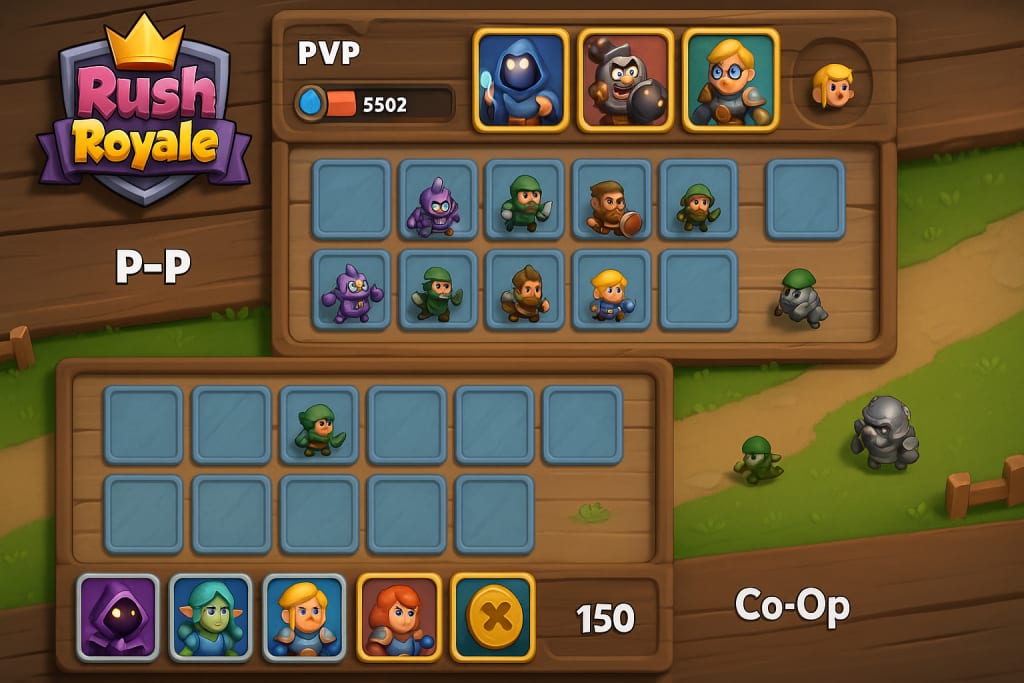
Rush Royale is a fast-paced tower defense and card strategy game where success heavily depends on building the right deck. Whether you're climbing the PvP ladder or teaming up in Co-Op mode, having a balanced deck can significantly boost your chances of victory.
In this comprehensive guide, we’ll walk you through how to build a balanced Rush Royale deck for PvP and Co-Op, providing examples, card recommendations, and core strategies to help you succeed in both modes.
Why a Balanced Deck Matters
A balanced Rush Royale deck ensures you can handle a wide range of challenges that arise during gameplay. It enables you to adapt to different waves of enemies, survive long rounds in Co-Op, and counter popular PvP meta decks.
A balanced deck also supports efficient mana usage, which is crucial for scaling your power over time. By including both single-target and AoE (area of effect) damage options, you can deal with bosses and waves effectively.
Key Components of a Balanced Deck
A strong deck in Rush Royale typically consists of five cards, and each card should fulfill a distinct role to maintain balance. These include:
- Damage Per Second (DPS) Card: This is your primary damage dealer, the card that will do the heavy lifting in taking down enemies. Examples include Engineer, Blade Dancer, and Inquisitor.
- Crowd Control or AoE Damage Card: These cards help clear waves of smaller enemies efficiently, especially during mid-game rounds. Meteor, Executioner, and Boreas are good examples.
- Mana Generation Card: Without sufficient mana, you can't upgrade or summon units effectively. Cards like Harlequin, Dryad, and Priestess enhance your mana economy.
- Support or Utility Card: These cards boost your deck's efficiency or counter specific problems. Chemist reduces enemy defense, Portal Keeper helps with board control, and Mime allows for better merging strategies.
- Control or Stall Card: These units slow or stun enemies to buy you more time. Bombardier stuns bosses, while Frost and Cold Mage slow enemy movement.
Differences Between PvP and Co-Op Decks
While the core principles of deck balance apply to both PvP and Co-Op, the priorities are different.
In PvP, you want a fast setup to counter your opponent early. High burst damage, efficient merging, and anti-boss tools are essential. Your goal is to survive longer than your opponent, not necessarily clear all waves.
In Co-Op, you and your teammate aim to survive as many waves as possible. That requires long-term damage output, wave-clearing potential, and mana efficiency. Coordination and synergy with your partner are crucial.
Step-by-Step: How to Build a Balanced PvP Deck
Step 1: Choose a Core DPS Unit
- Select a reliable and consistent damage dealer. Your entire deck will revolve around this card.
- For beginners, Engineer and Thunderer are great starting points.
- For experienced players, Blade Dancer, Inquisitor, and Cultist offer better scalability and performance.
Step 2: Add a Support or Buffer
- Support units enhance your DPS card’s effectiveness.
- Chemist lowers enemy defense, allowing your DPS to kill faster.
- Banner boosts damage output for nearby units.
- Use support that complements your core DPS style.
Step 3: Insert Mana Support
Generating enough mana is crucial to level up and maintain board control.
- Dryad allows instant upgrades, boosting your DPS quickly.
- Harlequin copies valuable units, enhancing mana efficiency.
- Priestess is a great option for free-to-play players who need additional mana.
Step 4: Include a Control Unit
- Control cards delay enemy progress and mitigate boss abilities.
- Bombardier is essential for stunning bosses, buying time.
- Frost or Cold Mage slow down enemies, helping in early and mid-game waves.
Step 5: Fill With a Flex or Utility Unit
- Your last card should help fix bad merges or boost overall synergy.
- Mime allows better merge control by duplicating or removing weak cards.
- Portal Keeper is vital for managing unit placement and avoiding debuffs like Silence or Move.
Sample Balanced PvP Deck (F2P-Friendly):
- Engineer (DPS)
- Bombardier (Control)
- Chemist (Support)
- Priestess (Mana)
- Mime (Utility)
Sample Balanced PvP Deck (Meta-Level):
- Inquisitor (DPS)
- Dryad (Mana)
- Harlequin (Copy)
- Bombardier (Control)
- Chemist (Support)
Step-by-Step: How to Build a Balanced Co-Op Deck
Step 1: Assign Roles With Your Teammate
In Co-Op, divide roles effectively. One player should focus on damage, and the other on support. This maximizes efficiency and survival.
Step 2: Choose a Wave-Clearing DPS
- Pick a DPS unit capable of sustained damage across many waves.
- Tesla excels at chain damage.
- Inquisitor and Blade Dancer offer excellent scaling.
- Corsair is a solid choice for dealing AoE damage.
Step 3: Use Strong Support Cards
- Support players should provide leveling and merging utility.
- Shaman helps upgrade DPS units on your teammate’s board.
- Dryad and Harlequin are staples for leveling and copying units.
- Portal Keeper helps fix bad RNG merges and unit positions.
Step 4: Add Control for Bosses
- Bosses can end a Co-Op run quickly, so control cards are a must.
- Bombardier stuns bosses, buying critical seconds.
- Cold Mage slows enemies, helping you manage wave speed.
- Hex synergizes with high DPS decks for instakills.
Step 5: Plan for Long-Term Mana
- Use multiple mana generators and conserve merges to survive late waves.
- Combine Priestess with Dryad for efficient mana scaling.
- Avoid over-merging in early waves to keep options open.
Sample Co-Op DPS Deck:
- Inquisitor (DPS)
- Bombardier (Control)
- Chemist (Support)
- Harlequin (Mana Copy)
- Dryad (Leveling)
Sample Co-Op Support Deck:
- Shaman (Boost)
- Dryad (Merge Support)
- Harlequin (Copy)
- Priestess (Mana)
- Portal Keeper (Control)
Pro Tips for Deck Building
Stay Flexible With Meta Changes
Rush Royale's meta evolves regularly due to patches and balance changes. Always monitor leaderboards, Reddit discussions, and Discord servers for updates. Adjust your deck accordingly to stay competitive.
Synergy Is Key
Build your deck around synergy. Cards like Blade Dancer and Inquisitor require specific formations, so ensure your support cards align with their mechanics.
Don’t Ignore Merge Strategy
Poor merging can ruin a game. Always plan your merges. Use Mime or Portal Keeper to fix bad merges and maintain board efficiency.
Test With Clanmates
Co-Op efficiency improves dramatically with coordination. Practice with your clan to find the most effective support-DPS combinations.
Best Balanced Decks (2025 Meta Snapshot)
Top PvP Meta Deck:
- Inquisitor
- Dryad
- Harlequin
- Bombardier
- Chemist
Top Co-Op Duo Combo:
Player 1 (DPS):
- Tesla
- Bombardier
- Chemist
- Harlequin
- Dryad
Player 2 (Support):
- Shaman
- Harlequin
- Dryad
- Priestess
- Portal Keeper
How to Evolve Your Deck
As you climb the ranks or reach higher waves in Co-Op, evolve your deck by unlocking and leveling stronger cards. Study high-level strategies and adapt them to your collection and playstyle.
Remember, success in Rush Royale isn’t just about copying top decks—it’s about understanding mechanics, building synergy, and staying ahead of the meta.
With the right balance of DPS, mana generation, support, and control, you’ll be ready to dominate both PvP and Co-Op in Rush Royale.
About the Creator
Richard Bailey
I am currently working on expanding my writing topics and exploring different areas and topics of writing. I have a personal history with a very severe form of treatment-resistant major depressive disorder.
Keep reading
More stories from Richard Bailey and writers in Gamers and other communities.
Top Co-Op Deck Builds for 2-Player Teams in Rush Royale (2025 Guide)
Co-op mode in Rush Royale provides a unique and strategic challenge where teamwork is essential. Unlike PvP, co-op requires two players to collaborate on a shared battlefield to survive as many waves as possible. With the right combination of carry and support decks, 2-player teams can push past wave 100 or efficiently farm faction cores and resources.
By Richard Bailey10 months ago in Gamers
My Top 25 NES Games
The Nintendo Entertainment System, or the Famicom in Japan, is the earliest console I have any direct experience of. We didn’t have a NES in our house when we were kids. I was a bit sniffy of it actually, viewing it as old-fashioned and before my time (I was born in 1984, between the Japanese and Western releases of the system). It was years later that I started to appreciate earlier games and hardware. I played the NES round friends’ houses and, eventually, well into adulthood, someone decided to get rid of theirs and now we had our own Family Computer.
By Daniel Tessier7 days ago in Gamers
Lycan Lore
As the students of my 10am mythology class take their seats, I decide to steer the day's curriculum away from Greek and dive into a Western European discourse on the misaligned beliefs of the Werewolf. A tale of truth or fiction. No one really knows.
By Lamar Wigginsabout 4 hours ago in Fiction




Comments (1)
Building a balanced Rush Royale deck is key. I like how you break down the components. I've found that having a mix of DPS and AoE cards is crucial. How do you think the mana gen cards work best in different stages of a match? And which support cards are most underrated?