
HOW THE 1968 MEXICO CITY OLYMPICS BECAME A PLATFORM FOR PROTEST
Using the World Stage to Amplify Civil Rights and Social Justice Movements.

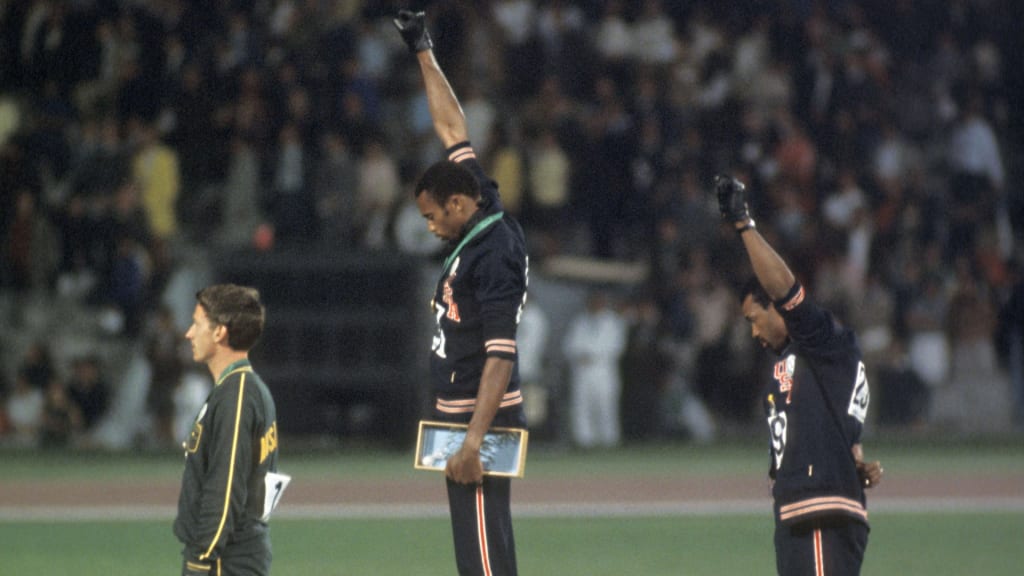
The 1968 Mexico City Olympics, held from October 12 to October 27, became a moment of global significance, not only for the athletic feats that took place but also for the political protests that emerged. This was the first Olympics hosted in Latin America, and it provided a unique setting for both athletes and activists to express their grievances about racial injustice, political oppression, and human rights violations. The event ultimately became a platform for protest, forever altering the relationship between sport and politics.
Pre-Olympic Climate and the Tlatelolco Massacre
Mexico City was chosen as the host of the 1968 Summer Olympics in part because it was seen as a symbol of modernity and progress for Latin America. However, beneath the surface of this image lay significant social unrest. Mexico was undergoing a period of political repression, marked by the government's crackdown on dissent. This came to a head in the months leading up to the Olympics during the Tlatelolco massacre on October 2, 1968, just ten days before the opening of the Games.
The Mexican government, under President Gustavo Díaz Ordaz, used extreme force to suppress student protests calling for greater political freedoms and an end to government corruption. Hundreds of students were killed or injured when the military opened fire on demonstrators in Mexico City’s Plaza de las Tres Culturas. The massacre was not widely covered by the international press, as the Mexican government sought to downplay it in order to ensure the success of the Olympic Games. However, the events surrounding the massacre created a tense and charged atmosphere that loomed over the Games.
The Stage for Protest: The Olympics
The 1968 Mexico City Olympics were also marked by the civil rights struggles occurring in the United States, where the Black Power movement was gaining momentum. Leaders such as Dr. Martin Luther King Jr. and Malcolm X had sparked a broader conversation about racial inequality, police brutality, and discrimination. The United States was undergoing profound social upheaval, including the violent response to the 1967 Detroit riots and the tragic assassinations of King and Robert F. Kennedy in 1968.
Athletes attending the Olympics, especially African Americans, were acutely aware of the tension between their participation in a global spectacle and the racial injustices they faced at home. This backdrop set the stage for one of the most iconic protests in Olympic history, known as the "Black Power salute."
The Black Power Salute
Perhaps the most famous protest at the 1968 Olympics occurred during the medal ceremony for the 200-meter race. Tommie Smith, an African American sprinter, won the gold medal, while his compatriot John Carlos took the bronze. As the U.S. national anthem played, Smith and Carlos, both members of the Olympic Project for Human Rights (OPHR), raised their fists in a Black Power salute, a symbol of solidarity with the civil rights movement.
Their actions were a direct protest against racial inequality, particularly the ongoing discrimination African Americans faced in the United States. Smith and Carlos wore black gloves, black socks, and no shoes to highlight the poverty that was a common condition for many African Americans. Smith, in particular, wore a black scarf to symbolize black pride. Their silent protest, though brief, made an immediate impact, as their powerful gesture was broadcast worldwide, catching the attention of millions of people.
The protest was met with backlash from various quarters. The International Olympic Committee (IOC), led by President Avery Brundage, condemned the athletes' actions as a violation of the Olympic spirit, which is meant to be apolitical. Smith and Carlos were expelled from the Games, and their medals were stripped. However, their protest was later lauded as a pivotal moment in the intersection of sports and politics. It highlighted the role of athletes as public figures who could use their platform to advocate for social change.
The Global Impact of the Protest
The Black Power salute at the 1968 Olympics resonated far beyond the Games. It served as a galvanizing moment for the broader struggle for racial justice and human rights, both in the United States and around the world. The protest was not just about the treatment of African Americans but was part of a larger wave of global dissent against oppressive regimes and systems.
The actions of Smith and Carlos inspired other athletes and activists to use sport as a platform for social and political causes. Their protest, though controversial, opened the door for future Olympic athletes to engage in political activism, including the 1972 Munich Olympics, where Israeli athletes were tragically killed in a terrorist attack, and the 1980 and 1984 boycotts, which were driven by Cold War politics.
In the decades that followed, the legacy of the 1968 Olympics protest continued to influence movements like Black Lives Matter and other global efforts against racial and social injustice.
In The End
The 1968 Mexico City Olympics became a watershed moment in the relationship between sports and political protest. The Black Power salute by Tommie Smith and John Carlos, as well as the broader political context of the Games, demonstrated that the Olympic stage was not immune to the global struggles of the time. While the IOC condemned the protest, the act of defiance by these athletes became a symbol of resistance and a call for greater social justice. The 1968 Olympics are remembered not only for the athletic achievements but also for how they helped to shape the ongoing dialogue about the role of sport in activism and social change.
About the Creator
Badhan Sen
Myself Badhan, I am a professional writer.I like to share some stories with my friends.
Keep reading
More stories from Badhan Sen and writers in Gamers and other communities.
THE IMPACT OF THE OLYMPICS ON RACE RELATIONS AROUND THE WORLD
The Olympic Games, held every four years, are one of the most Globally recognized and widely watched events. Beyond the athletic feats and celebrations of excellence, the Olympics have played a significant role in shaping race relations around the world. From the early days of the Games to the present, they have provided a stage for athletes to challenge racial inequalities, foster unity, and sometimes highlight the struggles of marginalized groups. The Olympics have served both as a symbol of progress and a reflection of the racial tensions that persist in many societies. This essay explores how the Olympics have impacted race relations, highlighting moments of progress, tension, and controversy.
By Badhan Senabout a year ago in Gamers


Comments (1)
Another great historical essay. Good job.