
HOW DRONES REVOLUTIONIZED THE COVERAGE OF THE 2018 WINTER OLYMPICS
Redefining Aerial Perspectives:The Role of Drones in the 2018 Winter Olympics.

The 2018 Winter Olympics, held in PyeongChang, South Korea, marked a technological turning point for sports broadcasting. Among the many innovations that transformed the viewer experience, drones stood out as a game-changing tool in providing breathtaking visuals, dynamic angles, and unprecedented access to events. Drones not only enhanced how the Olympics were covered but also reshaped audience expectations for sports media. This article explores the revolutionary impact of drones on the coverage of the 2018 Winter Olympics, highlighting their role in storytelling, innovation, and audience engagement.
A New Era of Storytelling in Sports Broadcasting
Before the advent of drones, sports broadcasts relied heavily on fixed cameras, cable-suspended systems, and helicopters to capture wide shots and dynamic angles. While effective, these technologies had limitations in terms of mobility, cost, and the ability to capture unique perspectives. Drones bridged this gap, offering unmatched agility and versatility.
During the 2018 Winter Olympics, drones were instrumental in capturing stunning overhead shots of events such as skiing, snowboarding, and the biathlon. These aerial views not only provided spectators with a bird’s-eye perspective but also brought a cinematic quality to the coverage. The compact size and maneuverability of drones allowed them to follow athletes closely as they navigated challenging terrains, from snow-covered mountains to icy tracks. This approach created an immersive experience, making viewers feel as if they were gliding alongside the athletes.
Additionally, drones enabled broadcasters to showcase the natural beauty of the PyeongChang region. Sweeping shots of the Taebaek Mountains and Olympic venues set against the wintry landscape added depth to the storytelling, connecting the audience with the event’s geographical and cultural context. This blending of sports and scenery elevated the narrative and kept viewers engaged beyond the competitions themselves.
Innovative Drone Technologies
The drones used during the 2018 Winter Olympics were equipped with state-of-the-art technologies that made their deployment both efficient and safe. Equipped with 4K cameras, these drones delivered high-definition footage that matched, and often surpassed, traditional broadcasting standards. Advanced stabilization systems ensured smooth and steady footage even in the face of PyeongChang’s cold and windy conditions.
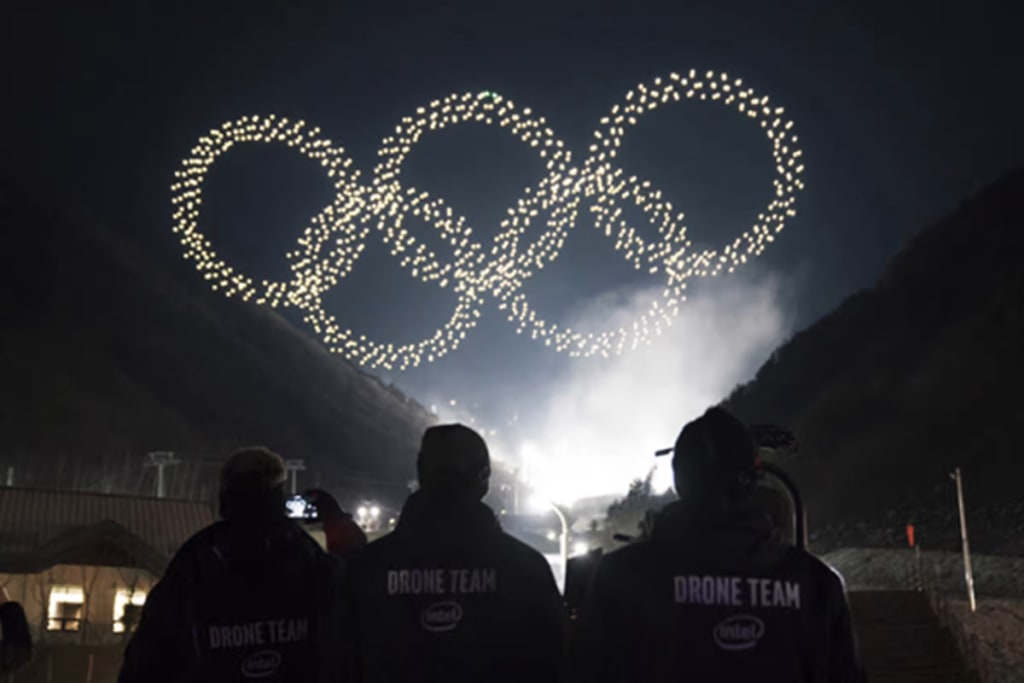
One of the standout moments came during the opening ceremony when Intel deployed a fleet of 1,218 drones to create a dazzling light show. These drones formed intricate patterns, including the iconic Olympic rings, against the night sky. This display not only set a world record for the most drones used in a performance but also showcased the creative potential of drone technology in live events.
In addition to their visual capabilities, drones were equipped with intelligent tracking systems. These systems allowed the drones to autonomously follow athletes, adjust their speed and angle, and avoid obstacles in real time. This level of automation reduced the need for manual control, ensuring seamless and consistent coverage of fast-paced events.
Overcoming Challenges
Despite their advantages, the use of drones at the Winter Olympics came with its own set of challenges. The cold temperatures of PyeongChang posed a risk to drone batteries, which are susceptible to reduced performance in freezing conditions. To mitigate this, broadcasters used drones with specialized batteries designed for low temperatures and rotated them frequently to avoid mid-air failures.
Safety was another critical concern. With thousands of spectators present at the events, strict protocols were implemented to prevent accidents. Drones were restricted to designated flight zones, and their operations were closely monitored by teams of technicians. This ensured that drones did not interfere with athletes or endanger the audience.
Additionally, regulatory hurdles had to be addressed. South Korea’s aviation laws were adapted to allow the use of drones during the Olympics, with careful planning to balance innovation and compliance.
Impact on Audience Engagement
The integration of drones into the coverage of the 2018 Winter Olympics had a profound impact on audience engagement. By offering dynamic and unconventional perspectives, drones provided viewers with a fresh way to experience their favorite sports. The close-up tracking shots of snowboarders performing aerial tricks or skiers racing downhill created a sense of excitement and immediacy that static cameras could not achieve.
Drones also enabled broadcasters to cater to the growing demand for shareable content on social media. Short clips of drone footage, highlighting jaw-dropping moments from events, went viral on platforms like Instagram and Twitter. This expanded the reach of the Olympics beyond traditional television audiences, attracting younger viewers who consume media primarily through digital channels.
The Legacy of Drones in Sports Broadcasting
The success of drones at the 2018 Winter Olympics set a new benchmark for sports broadcasting. Their ability to capture unique angles, enhance storytelling, and engage audiences has since been adopted by other major sporting events, from the FIFA World Cup to the Tour de France. Drones have become an integral part of the broadcaster’s toolkit, inspiring further innovation in the use of technology to elevate the spectator experience.
In conclusion, drones revolutionized the coverage of the 2018 Winter Olympics by offering unparalleled visuals, enhancing storytelling, and engaging audiences like never before. As technology continues to advance, drones are poised to play an even greater role in transforming the way we experience sports and live events. The legacy of their impact in PyeongChang will be remembered as a milestone in the evolution of sports media.
About the Creator
Badhan Sen
Myself Badhan, I am a professional writer.I like to share some stories with my friends.
Keep reading
More stories from Badhan Sen and writers in Gamers and other communities.
THE DIGITAL TRANSFORMATION OF THE OLYMPIC GAMES:2024 AND BEYOND
The Olympic Games are not only a global celebration of athletic excellence but also a showcase of technological innovation. Over the decades, the Games have evolved, embracing new technologies to enhance the experience for athletes, organizers, and fans. As the Paris 2024 Olympics approach, the integration of digital technologies promises to revolutionize every aspect of the event, from athlete performance to audience engagement. This article explores the key digital transformations shaping the 2024 Olympics and what lies beyond.
By Badhan Senabout a year ago in Gamers
Early March 2026: 4 Goals Accomplished
It's early March and I've now accomplished my 4th writing goal for the year of 2026. Before diving into the behind-the-scenes of it... why not tell you up front what that accomplishment was? I was published in a 2nd publication for this year. Published in Helix Literary Magazine out of Central Connecticut State University. You can read it for free right now!
By Stephen Kramer Avitabile7 days ago in Writers



Comments (2)
Heyo✨ Let's do a teamwork I like your stories you like mine 🫶🏻♥️
Good work and drones will soon show up in many aspects of our living our lives not just the Olympics or other events to be covered.