
Hades II Story Explained: Melinoë, Chronos, and the Mythological Conflict
Hades II Full Game Detail

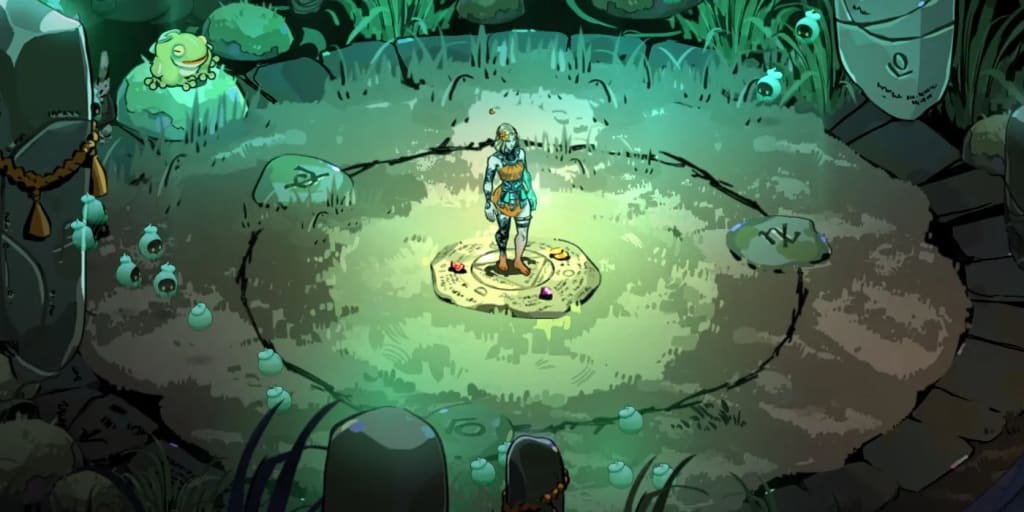
Hades II Story Explained focuses on the narrative framework and mythological reinterpretation presented in Hades II, a roguelike action role-playing game developed and published by Supergiant Games. The game entered early access in 2024 for Microsoft Windows and is built using Supergiant Games’ proprietary engine. Serving as a direct sequel to Hades (2020), the story shifts its perspective from Zagreus, son of Hades, to Melinoë, the Princess of the Underworld, while expanding the mythological scope and thematic focus of the series. The narrative centers on a cosmic conflict involving time, fate, and the destabilization of the Underworld and Olympus.
In Hades II, the central antagonist is Chronos, the Titan of Time, who has escaped imprisonment and overthrown the established order of the gods. Chronos’s rise disrupts the balance between the Underworld, the mortal realm, and Olympus, leading to the capture or displacement of several Olympian gods. This upheaval forms the foundation of the game’s story, positioning Melinoë as the primary force opposing Chronos’s influence. Unlike the escape-driven narrative of the first game, Hades II presents a proactive journey in which the protagonist seeks to confront and defeat a powerful external threat.
Melinoë is trained in witchcraft and combat by Hecate, a central figure in the narrative who serves as both mentor and guide. Hecate’s role establishes the game’s emphasis on magic, ritual, and preparation, distinguishing Melinoë’s journey from Zagreus’s more impulsive rebellion. Melinoë’s mission is not driven by personal escape or familial reconciliation but by responsibility and duty to restore balance. This shift in motivation influences the tone of the story, which places greater weight on inevitability, sacrifice, and long-term consequence.
The story unfolds gradually through repeated runs, character interactions, and environmental storytelling, consistent with Supergiant Games’ narrative design approach. Each attempt to reach Chronos reveals new dialogue, character development, and lore details. Melinoë interacts with a wide range of mythological figures, including gods, spirits, and creatures affected by Chronos’s actions. These interactions provide insight into the broader impact of the Titan’s return, showing how time manipulation and control destabilize both divine and mortal realms.
Unlike the confined escape route of the original Hades, Hades II expands the narrative geography. Melinoë travels not only through altered regions of the Underworld but also toward locations connected to the surface world and beyond. This broader scope reflects the escalating stakes of the story, as Chronos’s influence extends past traditional boundaries. Each region introduces new narrative themes, enemies, and allies, reinforcing the sense that the conflict is reshaping the entire mythological world.
Family and legacy remain important narrative elements, though they are explored differently than in the first game. Melinoë’s lineage ties her to Hades and Persephone, but her identity is defined more by her role as a guardian and challenger of fate. Characters from the first game appear in altered circumstances, often shaped by Chronos’s interference. These changes provide continuity while emphasizing the passage of time and the consequences of unresolved conflicts.
A key thematic focus of Hades II is the tension between destiny and resistance. Chronos represents inevitability and control, using time as a weapon to enforce order. Melinoë’s journey challenges this philosophy, suggesting that even seemingly fixed outcomes can be altered through persistence, knowledge, and sacrifice. This theme aligns with the roguelike structure, where repeated failure and retrying are integrated into the story rather than treated as non-canonical events.
As an early access title, Hades II presents its story in an evolving form. Additional narrative content, character arcs, and resolutions are designed to be introduced over time through updates. The existing story framework establishes clear narrative goals while leaving room for expansion, allowing the conflict with Chronos and its broader implications to develop progressively. This approach ensures that story progression remains tightly linked to gameplay advancement and player discovery.
In summary, Hades II Story Explained reveals a narrative centered on Melinoë’s mission to confront Chronos and restore balance to a mythological world disrupted by time itself. Developed by Supergiant Games, the game builds on the storytelling foundations of its predecessor while introducing new themes, characters, and narrative scale. Through repeated runs, character-driven dialogue, and mythological reinterpretation, Hades II presents a story about fate, resistance, and responsibility, unfolding gradually as players advance through its evolving early access experience.
About the Creator
Keep reading
More stories from Games Mode On and writers in Gamers and other communities.
Forza Horizon CHAPTER#5 (2021) View
Forza Horizon 5 is an open-world racing game developed by Playground Games and published by Xbox Game Studios. Set in a stunning, highly detailed version of Mexico, it combines fast-paced racing, hundreds of licensed cars, and a shared online world. The game appeals to both casual players and dedicated racing fans, offering a perfect balance between freedom, exploration, and competitive gameplay.
By Games Mode Onabout a month ago in Gamers
How Fan Translations Keep Games Alive After Official Support Ends
A video game translation company usually enters a project at the cleanest moment, when budget is great and source files are organized. Developers answer questions. Everyone assumes the game has a future.
By CCJK Technologies6 days ago in Gamers
U4gm How Negative Rarity Farming Is Changing PoE 2 Endgame
Path of Exile 2 is all about loot, but not all loot is equal. Recently, an unusual strategy has gained traction among endgame players: Negative Rarity farming. At first glance, it seems counterintuitive—why would anyone want fewer rare drops? The answer lies in efficiency, crafting control, and consistent profit. Negative Rarity farming in PoE 2 turns seemingly worthless white items into a reliable and strategic source of crafting materials and steady endgame profit.
By Billo Nali5 days ago in Gamers




Comments
There are no comments for this story
Be the first to respond and start the conversation.